
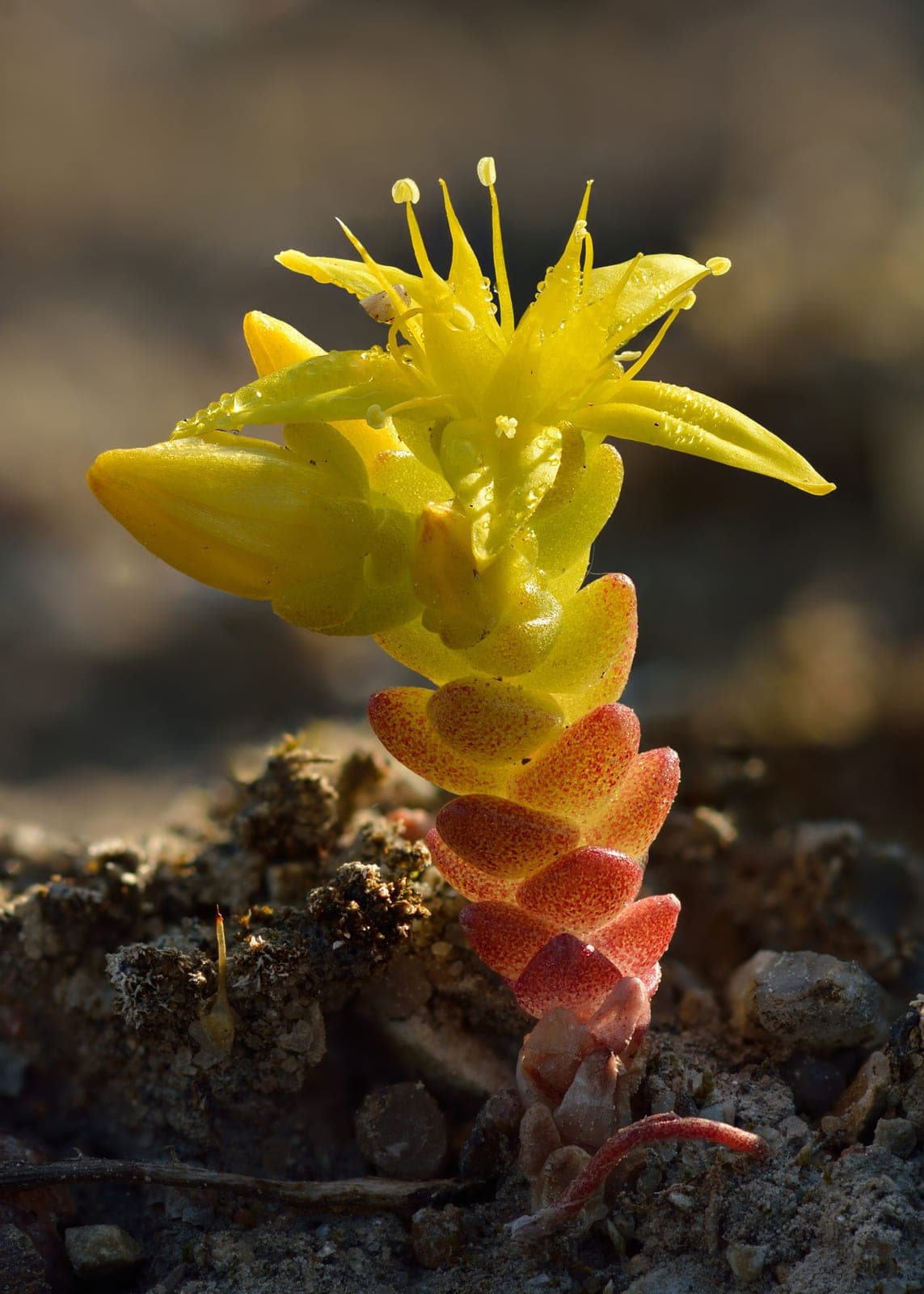
Sedum hispanicum is a low, mat-forming succulent native to rocky slopes, dry hillsides, and limestone outcrops across southern Europe and into western Asia. It grows just 2–4 inches tall, spreading steadily into dense mats of small, fleshy, blue-green to glaucous foliage. In early summer it produces small white to pale pink star-shaped flowers. It performs well as a ground cover in rock gardens, along path edges, between stepping stones, and on green roofs.
This plant requires sharply drained, even poor soil and is highly drought tolerant once established. It cannot tolerate standing water or heavy clay, which cause root and crown rot rapidly. Detached stem segments root readily on contact with soil, making it simple to propagate by division and useful for stabilizing dry sunny slopes. It tolerates light foot traffic and outcompetes weeds in infertile, dry conditions where other ground covers thin out. In colder parts of its range, foliage may take on reddish or purplish tints in fall before going semi-dormant.