
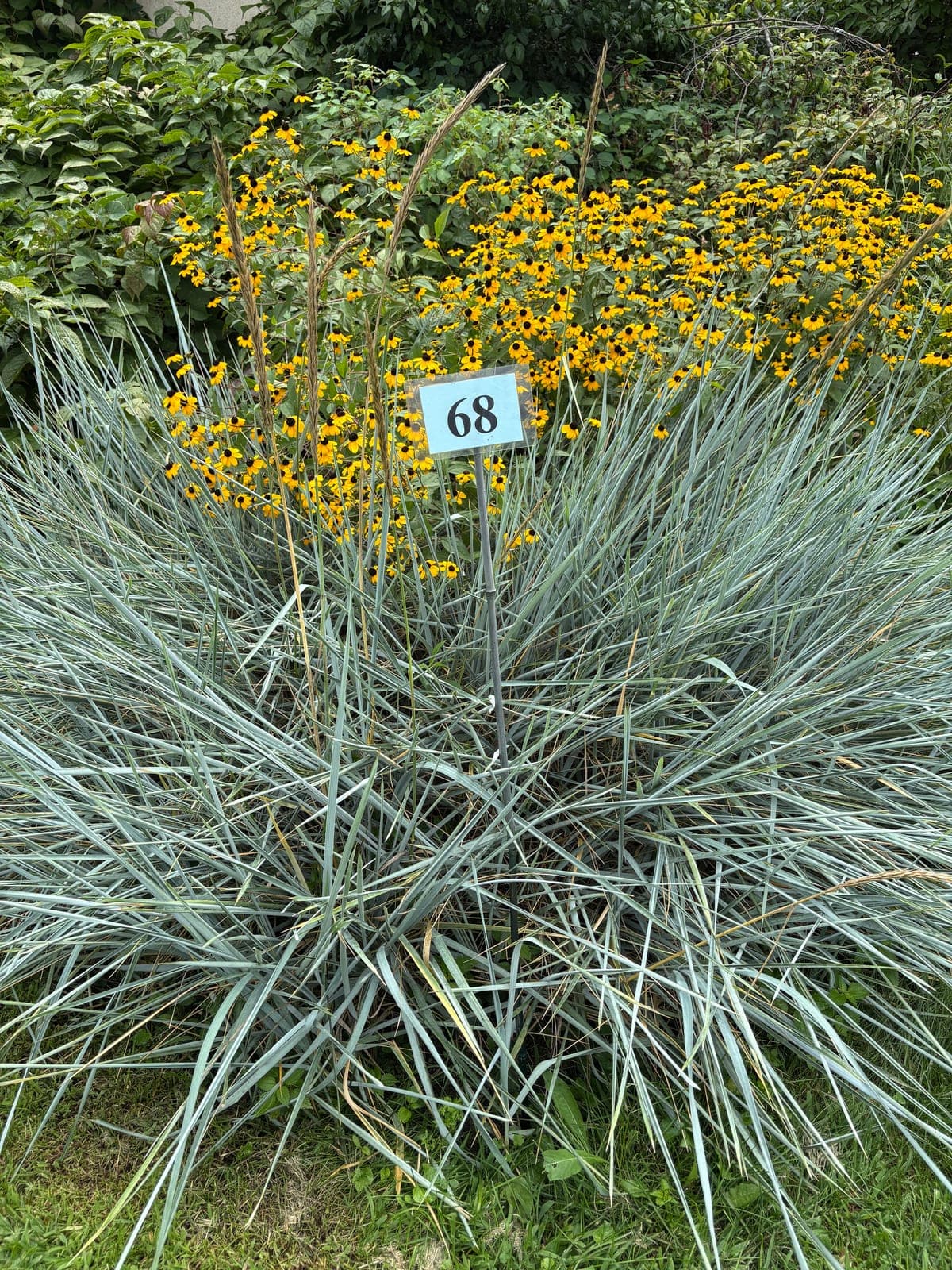
Blue oat grass is a clump-forming bunchgrass native to rocky grasslands of central and southwestern Europe. Its persistent steel-blue foliage makes it one of the most striking cool-season ornamental grasses for sunny, dry borders, useful as a specimen, edging plant, or repeated accent in dry gardens.
It grows in a tight, arching mound and sends up slender oat-like seed stalks in early summer. Performance is best where summers are dry and cool; in hot, humid conditions common in the southern end of its zone range, foliage browns and the plant becomes short-lived. Neutral to alkaline, sharply drained soil is essential - it tolerates poor, rocky ground well. Keep mulch away from the crown to prevent rot. Clumps develop dead centers over time and benefit from division every three to five years.
The semi-evergreen foliage provides off-season structure, and the dried seed heads attract seed-eating songbirds in late summer and fall.
Rust
Orange to brown raised pustules on the undersides of leaves, with yellow spotting on the upper surface. Heavy infections cause leaves to yellow and drop.
Remove and destroy infected leaves. Avoid overhead watering and improve air circulation. Apply a sulfur or copper-based fungicide if it spreads. Clear plant debris in fall.
Crown Rot
Lower leaves yellow and wilt; the base of the rosette turns brown and soft, sometimes with white fungal threads at the soil line. Plants collapse in wet conditions.
Remove and destroy affected plants. Improve drainage and avoid overhead watering. Do not mulch directly against the crown. Space plants for airflow and avoid replanting in the same wet spot.