
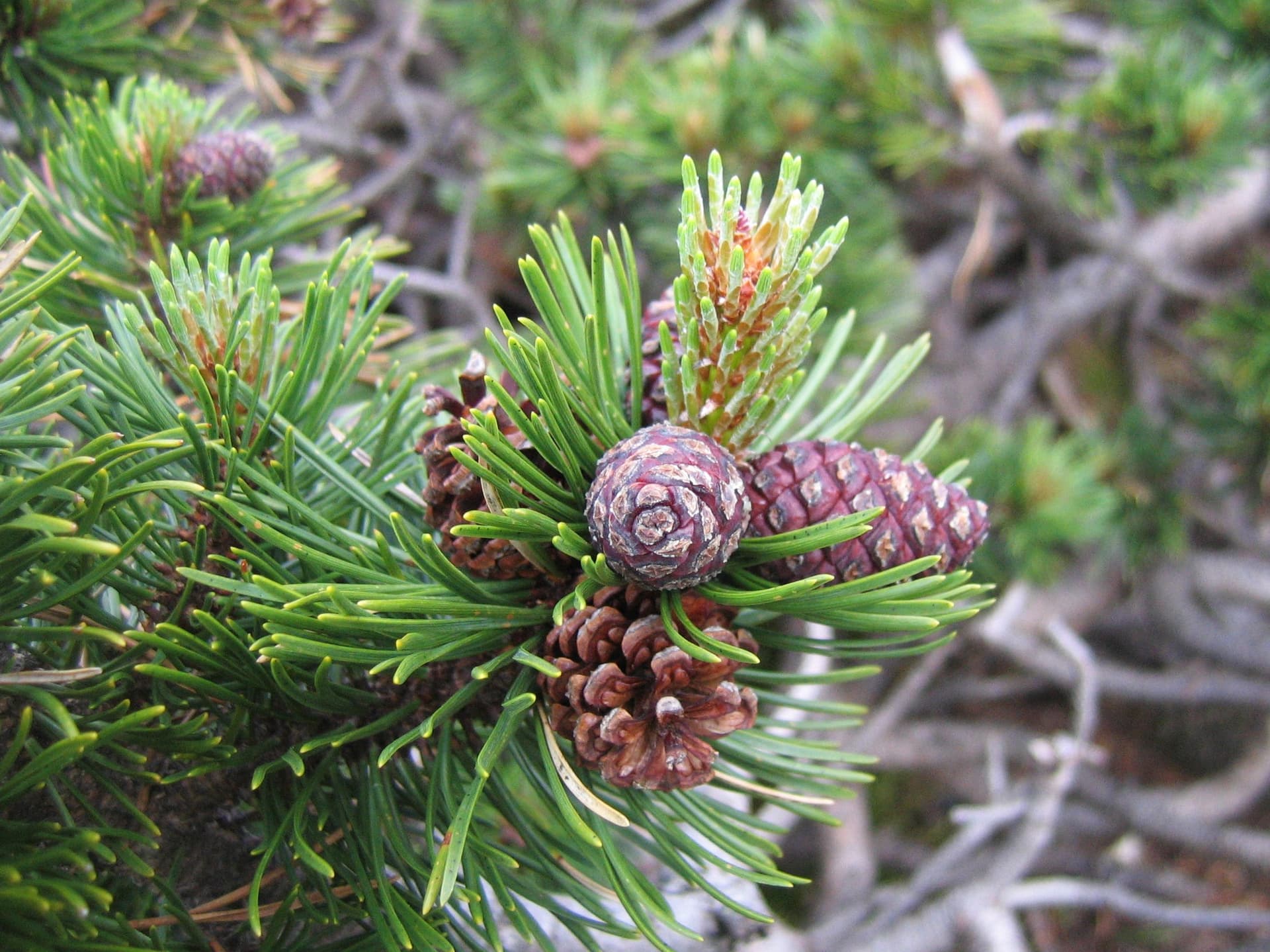
Mugo pine is a slow-growing evergreen shrub native to subalpine zones across central and southern Europe, where it colonizes rocky slopes, cliff edges, and exposed ridgelines. It forms dense, rounded mounds of dark green paired needles and holds structural form through all four seasons. Cultivar selection determines final size: compact forms such as 'Mops' and 'Gnome' stay under 3 feet, while the straight species can eventually exceed 10 feet in garden settings.
This plant thrives in full sun and tolerates rocky, sandy, or nutrient-poor ground that would stress most ornamentals. It is highly wind-resistant and drought tolerant once established. Soil pH between 4.5 and 7.0 is acceptable; waterlogged soil is the greatest establishment risk. Annual candle pinching in late spring-removing half of each new candle before needles fully elongate-controls size without cutting into old wood, which cannot regenerate. Cold hardiness reaches zone 2a, making it reliable where most evergreen shrubs fail.
Mugo pine buds and shoot tips have been used in Alpine folk medicine and commercial distillation for centuries. The essential oil pressed from branches and needles-sold as mountain pine oil or Latschenkieferöl-is applied topically for muscle pain and joint stiffness and used as an inhalant for respiratory congestion. In central Europe, young shoots are simmered into pine syrup, taken traditionally for sore throats and coughs.
Diplodia Tip Blight
New shoot tips wilt and collapse in spring while needles are still expanding, turning brown and remaining stunted. Small black fungal fruiting bodies (pycnidia) form at the base of infected needles and on cone scales. Resinous lesions may develop at the base of infected branches. Repeated infections cause progressive dieback from branch tips inward.
Apply a registered fungicide (thiophanate-methyl or copper-based) beginning at bud swell, before candles begin to elongate, and repeat at 10–14 day intervals through candle expansion. Prune and destroy all infected shoot tips. Avoid overhead irrigation. Rake and remove fallen needles and cones. Reduce tree stress through adequate soil moisture and avoiding mechanical injury, as the pathogen preferentially attacks weakened plants.
Pine Needle Scale
White, elongated, oyster-shell-shaped scale encrustations along needle surfaces; heavy infestations cause needle yellowing, premature needle drop, and progressive canopy thinning.
Apply horticultural oil spray in early spring during the crawler stage. A second application in early summer controls late crawlers. Prune and dispose of heavily encrusted shoots.
Pine Pitch Canker
Sunken, resin-soaked cankers on branches and main trunk; shoot tips die back and turn brown; heavy resin bleeding at infected sites; progressive dieback of scaffold branches.
Prune infected branches at least 6 inches below visible canker margins using sterilized tools; destroy all removed material. No curative fungicide is available. Maintain tree vigor through correct infrequent watering; avoid mechanical wounds to bark and surface roots.
Armillaria Root Rot
Thinning, yellowing canopy with progressive dieback; white, fan-shaped mycelial mats visible beneath bark at or just below the soil line; honey-colored mushroom clusters appearing at the trunk base or on surface roots in autumn.
No chemical cure exists. Improve drainage and avoid any injury to roots or trunk. Remove severely infected trees along with as much root material as possible. Do not replant susceptible species in the same spot.
Phytophthora Root Rot
Wilting despite moist soil, yellowing leaves, stunted growth, and dark, decayed roots and crown tissue. Vines may collapse during hot weather.
Plant in well-draining soil and avoid waterlogging. Remove and destroy affected vines. Improve drainage with raised beds or amended soil and avoid overwatering.