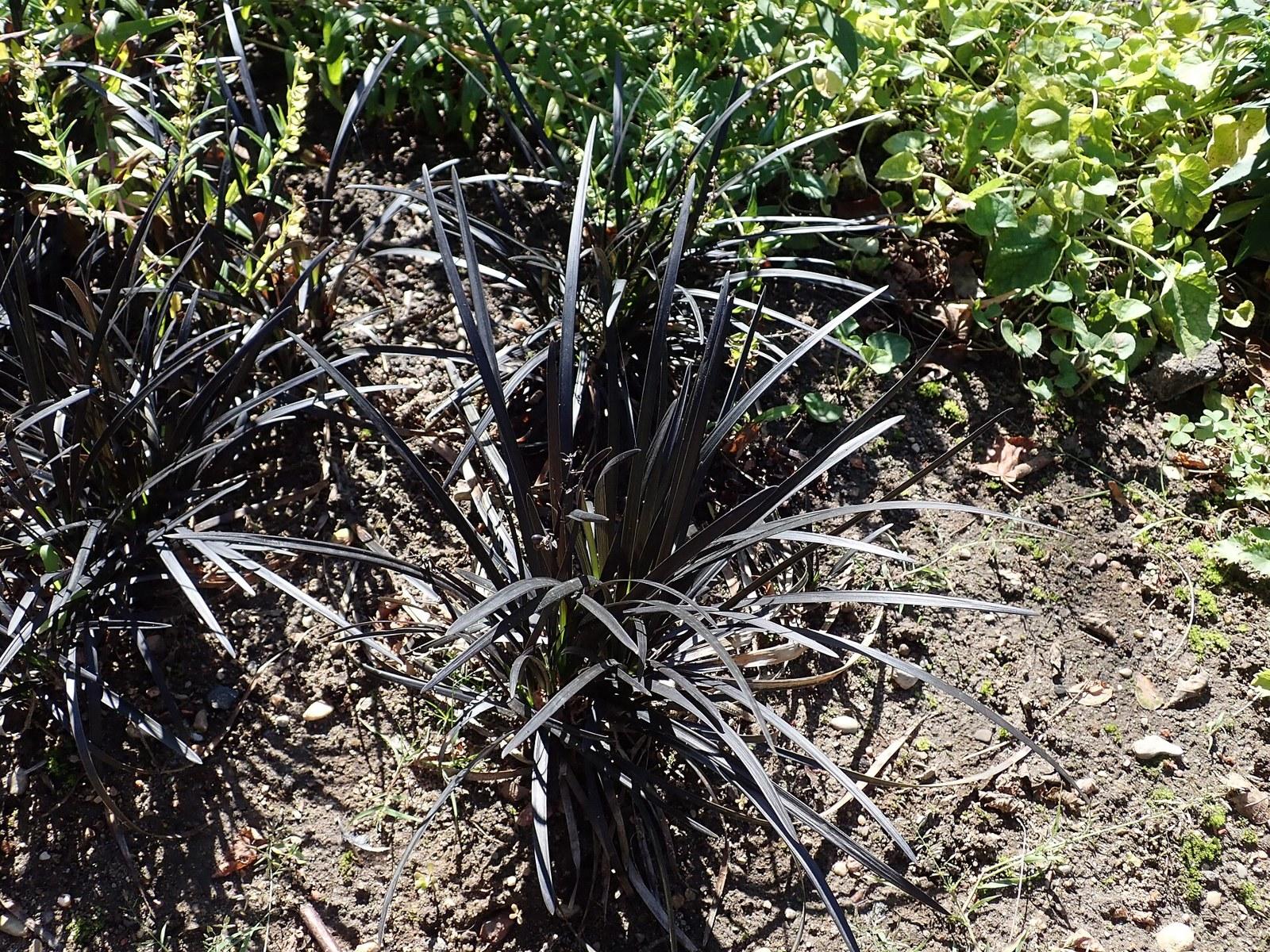
Black mondo grass (Ophiopogon planiscapus 'Nigrescens') is the darkest foliage plant most gardens can grow: arching, strap-shaped evergreen leaves that emerge deep green and mature to a glossy purple-black. It is a selection of a species native to Japan and, despite the name, is a lily relative rather than a true grass. Clumps stay about 6 inches tall and creep outward slowly on short stolons, so it never runs the way the green mondo grass can.
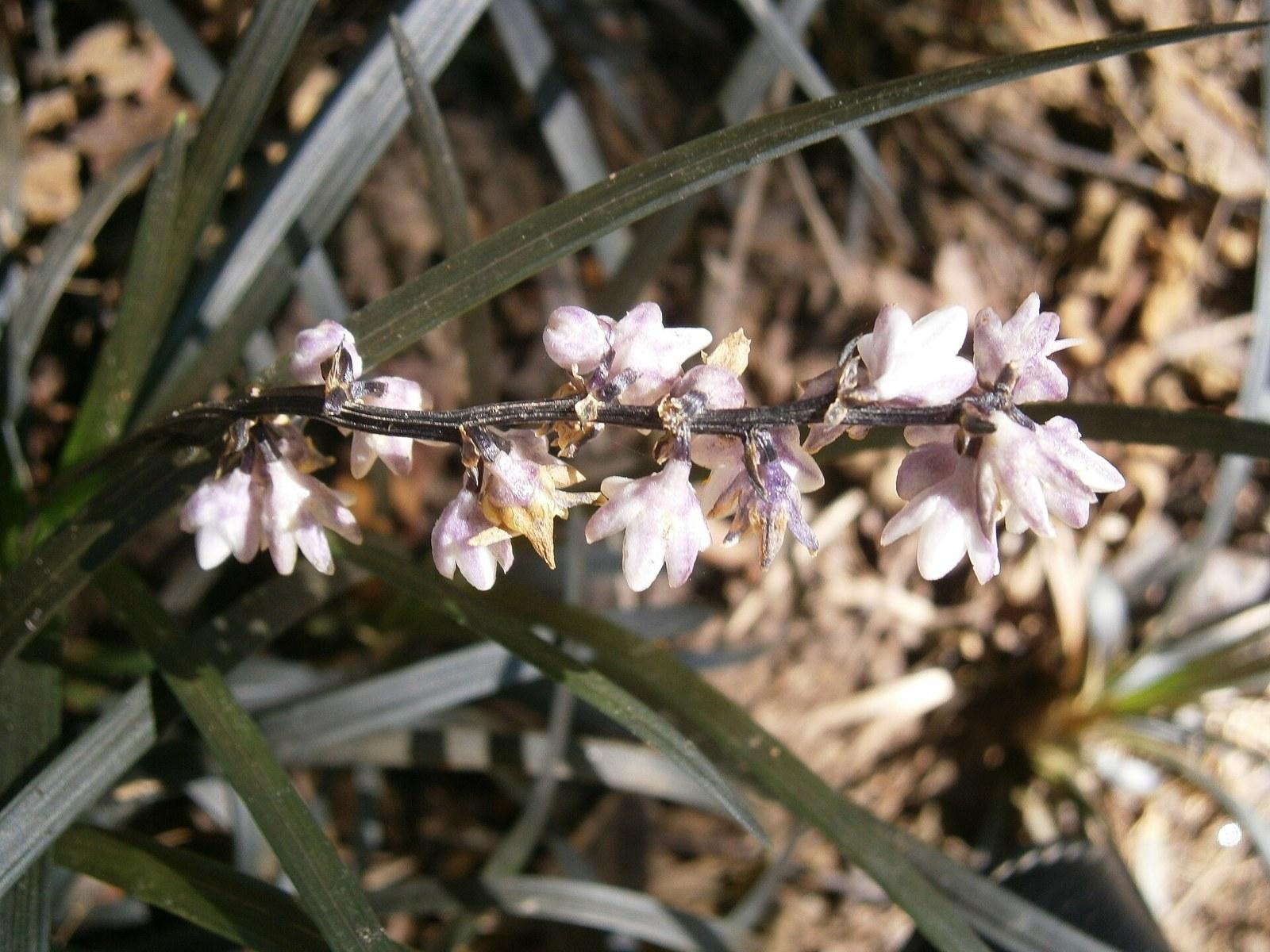
The near-black leaves are at their best against something pale or bright: moss, golden creeping Jenny, chartreuse spikemoss, silver stone or light gravel. Short spikes of pale pink bells appear among the leaves in summer, followed by shiny black berries that hold into winter. Leaf color is darkest with good light; in deep shade the foliage turns greener and growth slows further. In hot-summer climates give it afternoon shade, and in cool, cloudy climates it takes full sun.
Plant it closely, because a carpet takes several years to knit together. It wants soil that drains but does not dry out, enriched with leaf mold or compost, and it resents being sheared; tidy it by combing out damaged leaves instead. Divide established clumps every few years to make more plants, since seedlings often come up green.
These dates are for Zone 6b. Enter your ZIP to time every job to your own frost dates.
- buy · Jan 16 - Jan 30Order plants - about two months before planting
- cut · Mar 13 - Mar 27Comb out or snip winter-tattered leaves before new growth starts; do not shear to the ground, it recovers slowly.
- plant · Mar 27 - Apr 24Plant or divide clumps as growth starts, 4-6 in apart; it fills in slowly, so plant closely and divide every 3-4 years.
- watch · Any time in springCheck new leaves for slug and snail damage in damp shade.
- watch · Any time in summerWater during dry spells; leaf tips brown when the soil dries out.
Problems & troubleshooting
Common problems
Fungal leaf spot
Brown or purplish spots on the leaves, often ringed with a yellow halo, that spread and merge in warm, humid, or wet weather; heavily spotted leaves yellow and drop early.
Pick off spotted leaves and clear fallen debris to remove overwintering spores. Improve air circulation by thinning, and water at the base so foliage dries quickly. If it persists, apply a copper- or sulfur-based fungicide at the first sign.
Crown Rot
Lower leaves yellow and wilt; the base of the rosette turns brown and soft, sometimes with white fungal threads at the soil line. Plants collapse in wet conditions.
Remove and destroy affected plants. Improve drainage and avoid overhead watering. Do not mulch directly against the crown. Space plants for airflow and avoid replanting in the same wet spot.
Root rot
Plants wilt, yellow, and stunt even in moist soil; lower stems and roots turn brown, soft, and mushy and the plant may collapse. Most common in heavy, wet, or poorly drained ground.
Improve drainage and stop overwatering, and never plant too deep. Lift and destroy badly affected plants along with the soil around the roots. Grow in raised or free-draining beds to prevent it returning.