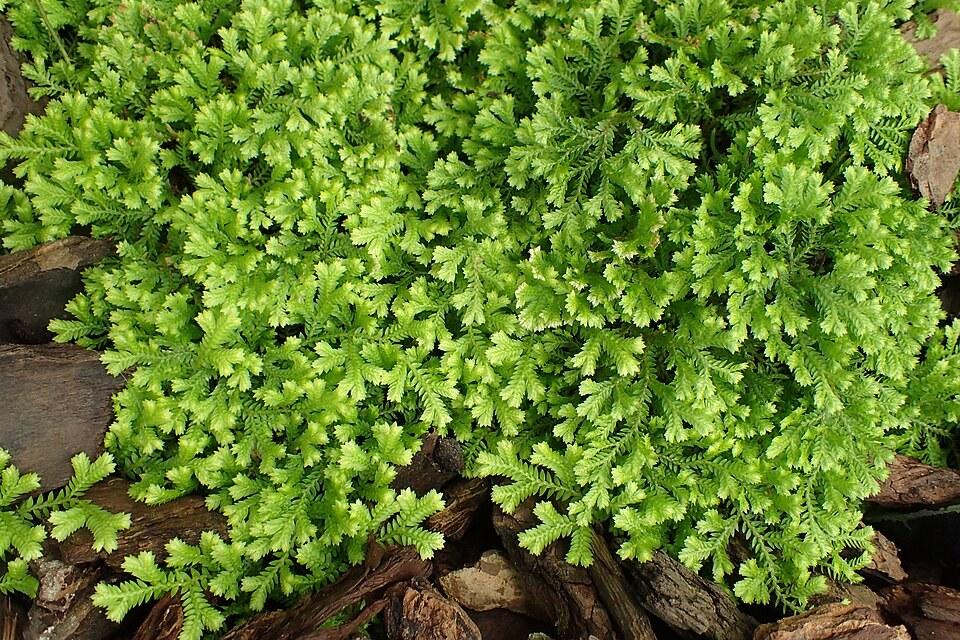
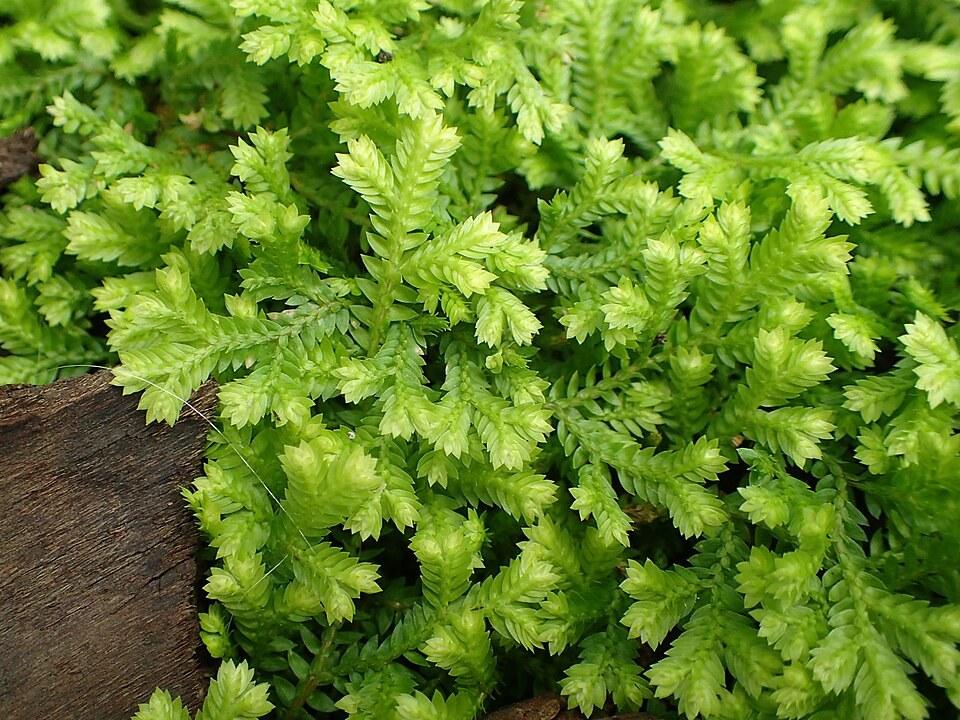
Golden spikemoss (Selaginella kraussiana 'Aurea') is a mat-forming spikemoss with flat, ferny sprays of tiny scale-like leaves in bright chartreuse. It is neither a moss nor a fern but a lycophyte, one of the oldest lineages of vascular plants, and it reproduces by spores rather than flowers. The species is native to southern and eastern Africa and the Azores; 'Aurea' is the golden selection most often sold for gardens and terrariums.
The trailing stems root wherever they touch damp soil, building a carpet 2 to 4 inches deep that drapes over rocks and flows between stepping stones. It gives the look of a moss garden in places where true moss is slow to establish, and its color lights up the shade under Japanese maples and dwarf conifers. The brightest gold comes in open shade with morning light; hot afternoon sun scorches it and deep shade turns it greener.
Steady moisture is the one requirement that cannot be skipped. The foliage browns quickly when the soil dries, although plants usually regrow from the stems once watered. It suits mild, humid climates best and is evergreen where winters are gentle; at the cold end of its range it dies back in hard frost and returns from protected stems. Spread it by lifting rooted pieces and pressing them into new ground.
These dates are for Zone 6b. Enter your ZIP to time every job to your own frost dates.
- watch · Any time in fallClear fallen leaves off the mat before they smother it, and mulch the edges lightly where winters are cold.
- buy · Jan 30 - Feb 13Order plants - about two months before planting
- plant · Apr 10 - May 8Plant small divisions 12 in apart in moist, humus-rich soil out of direct afternoon sun; press rooted pieces into bare ground to extend the carpet.
- watch · Any time in summerKeep the carpet evenly moist; fronds crisp and brown within days if the soil dries out.
- cut · Any time in summerTrim back stems that creep over paths or into neighbors; it roots as it goes.
Problems & troubleshooting
Common problems
Root rot
Plants wilt, yellow, and stunt even in moist soil; lower stems and roots turn brown, soft, and mushy and the plant may collapse. Most common in heavy, wet, or poorly drained ground.
Improve drainage and stop overwatering, and never plant too deep. Lift and destroy badly affected plants along with the soil around the roots. Grow in raised or free-draining beds to prevent it returning.