
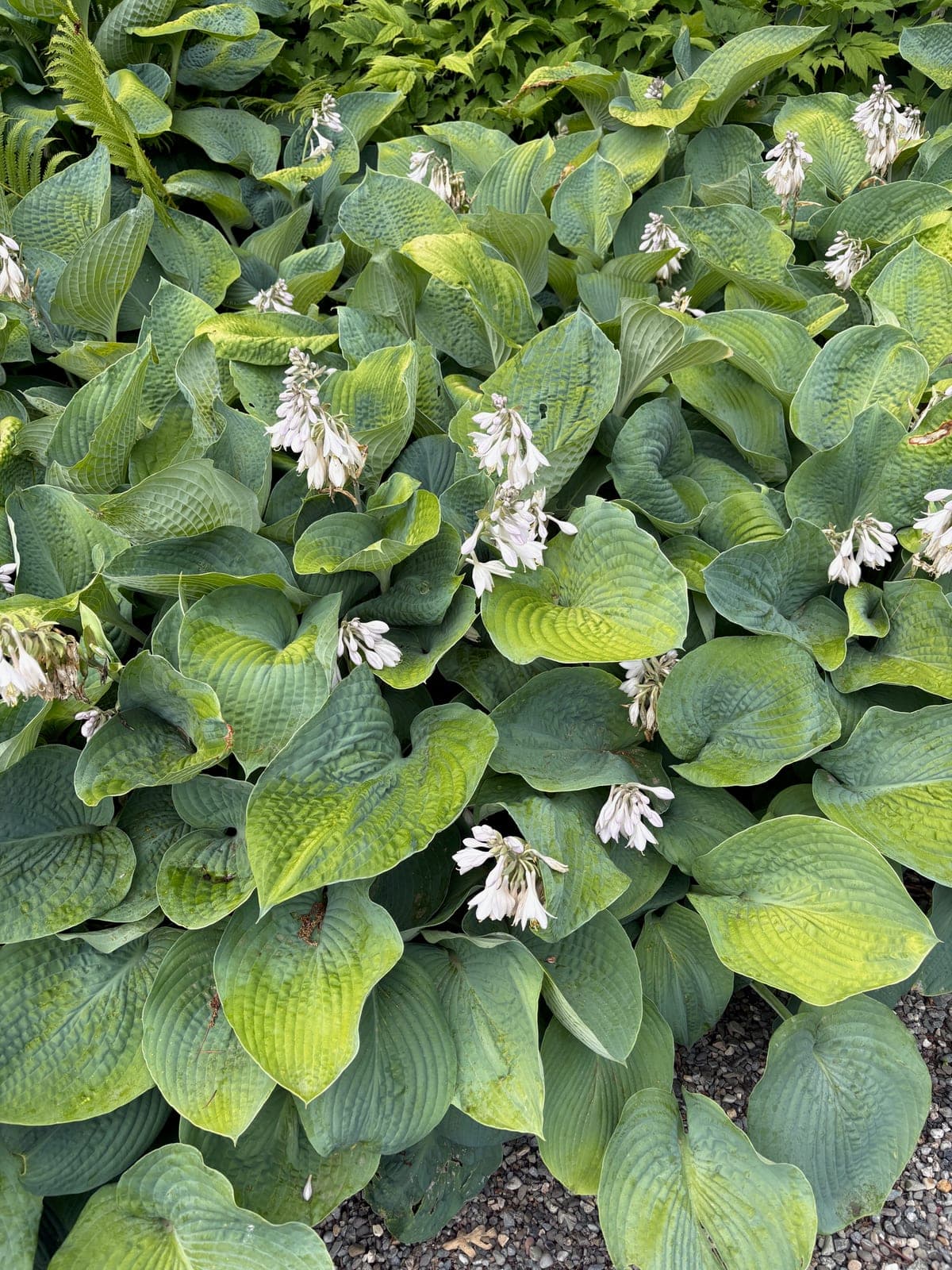
Hosta sieboldiana is one of the most rewarding shade perennials you can put in the ground - if you set it up right from the start. Soil preparation is everything. Dig in plenty of well-rotted compost or leaf mould before planting; these hostas are hungry for organic matter and will reward you with increasingly impressive clumps year after year. Plant divisions in early spring just as the eyes are nosing up through the soil, or in early fall to give roots time to settle before dormancy. Aim for a site with morning light and afternoon shade - dappled woodland conditions are ideal. The most common mistake gardeners make is planting too shallow or disturbing the crown during division; keep that growing point just at or barely below the soil surface and you'll be fine. Slugs are the perennial nemesis, so lay diatomaceous earth or copper tape early in the season before the big leaves unfurl.
In traditional Japanese practice, young hosta shoots - called urui - are harvested in early spring and eaten as a vegetable, lightly blanched and dressed with sesame or miso. The emerging spears of Hosta sieboldiana are among the mildest and most palatable of the genus, with a clean, slightly mucilaginous texture not unlike asparagus. If you want to try them, harvest sparingly when they're 3–4 inches tall, well before the leaves fully open, and only from established clumps that can afford to lose a few shoots without weakening. From a medicinal standpoint, hostas have been used in folk herbalism in East Asia - primarily as a topical poultice for insect bites and minor skin inflammation - though this isn't a plant with a deep clinical tradition in Western herbalism. Its real medicine is what it does for the soul of a shady garden: those enormous, corrugated, blue-green leaves catching the morning light are genuinely restorative.