
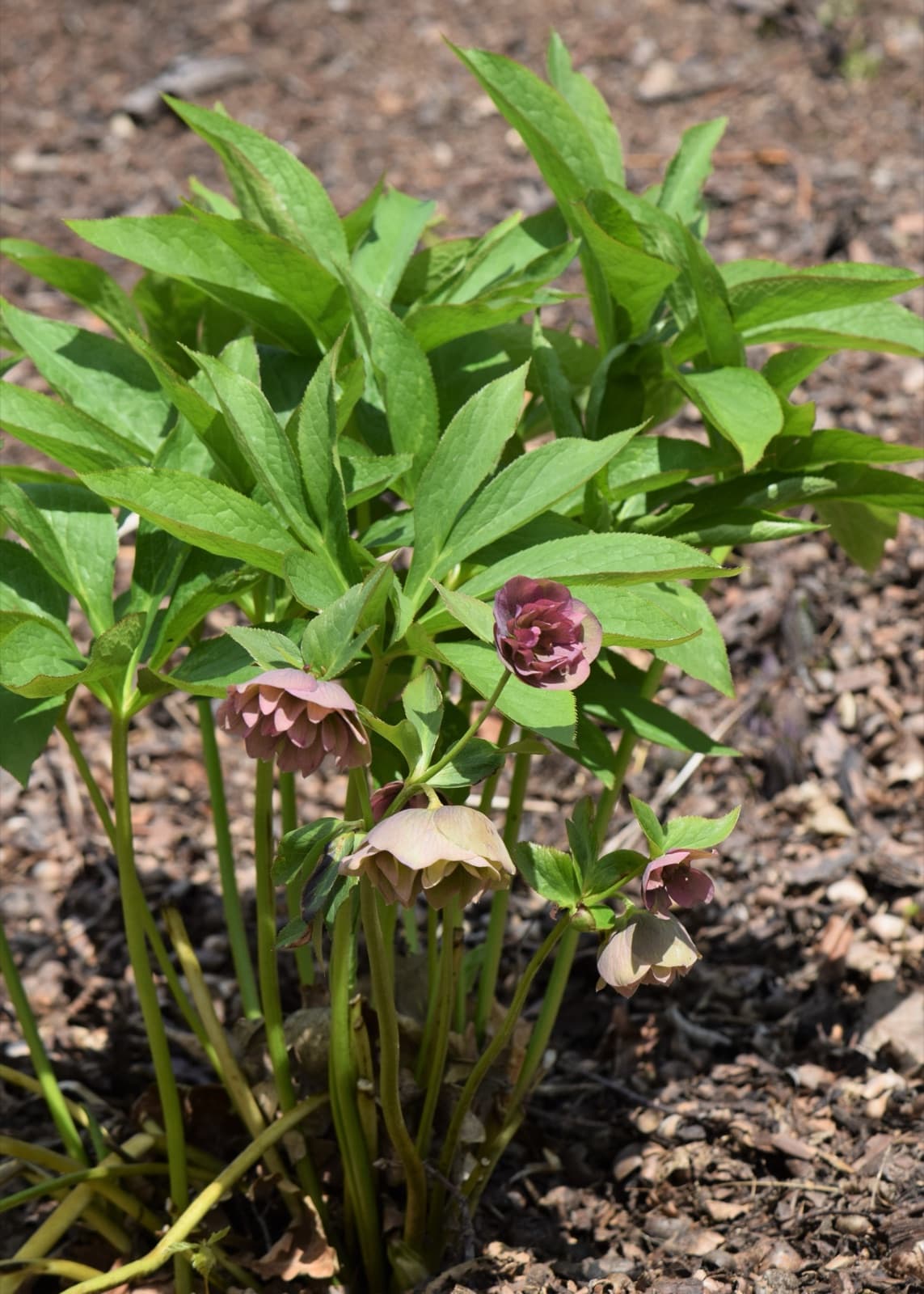
 'Double Ellen Pink Spotted' — a double form, where the nectaries have turned into extra sepals. Doubles are sold as named clones rather than seed, which is why they cost more and come true. Photo: Krzysztof Ziarnek, Kenraiz, CC BY-SA 4.0.
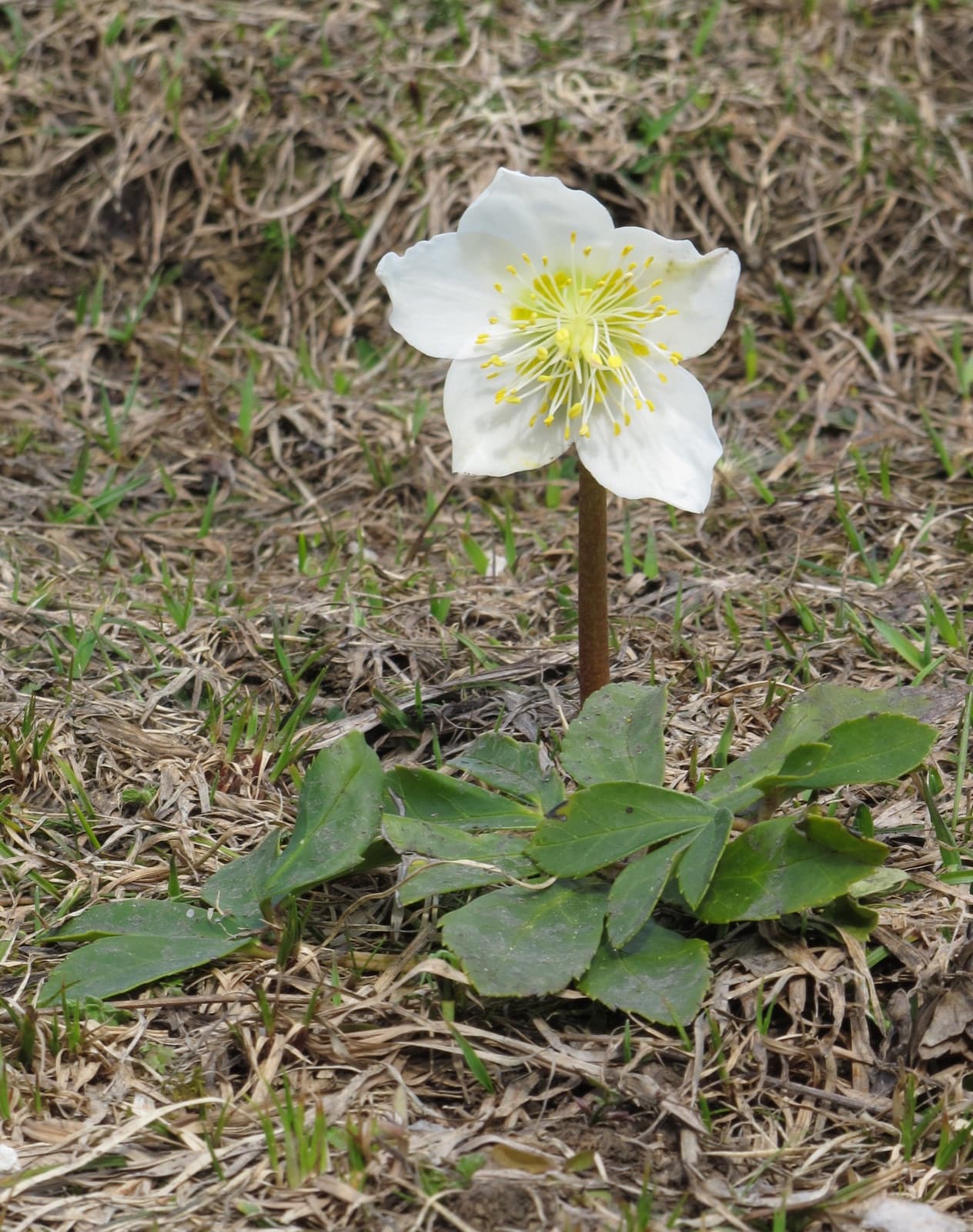 Helleborus niger, the Christmas rose — earlier than the Lenten rose and facing outward instead of nodding, but fussier, wanting sharper drainage and a little lime. Photo: Robert Flogaus-Faust, CC BY 4.0.
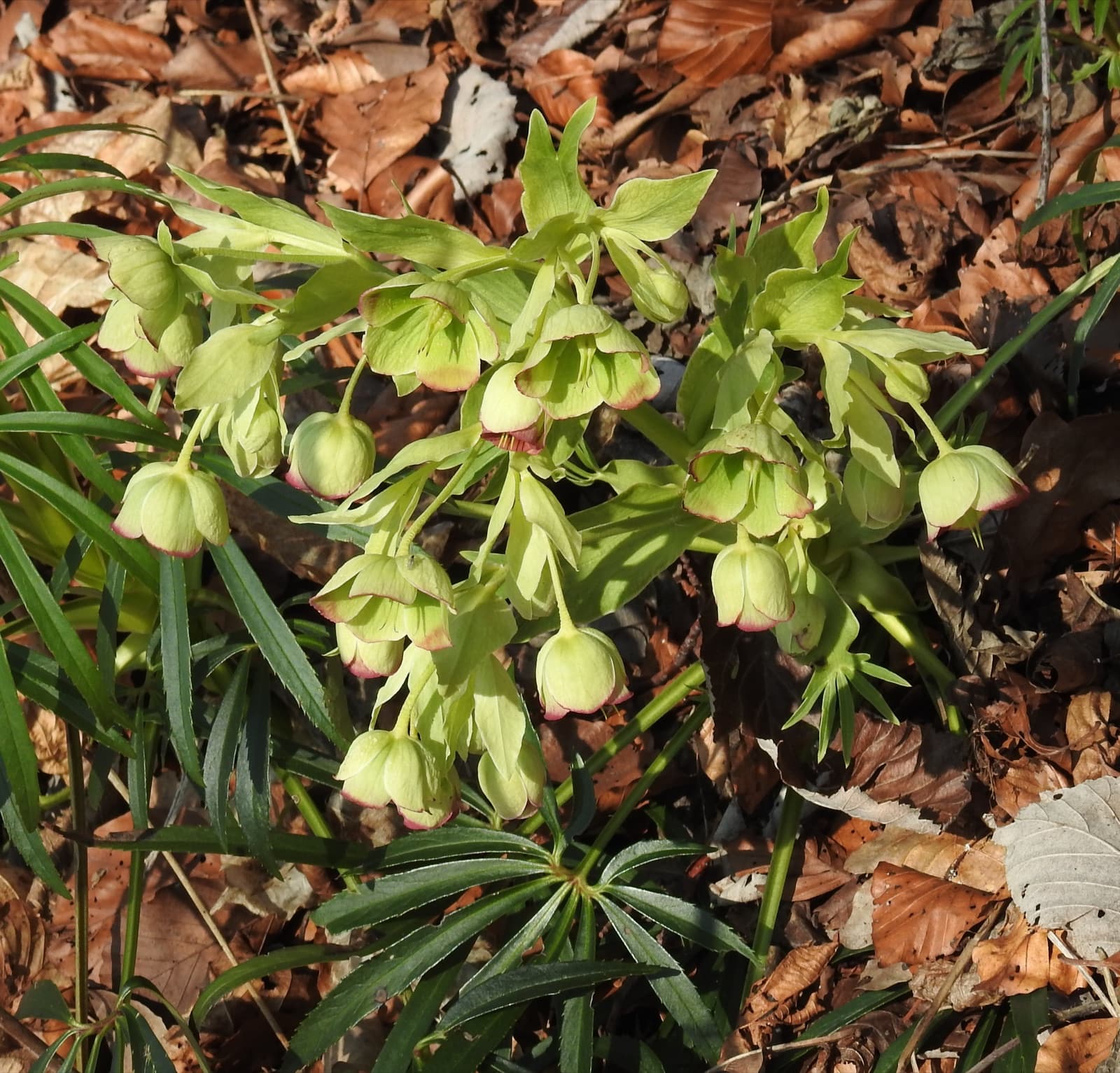 Helleborus foetidus builds a woody stem and carries its narrow leaves and green red-rimmed bells on it, reading as a small evergreen shrub rather than a clump. Photo: Robert Flogaus-Faust, CC BY 4.0.
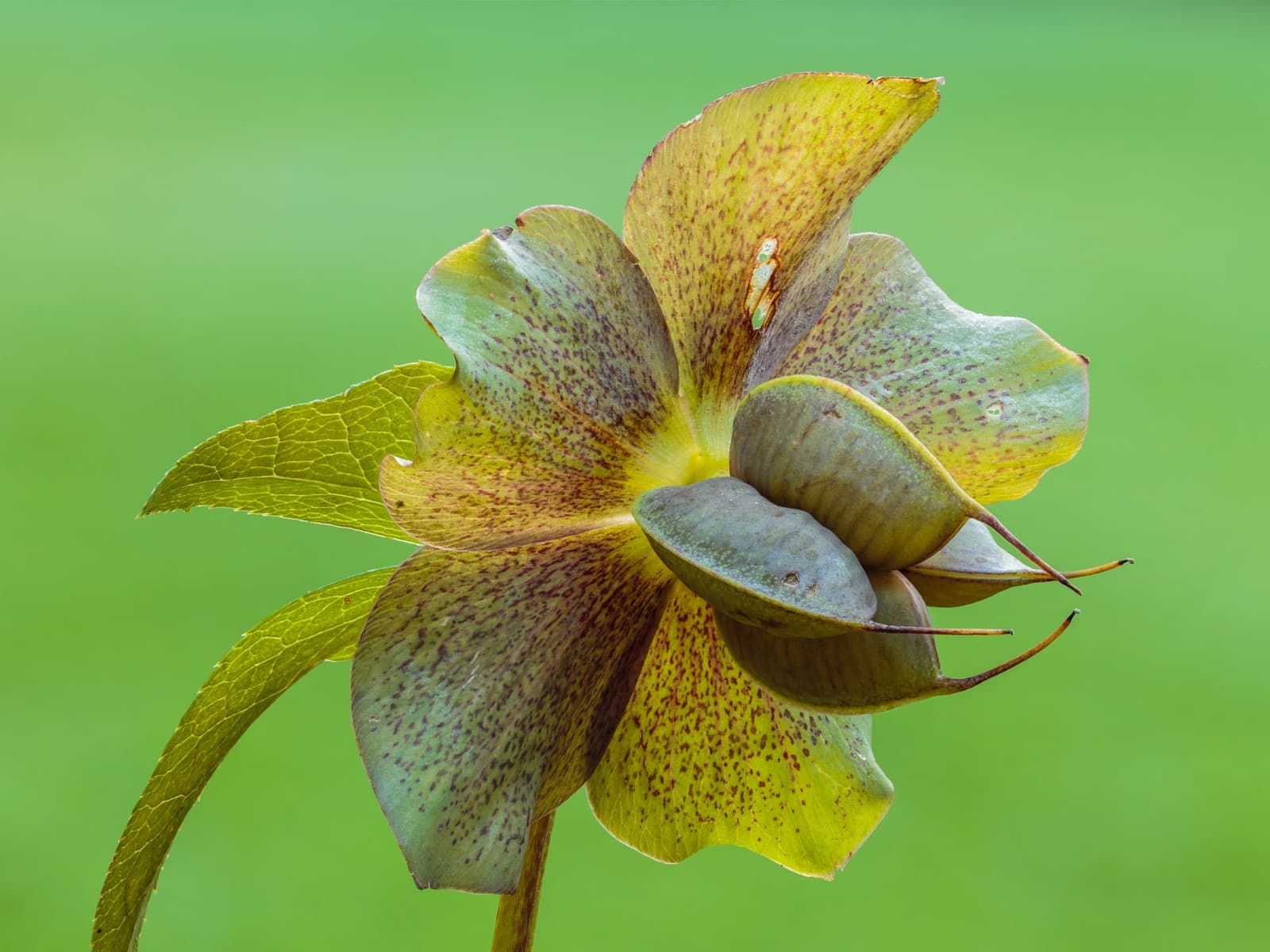 Why the bloom lasts months: the sepals persist and green up while the seed capsules swell inside them. A stem this far along also cuts well — the young ones are what wilt. Photo: Dominicus Johannes Bergsma, CC BY-SA 4.0.
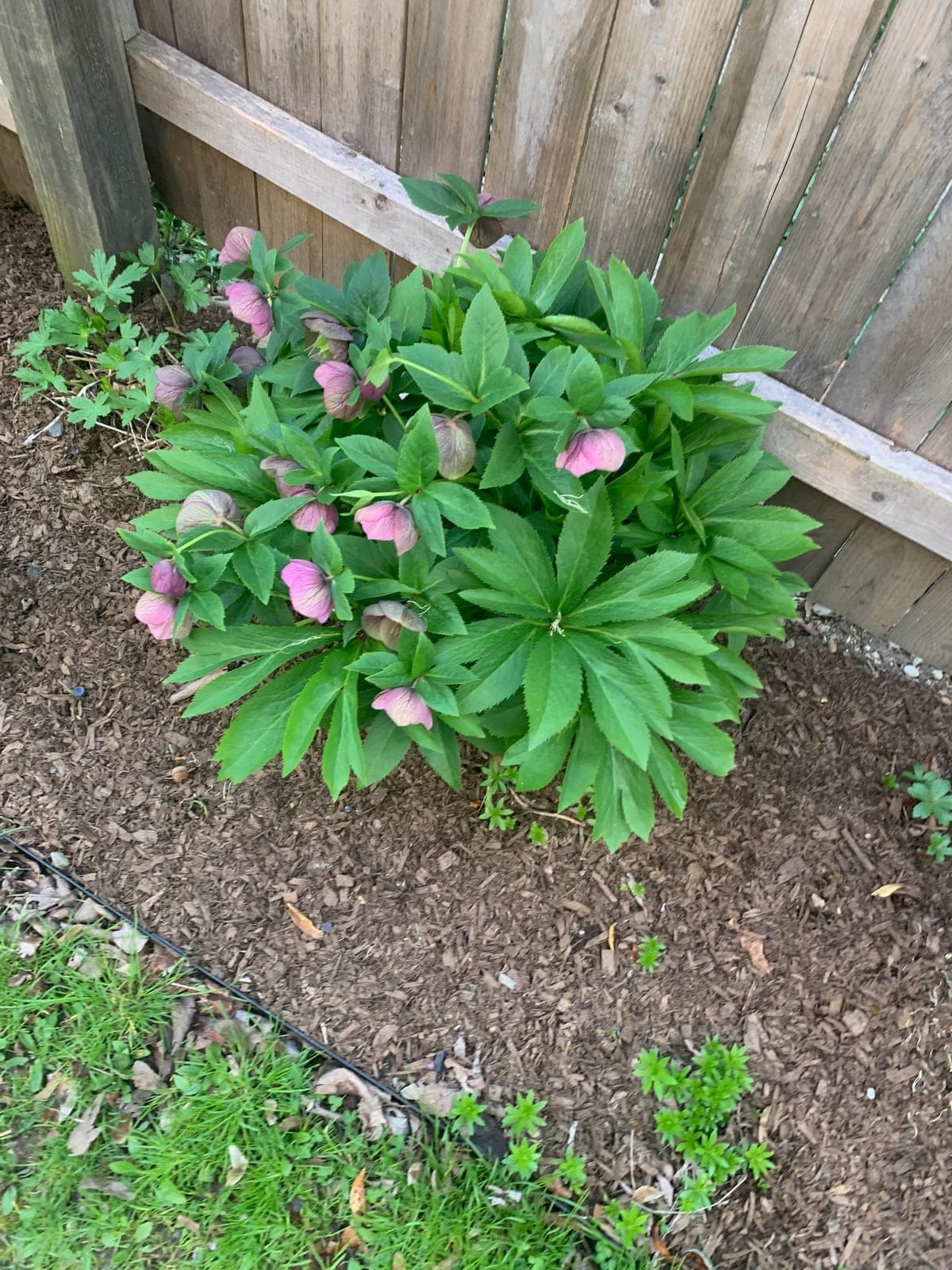 An established clump in its third season, flowering at the base of a fence in dry shade — the habit the portraits above don't show.
Hellebores carry the winter garden. The flowers open in the dead of the cold season and hold on for two or three months in cream, dusky pink, deep plum, slate, apricot, and near-black, often freckled or picotee-edged, on a plant that is evergreen, genuinely deer-proof, and long-lived once settled. They ask almost nothing after the first year. A clump set in the right place will outlast most of what is planted around it.
The one you meet most is the Lenten rose, Helleborus ×hybridus — a garden hybrid swarm rather than a single species, which is why no two seed-grown plants look quite alike. Nurseries sell both unnamed seed strains, cheap and variable, and tissue-cultured named clones that come true, including the double series like Wedding Party. Helleborus niger, the Christmas rose, is the earliest and faces outward rather than nodding, but it is fussier and wants sharper drainage and more lime. Helleborus foetidus and H. argutifolius are different in habit again: they build a woody stem with the leaves and flowers carried on it, so they read as small evergreen shrubs, and they carry clusters of green bells rather than open faces.
What look like petals are sepals, and that is the whole trick of the plant. Sepals do not drop the way petals do — they persist after the flower is fertilised, often turning green or dusky as the seed capsules swell inside them, which is why one flower reads as a long bloom. It also explains the cut-flower problem: a young hellebore stem wilts within hours. Cut them late instead, once the seed pods have begun to form and the stems have gone woody, and they behave. For a young stem, sear the cut end in boiling water for twenty seconds and plunge it into cold water for several hours, or skip stems altogether and float the flower heads in a shallow bowl, which is how the nodding ones are best seen anyway.
Site them in part to full shade, ideally under deciduous trees where they take winter light and summer shade. Soil wants to be humus-rich, moist, and well-drained, and unlike most woodland plants hellebores prefer neutral to slightly alkaline ground — a handful of lime suits them where soil runs acid. Set the crown at soil level, never buried, or the plant sulks and rots. Mulch around it but keep the mulch off the crown. They resent being moved, so choose the spot properly the first time; established clumps left alone simply get better. Seed drops freely and germinates in the surrounding soil, but seedlings from a hybrid will not match the parent — pot them up and grow them on if you are curious, weed them out if you are not.
The one real job in the year is cutting last season's leaves off at the base before the flower stems push up. It is not tidiness: the old foliage hides the flowers, and it carries hellebore leaf spot through the winter, so removing and binning it breaks the cycle. Cut too late and you slice the buds. Beyond that, watch for aphids sheltering up under the nodding flowers on warm days, and for blackened, distorted growth, which is hellebore black death — a virus with no cure; dig and destroy the plant. Every part of a hellebore is toxic if eaten and the sap irritates skin, so wear gloves cutting them, and keep that in mind before planting where small children graze. The upside of that chemistry is the deer and rabbits leave it entirely alone, and on a mild winter afternoon the flowers are one of the very few nectar sources open for a bumblebee queen.
Botrytis (grey mould)
Grey fuzzy mould on petals and stems, worst in cool wet conditions.
Remove affected parts immediately. Improve air circulation. Avoid overhead watering. Apply copper fungicide if severe.
Fungal leaf spot
Brown or purplish spots on the leaves, often ringed with a yellow halo, that spread and merge in warm, humid, or wet weather; heavily spotted leaves yellow and drop early.
Pick off spotted leaves and clear fallen debris to remove overwintering spores. Improve air circulation by thinning, and water at the base so foliage dries quickly. If it persists, apply a copper- or sulfur-based fungicide at the first sign.
Crown Rot
Lower leaves yellow and wilt; the base of the rosette turns brown and soft, sometimes with white fungal threads at the soil line. Plants collapse in wet conditions.
Remove and destroy affected plants. Improve drainage and avoid overhead watering. Do not mulch directly against the crown. Space plants for airflow and avoid replanting in the same wet spot.
Aphids
Aphididae →Clusters of small soft insects on new growth and flower buds.
Knock off with a strong jet of water. Ladybirds and lacewings are natural predators. Insecticidal soap as last resort.
Slug and Snail Damage
Deroceras reticulatum →Large irregular holes chewed in leaves, with slime trails on foliage and soil.
Hand-pick at night, set beer traps, or apply iron phosphate bait. Remove debris and mulch where they hide.