
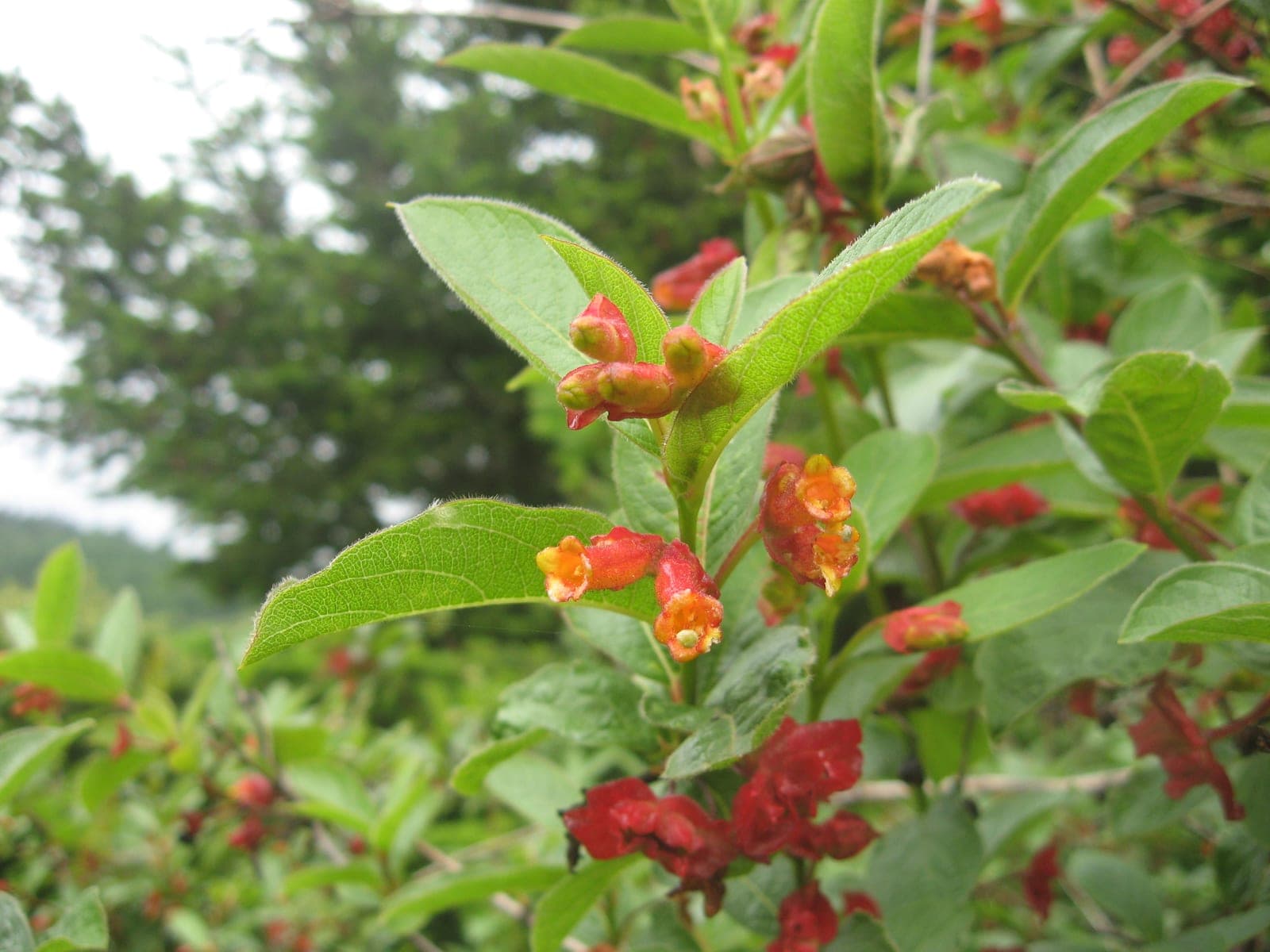
Lonicera involucrata is a deciduous native shrub found across western and northern North America, from Alaska to Mexico and east through the Rocky Mountains. It produces paired tubular yellow flowers backed by conspicuous red to deep purple bracts, followed by twin glossy black berries - a reliable shrub for wildlife value from early spring through late fall.
This shrub naturally grows along streambanks, forest edges, seeps, and moist mountain meadows, making it well suited for rain gardens, riparian buffers, and any site with consistent soil moisture. It tolerates part shade under a light canopy, useful along woodland garden edges. Hummingbirds and bumblebees work the flowers heavily, and the black berries are eaten by many bird species including cedar waxwings, robins, and thrushes. Mature plants spread slowly by layering and may sucker lightly at the base; removing the oldest canes periodically keeps growth vigorous and the shrub center open. A 2–3 inch mulch layer over the root zone conserves moisture and moderates soil temperature, which is especially useful in the warmer end of its range.
Several Pacific Northwest and Great Plains Indigenous peoples used bark and leaf preparations for skin ailments and eye washes. The berries were documented as a purgative in some groups but are considered mildly toxic and should not be consumed as food.
Ecoregions:Northern ForestsNorthwestern Forested MountainsMarine West Coast ForestGreat PlainsNorth American DesertsMediterranean CaliforniaTemperate Sierras
Honeysuckle Leaf Blight
Brown or black spots on leaves that enlarge and merge, followed by curling, browning, and early leaf drop, often worse in wet seasons.
Remove and destroy infected leaves, thin growth to improve airflow, avoid overhead watering, and apply a copper-based fungicide if the problem recurs.
Powdery mildew
White or grey powdery coating on leaves - usually starting on older growth in humid conditions or when nights cool.
Improve air circulation by thinning plants. Apply neem oil or potassium bicarbonate spray at first sign. Avoid overhead watering.