
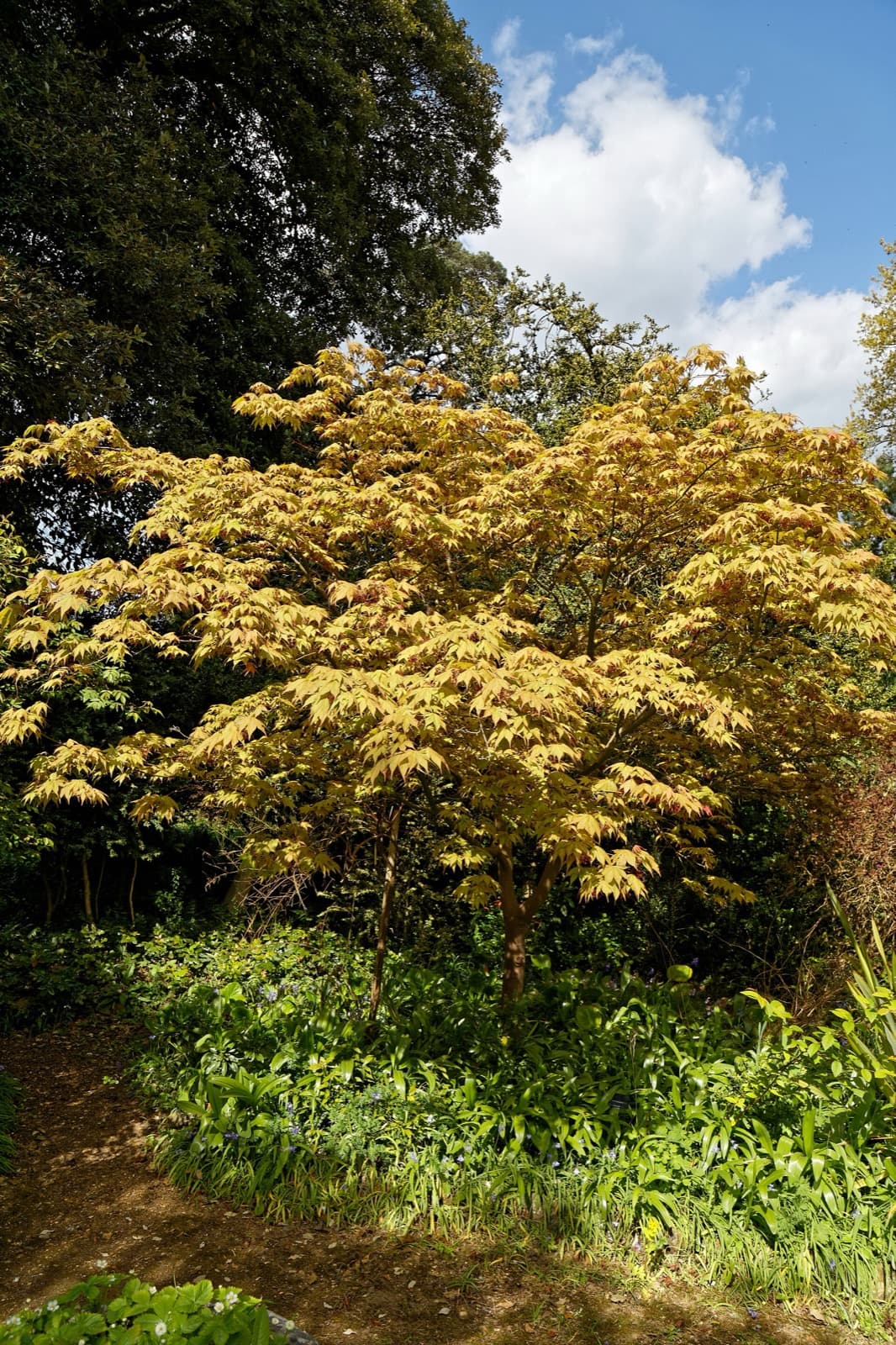
Acer palmatum is a small to medium deciduous tree native to Japan, Korea, and China, grown worldwide for its variable leaf form and reliable multi-season appeal. Gardeners prize it for delicate, deeply lobed spring foliage, layered architectural branch structure in summer, and intense autumn color ranging from gold to deep crimson. Hundreds of cultivars exist spanning weeping, upright, and mounding habits, with leaf lobes ranging from five to nine.
Grows best in moist, well-drained, slightly acidic soil. In zones 7 and warmer, afternoon shade is important to prevent leaf scorch; in cooler zones, full sun is tolerated. New growth emerges early and is frost-tender, so avoid siting in frost pockets or wind tunnels. A 3-inch layer of organic mulch over the root zone is one of the highest-value cultural practices - it retains moisture, moderates soil temperature, and protects shallow feeder roots. Avoid soil compaction, grade changes, and mechanical damage near the trunk.
In the Minoo area of Osaka, Japan, young Acer palmatum leaves are salt-cured and deep-fried as momiji tempura, a food tradition documented to over a thousand years old.
Verticillium Wilt
Lower leaves yellow and wilt, often on one side of the plant, with brown streaking in the stem and crown tissue when cut open. Plants are stunted and decline over the season.
Remove and destroy affected plants. Avoid planting in soil that has grown infected tomatoes, peppers, or other susceptible crops. Rotate beds and improve drainage; there is no cure once a plant is infected.
Maple Anthracnose
Irregular brown or tan spots that follow and spread between leaf veins, giving leaves a scorched or blighted appearance. Severe infections cause premature leaf drop. In wet springs, small cankers may appear on young shoots.
Rake and remove fallen leaves each autumn to reduce overwintering fungal spores. Avoid overhead irrigation. Apply a copper-based fungicide at bud break during wet spring conditions. Prune selectively to improve canopy airflow.
Powdery mildew
White or grey powdery coating on leaves - usually starting on older growth in humid conditions or when nights cool.
Improve air circulation by thinning plants. Apply neem oil or potassium bicarbonate spray at first sign. Avoid overhead watering.
Phytophthora Root Rot
Wilting despite moist soil, yellowing leaves, stunted growth, and dark, decayed roots and crown tissue. Vines may collapse during hot weather.
Plant in well-draining soil and avoid waterlogging. Remove and destroy affected vines. Improve drainage with raised beds or amended soil and avoid overwatering.
Botryosphaeria Canker
Dark, sunken cankers on stems and major branches, most often occurring after drought stress or mechanical wounding. Bark peeled back from affected areas reveals brown, discolored wood beneath. Branch tips wilt and die back progressively inward.
Prune infected branches at least 6 inches below the visible canker margin using sterilized tools, and dispose of all cuttings away from the garden. Reduce plant stress by maintaining consistent irrigation during dry periods and avoiding bark wounds during maintenance. No curative fungicide is available; keeping plants vigorous is the primary preventive strategy.
Maple Tar Spot
Pale yellow-green spots appear on upper leaf surfaces in early summer. By late summer they enlarge into raised, glossy black blotches up to 1 in across, closely resembling tar splashes. Caused by Rhytisma acerinum and related species.
Rake and destroy all fallen leaves in autumn to eliminate overwintering spores. Fungicide applications are rarely justified on established trees. Improve air circulation through selective pruning where practical.