
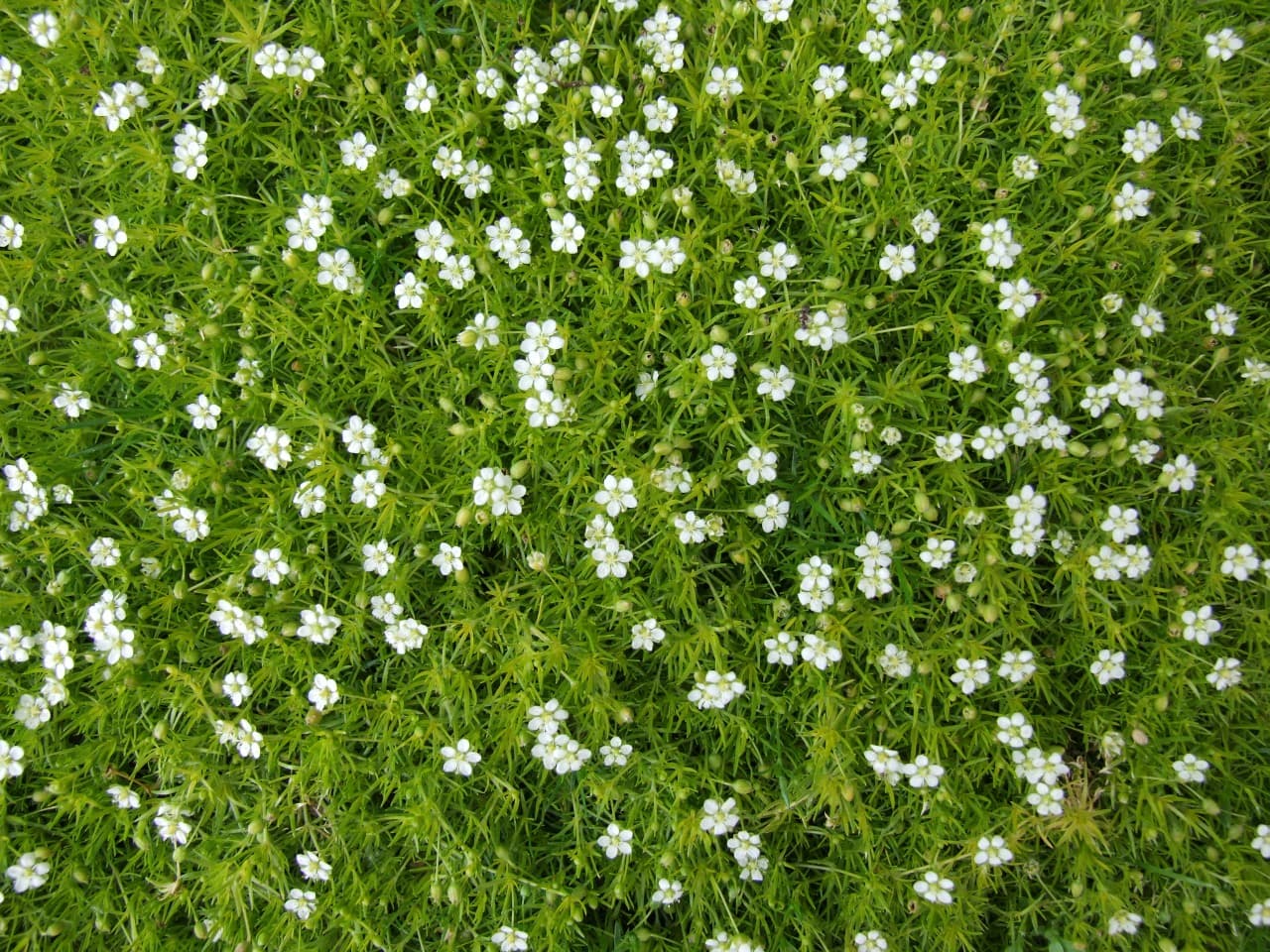
Irish moss isn't a true moss but a low mat-forming perennial that reads like one - bright green, dense, and springy underfoot, studded with tiny white star-shaped flowers in early summer. It's a favorite for filling cracks between pavers and stepping stones, edging rock gardens, and standing in for lawn in small no-mow areas.
It needs steadier moisture than most ground covers of its type and will brown out in a dry spell, so it suits a spot with regular watering rather than a drought-prone bed. Good drainage still matters - waterlogged soil rots the mat as readily as drought scorches it.
Root rot
Plants wilt, yellow, and stunt even in moist soil; lower stems and roots turn brown, soft, and mushy and the plant may collapse. Most common in heavy, wet, or poorly drained ground.
Improve drainage and stop overwatering, and never plant too deep. Lift and destroy badly affected plants along with the soil around the roots. Grow in raised or free-draining beds to prevent it returning.
Crown Rot
Lower leaves yellow and wilt; the base of the rosette turns brown and soft, sometimes with white fungal threads at the soil line. Plants collapse in wet conditions.
Remove and destroy affected plants. Improve drainage and avoid overhead watering. Do not mulch directly against the crown. Space plants for airflow and avoid replanting in the same wet spot.