
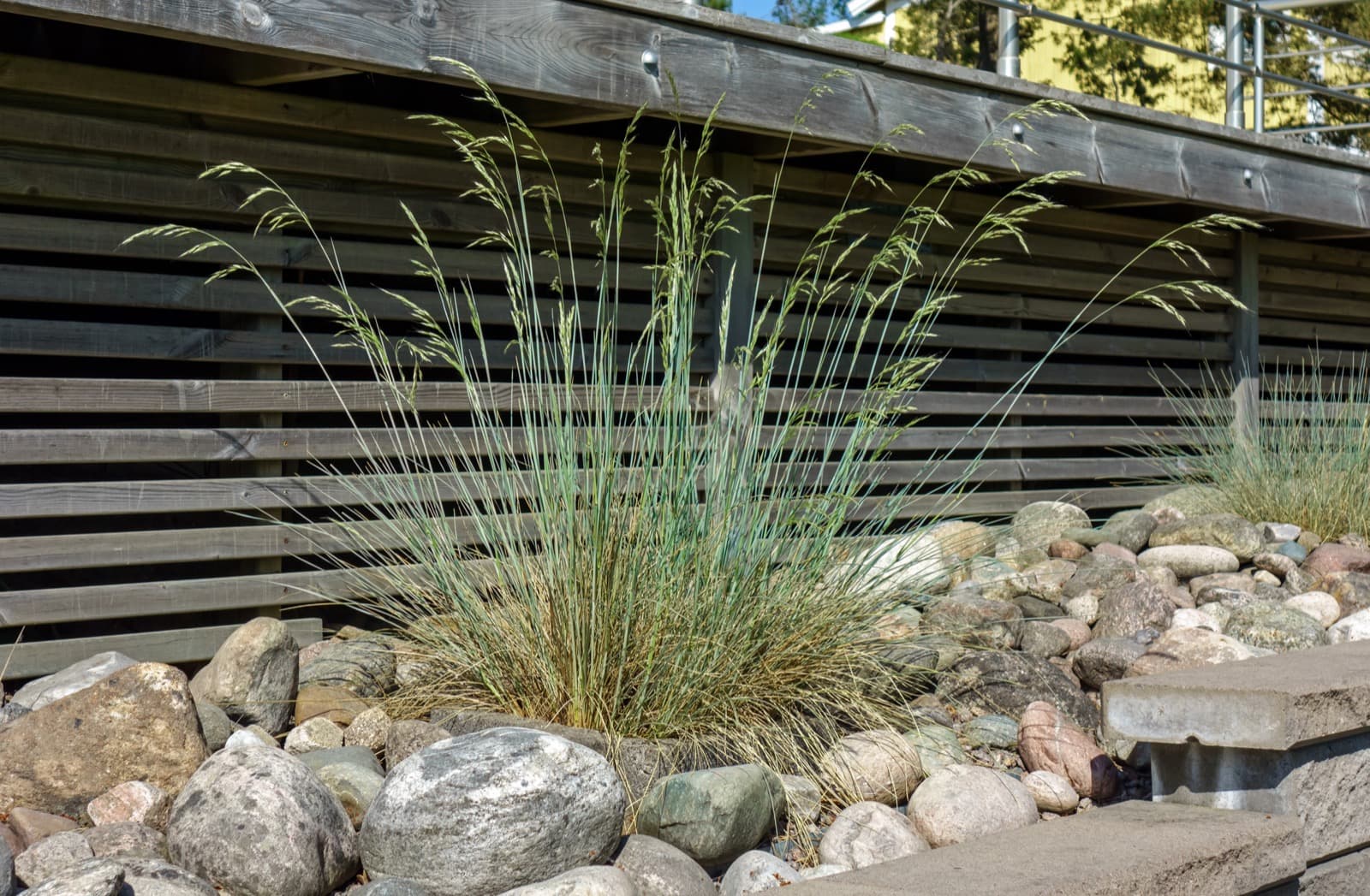
Blue fescue is a compact, clump-forming evergreen ornamental grass native to rocky and alpine habitats in Europe. Its fine, blue-silver foliage is among the most distinctive of any cool-season grass, and the color is strongest in full sun on lean soil. Cultivars such as 'Elijah Blue' and 'Siskiyou Blue' hold color reliably through the growing season.
Good drainage is the single most critical requirement. Rich or consistently moist soils cause foliage to flop and fade toward green, and wet winters or humid summers invite crown rot. Clumps tend to die out at the center after three to four years; lift and divide them in early spring, replanting only the vigorous outer portions. In zones 7–8 the grass often goes semi-dormant during peak summer heat, and soil pH between 5.5 and 7.5 is well tolerated.
Blue fescue is well suited to dry slopes for erosion control, gravel and rock gardens, and path edging. Its fine, mounding form creates strong textural contrast with broad-leaved perennials, succulents, and dark-stemmed shrubs, and it holds structure through winter where it remains evergreen.
Crown Rot
Lower leaves yellow and wilt; the base of the rosette turns brown and soft, sometimes with white fungal threads at the soil line. Plants collapse in wet conditions.
Remove and destroy affected plants. Improve drainage and avoid overhead watering. Do not mulch directly against the crown. Space plants for airflow and avoid replanting in the same wet spot.
Root rot
Plants wilt, yellow, and stunt even in moist soil; lower stems and roots turn brown, soft, and mushy and the plant may collapse. Most common in heavy, wet, or poorly drained ground.
Improve drainage and stop overwatering, and never plant too deep. Lift and destroy badly affected plants along with the soil around the roots. Grow in raised or free-draining beds to prevent it returning.
Rust
Orange to brown raised pustules on the undersides of leaves, with yellow spotting on the upper surface. Heavy infections cause leaves to yellow and drop.
Remove and destroy infected leaves. Avoid overhead watering and improve air circulation. Apply a sulfur or copper-based fungicide if it spreads. Clear plant debris in fall.