
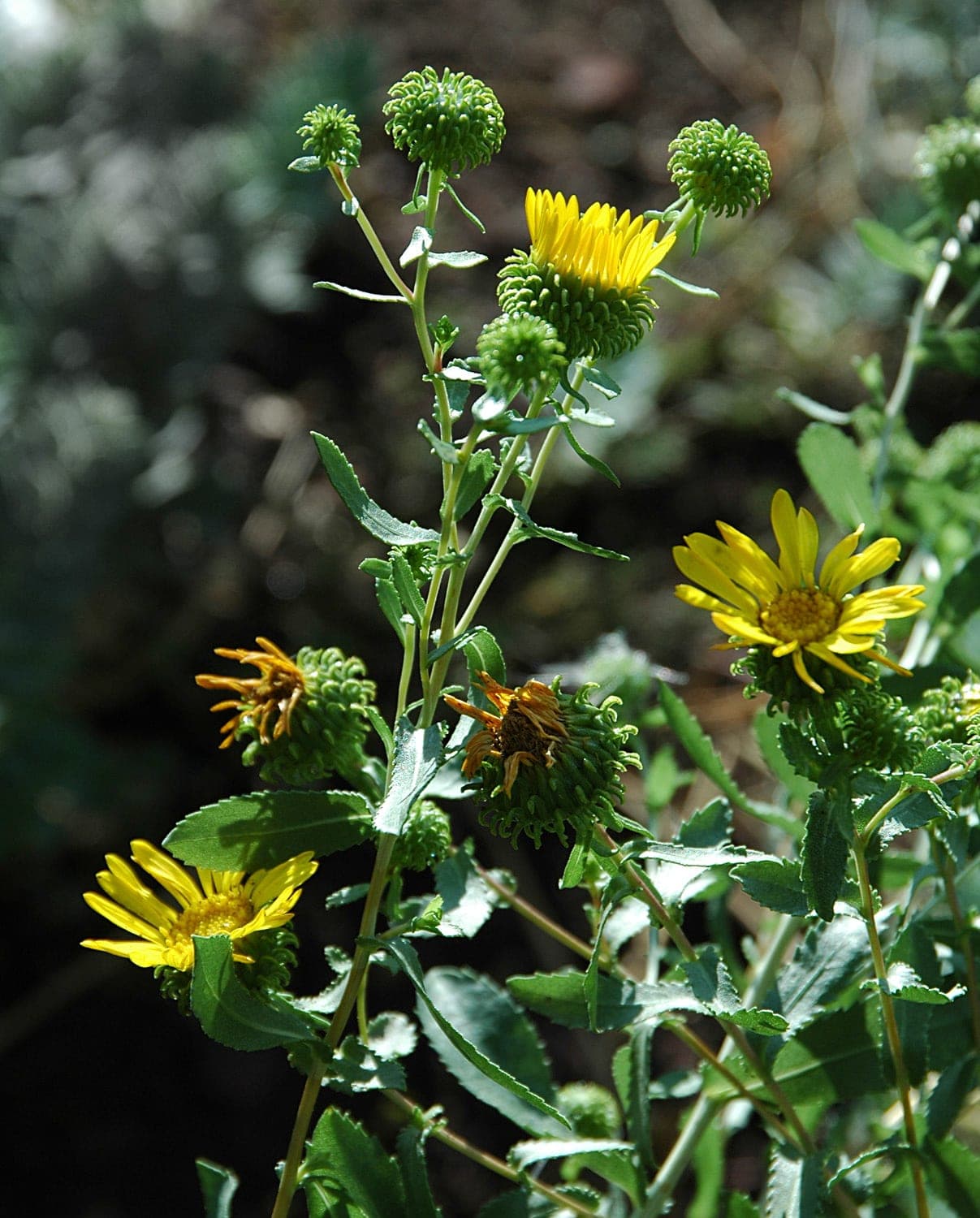
Grindelia squarrosa is a native North American biennial or short-lived perennial in the daisy family, found naturally across the Great Plains and into the intermountain West. It produces yellow flower heads on branching stems from midsummer through fall, with distinctive sticky, reflexed bracts beneath each head - the feature that gives it its common name. It tolerates poor, dry, and disturbed ground where most other flowering plants fail, making it useful in xeric borders, dry meadows, and prairie-style plantings.
Plants typically form a basal rosette in their first year and flower in their second. They self-seed freely and can persist in a planting without replanting. Excellent drainage is essential; plants in heavy, wet soils decline quickly. The species tolerates alkaline and saline soils, extending its usefulness to roadside and disturbed-site reclamation. Cut stalks before seed set if spread needs to be managed.
Numerous Native American nations used Grindelia squarrosa as an expectorant and respiratory remedy for bronchitis, asthma, and coughs. The sticky resin on the flower heads was applied topically to relieve inflammation from poison ivy and poison oak contact. The plant contains grindeline alkaloids and terpenoid resins that have been investigated for antimicrobial and bronchodilatory activity.
Ecoregions:Northern ForestsNorthwestern Forested MountainsEastern Temperate ForestsGreat PlainsNorth American DesertsTemperate Sierras
Powdery mildew
White or grey powdery coating on leaves - usually starting on older growth in humid conditions or when nights cool.
Improve air circulation by thinning plants. Apply neem oil or potassium bicarbonate spray at first sign. Avoid overhead watering.
Rust
Orange to brown raised pustules on the undersides of leaves, with yellow spotting on the upper surface. Heavy infections cause leaves to yellow and drop.
Remove and destroy infected leaves. Avoid overhead watering and improve air circulation. Apply a sulfur or copper-based fungicide if it spreads. Clear plant debris in fall.
Root rot
Plants wilt, yellow, and stunt even in moist soil; lower stems and roots turn brown, soft, and mushy and the plant may collapse. Most common in heavy, wet, or poorly drained ground.
Improve drainage and stop overwatering, and never plant too deep. Lift and destroy badly affected plants along with the soil around the roots. Grow in raised or free-draining beds to prevent it returning.