
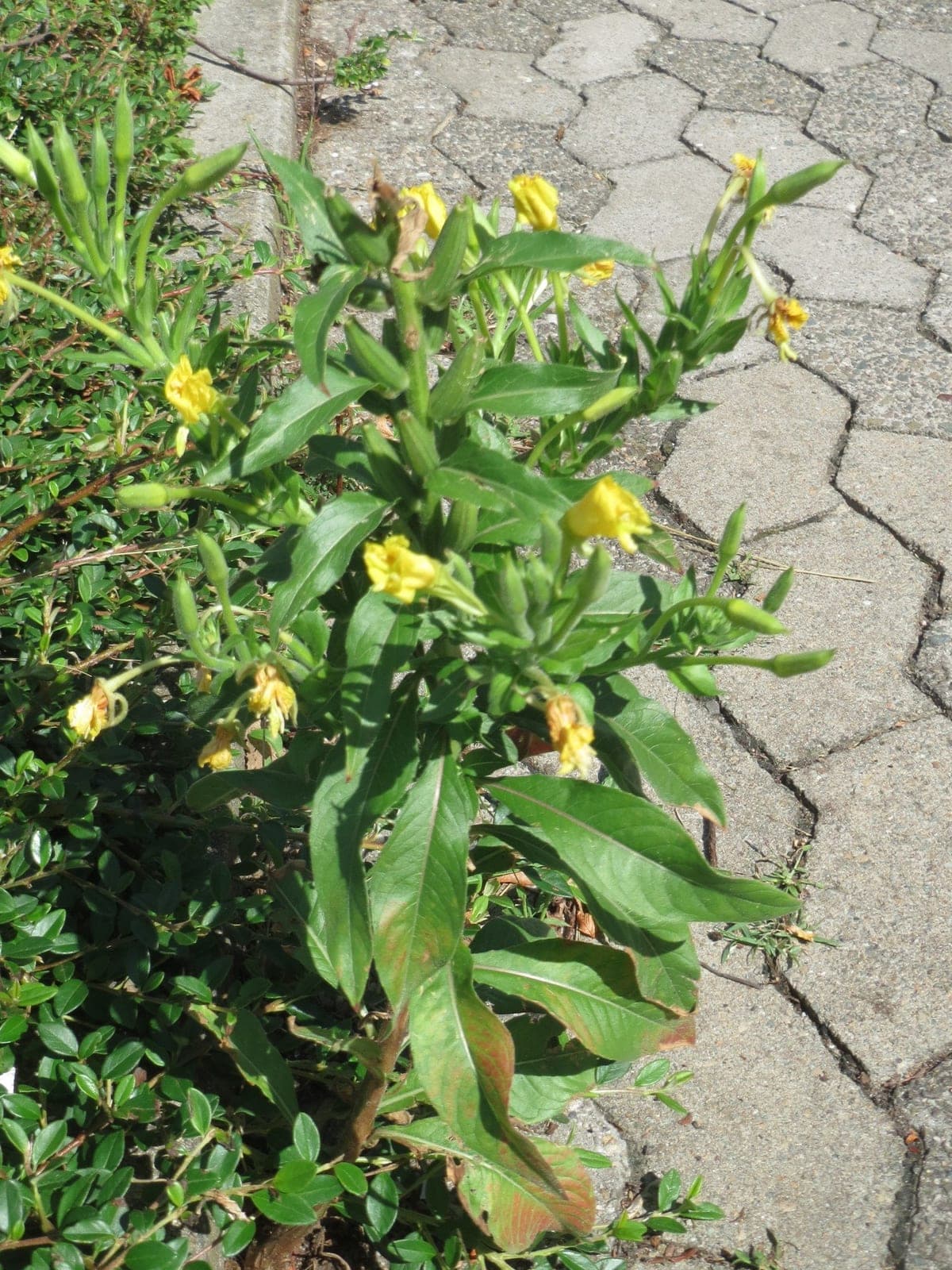
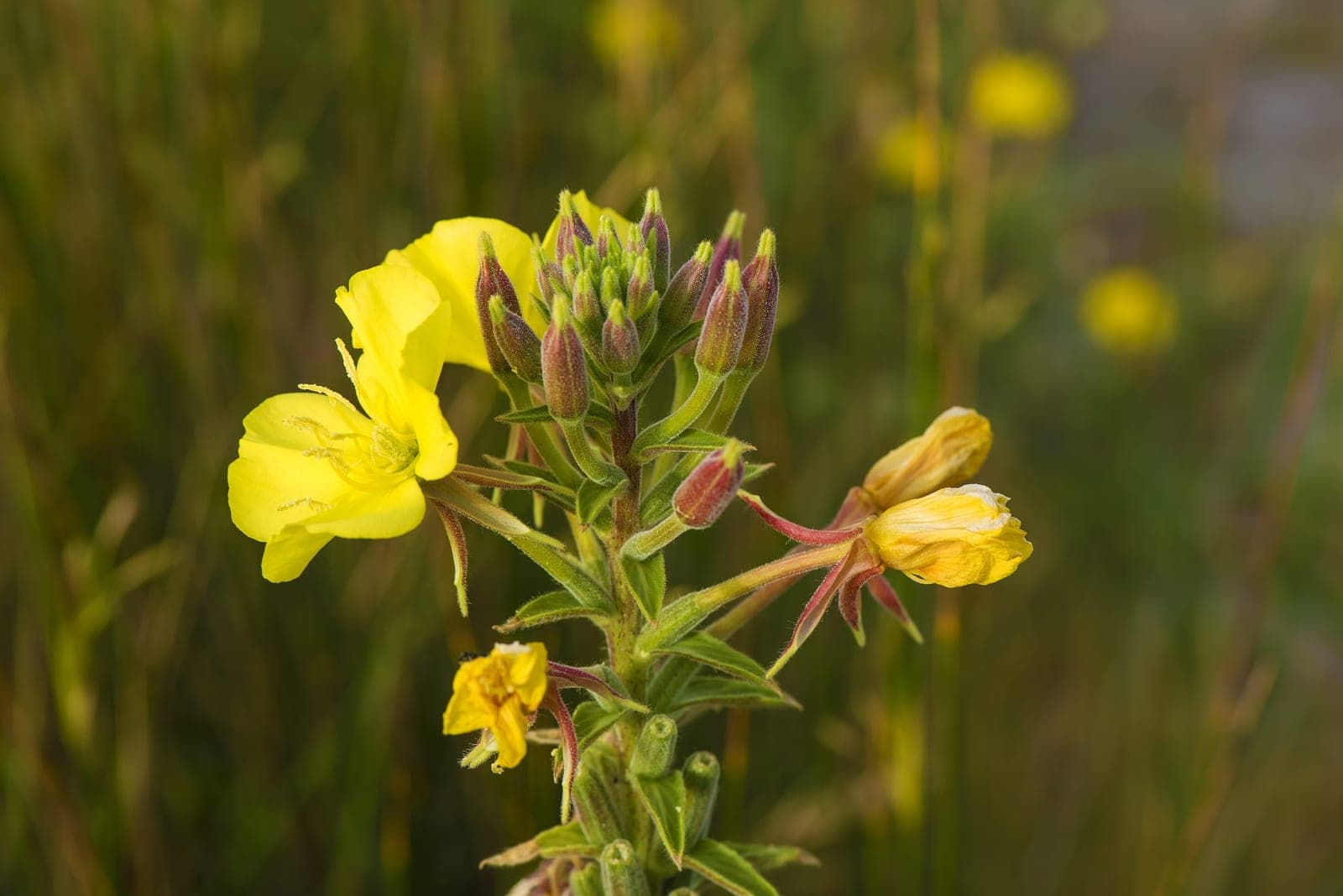
Oenothera biennis is a biennial native to eastern and central North America, ranging from Newfoundland to Florida and Texas. It forms a low basal rosette in its first year, then sends up a tall leafy stalk bearing bright yellow, four-petaled flowers in its second. Flowers open at dusk, persist through the following morning, and attract hawkmoths and long-tongued bees. It suits meadow plantings, informal borders, and cottage gardens where self-seeding is tolerated.
The plant thrives in poor, dry, sandy soil with little or no fertilization; rich soil produces lax stems and excess foliage at the expense of seed set. It self-seeds prolifically - removing most spent stalks before seeds disperse keeps spread in check, while leaving a few standing provides seed for next year and winter forage for finches. Prefers well-drained, lean soil at near-neutral pH and full sun but adapts to light shade. Avoid heavy mulching over first-year rosettes, which promotes crown rot.
The seeds are the commercial source of evening primrose oil, prized for its high gamma-linolenic acid (GLA) content. Clinical research has investigated EPO for atopic eczema, cyclical mastalgia, and premenstrual symptoms. Native peoples across North America boiled the young roots - which have a mild, parsnip-like flavor - and used young leaves as cooked greens. Flowers are edible and can be added to salads.
Ecoregions:Northern ForestsMarine West Coast ForestEastern Temperate ForestsGreat Plains
Powdery mildew
White or grey powdery coating on leaves - usually starting on older growth in humid conditions or when nights cool.
Improve air circulation by thinning plants. Apply neem oil or potassium bicarbonate spray at first sign. Avoid overhead watering.
Fungal leaf spot
Brown or purplish spots on the leaves, often ringed with a yellow halo, that spread and merge in warm, humid, or wet weather; heavily spotted leaves yellow and drop early.
Pick off spotted leaves and clear fallen debris to remove overwintering spores. Improve air circulation by thinning, and water at the base so foliage dries quickly. If it persists, apply a copper- or sulfur-based fungicide at the first sign.
Root rot
Plants wilt, yellow, and stunt even in moist soil; lower stems and roots turn brown, soft, and mushy and the plant may collapse. Most common in heavy, wet, or poorly drained ground.
Improve drainage and stop overwatering, and never plant too deep. Lift and destroy badly affected plants along with the soil around the roots. Grow in raised or free-draining beds to prevent it returning.
Damping Off
Seedlings collapse at the soil line with thin, water-soaked stems; seeds may fail to emerge or rot before sprouting.
Sow in well-draining mix, avoid overwatering, and ensure good airflow. Remove affected seedlings and let the surface dry between waterings.