
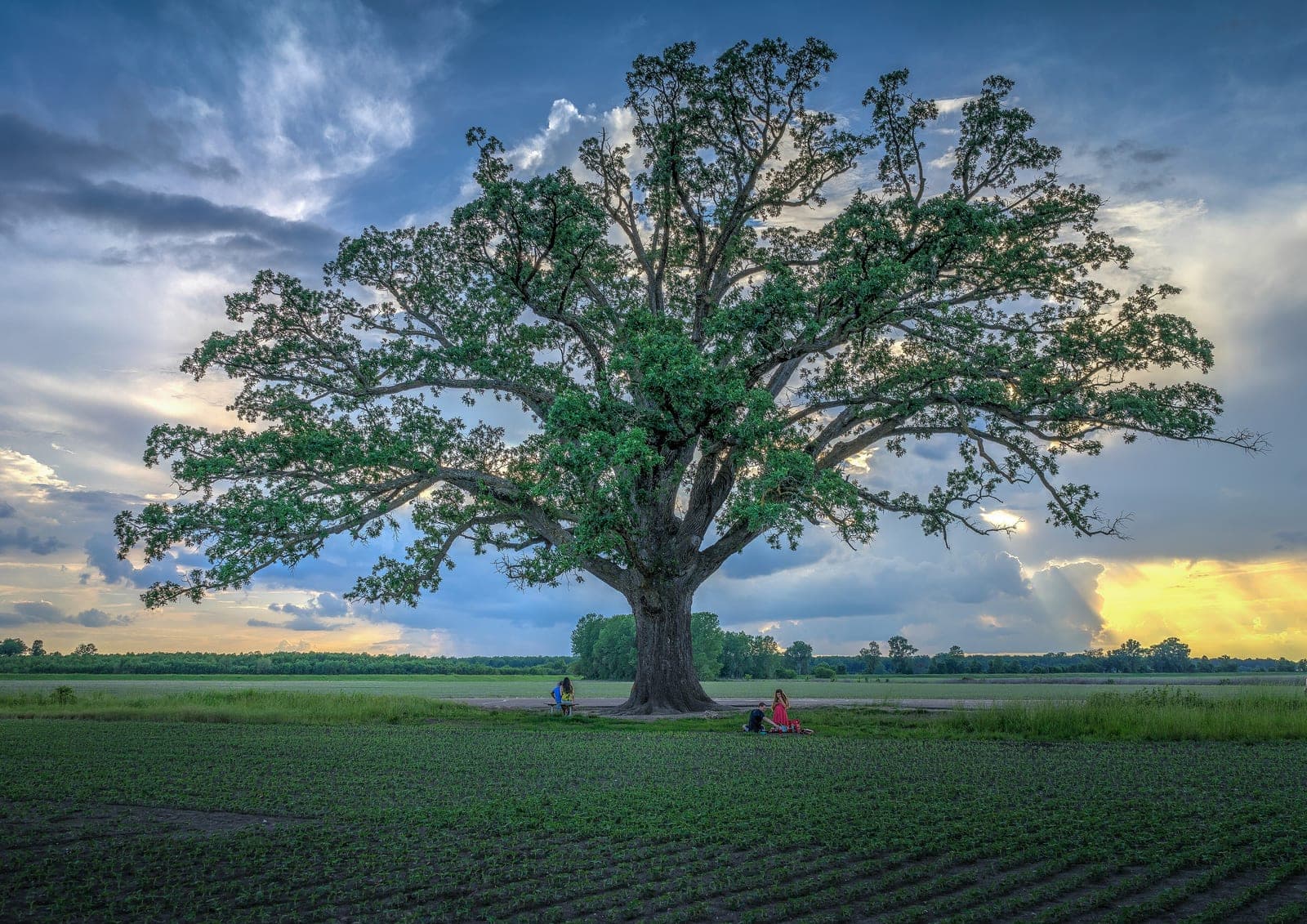
Bur oak is a massive, slow-growing native tree of central and eastern North America, recognized by its deeply furrowed corky bark, broadly lobed leaves, and the largest acorns produced by any North American oak. It tolerates drought, compacted clay, seasonal flooding, and extreme cold better than nearly any other oak, making it one of the most adaptable large shade trees for difficult sites.
The thick bark is an adaptation to the prairie fires that historically maintained the oak savanna ecosystem. Trees establish slowly but can exceed 400 years in age, eventually forming a broad, rounded canopy 60–80 feet tall. Acorns ripen in a single growing season, unlike red-group oaks that require two years, and carry lower tannin levels than most native oaks. Bur oak supports hundreds of native insect species and is a keystone species for oak savanna and eastern tallgrass prairie restoration plantings. Do not prune from April through October - open wounds during this period attract the nitidulid beetles that vector oak wilt.
Native peoples across the Great Plains and Midwest leached and ground bur oak acorns into flour as a staple food. White oak bark contains condensed tannins used traditionally as an astringent for sore throats, minor skin inflammation, and wound care; this use is shared across the white oak group.
Ecoregions:Northern ForestsNorthwestern Forested MountainsEastern Temperate ForestsGreat Plains
Oak Wilt
Leaves wilt and brown starting at branch tips, progressing rapidly toward the trunk. Discoloration may appear as brown or yellow veining across the leaf blade. Individual branches or the entire canopy can defoliate within days to weeks. A cross-section of affected branches reveals dark streaking in the outer sapwood ring.
Contact a certified arborist for trunk injection of propiconazole fungicide, which is most effective as a preventive measure or at earliest symptom onset. Sever root grafts between infected and neighboring live oaks by cutting a trench 3–4 ft deep between trees to prevent fungal spread through connected root systems. Remove and immediately chip, burn, or bury all infected wood; do not store as firewood. Avoid any pruning from March through July when nitidulid sap-feeding beetles that carry the pathogen are most active. Apply wound sealant to all cuts made outside this window within minutes of cutting.
Oak Anthracnose
Brown, irregular dead areas along and between leaf veins appearing soon after bud break, typically in cool, wet springs. Affected leaves curl, wither, and drop prematurely. Severe or repeated infections cause twig dieback in the lower and interior crown.
Rake and dispose of all fallen leaves in autumn to reduce overwintering inoculum. Prune affected twigs back to healthy wood during dry winter weather and dispose of the material. Apply a copper-based or mancozeb fungicide at bud break for young trees or those with a history of severe annual infection. Healthy established trees typically recover without chemical treatment and produce a second flush of foliage.
Hypoxylon Canker
Outer bark sloughs off stressed limbs to reveal gray, tan, or black crusty fungal stromata on the exposed wood surface; affected branches die back progressively and cross-sections of sapwood show brown streaking.
No effective chemical control exists. Remove affected limbs promptly and dispose of all infected wood off-site - do not chip or compost it on the property. Reduce predisposing stress by providing deep irrigation during drought and avoiding mechanical injury to roots and bark. The fungus is opportunistic; healthy, unstressed trees resist infection.
Powdery mildew
White or grey powdery coating on leaves - usually starting on older growth in humid conditions or when nights cool.
Improve air circulation by thinning plants. Apply neem oil or potassium bicarbonate spray at first sign. Avoid overhead watering.