
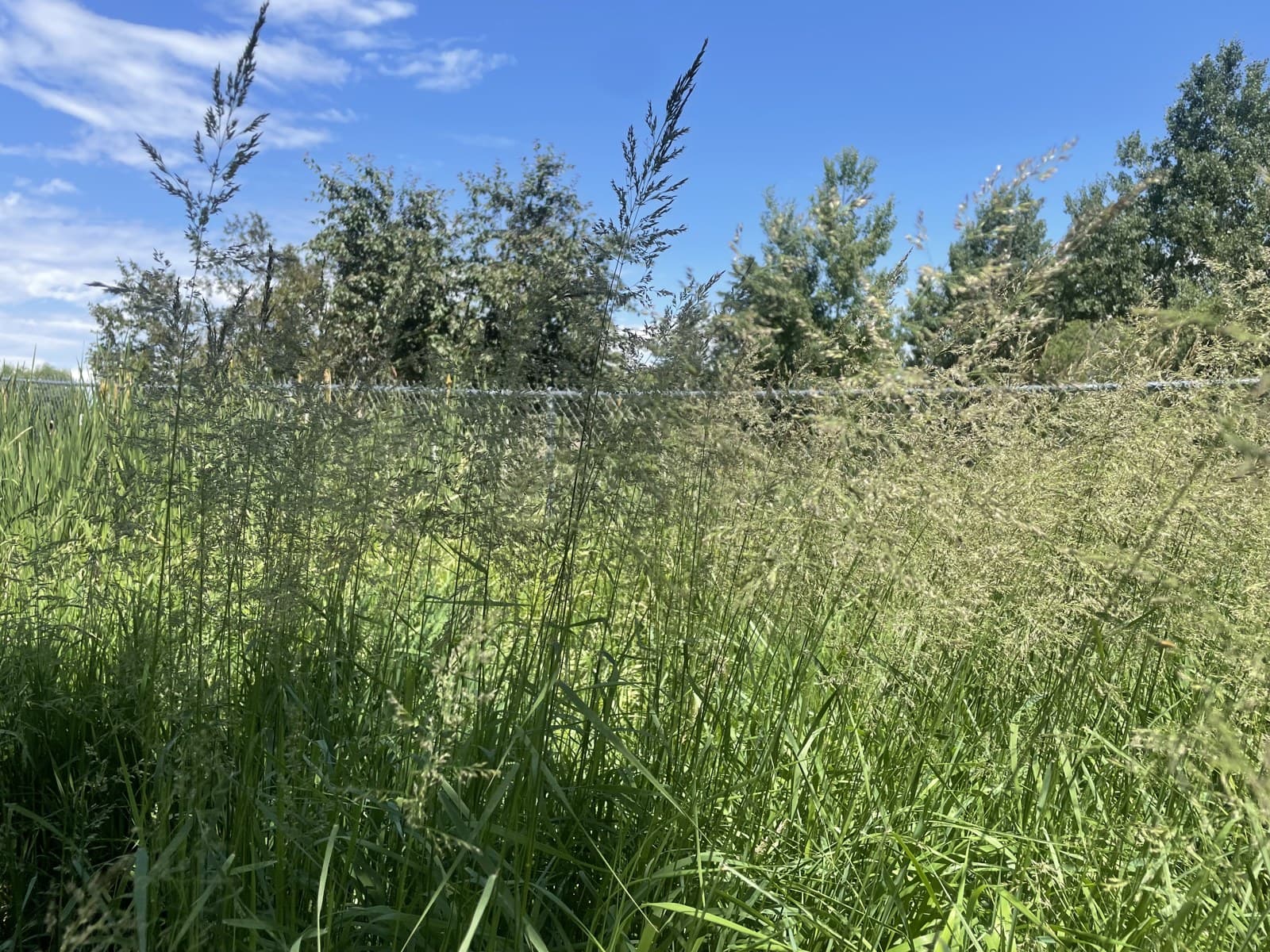
Calamagrostis canadensis is a native cool-season grass found across North American wetlands, moist meadows, marshes, and streambanks from Alaska through the continental US into northern Mexico. It forms upright clumps and produces airy, purplish-bronze seed heads in summer that fade to straw through fall. It is a strong candidate for rain gardens, pond edges, retention basins, and large-scale naturalized plantings in wet or seasonally flooded areas.
This grass spreads by both rhizomes and prolific self-seeding. In confined spaces it can become invasive; in restoration plantings it colonizes disturbed wet ground quickly and outcompetes weedy species. It tolerates seasonal flooding, compacted clay, and saturated soil where most ornamental grasses fail. In formal settings, annual division keeps spread in check. Cold tolerance to zone 2a makes it one of the hardiest native grasses available.
Dense bluejoint stands provide critical nesting cover and seed forage for sparrows, bobolinks, wrens, and waterfowl. Indigenous peoples across its range used the stems for thatching and basket weaving. It is widely specified in wetland mitigation and ecological restoration projects for its ability to rapidly stabilize saturated soils.
Ecoregions:TundraTaigaNorthern ForestsNorthwestern Forested MountainsMarine West Coast ForestEastern Temperate ForestsGreat PlainsNorth American Deserts
Rust
Orange to brown raised pustules on the undersides of leaves, with yellow spotting on the upper surface. Heavy infections cause leaves to yellow and drop.
Remove and destroy infected leaves. Avoid overhead watering and improve air circulation. Apply a sulfur or copper-based fungicide if it spreads. Clear plant debris in fall.
Ergot
Dark purple-black, hard, elongated sclerotia replace individual seeds within the seed head. Affected heads carry a mix of normal seeds and conspicuous ergots roughly two to three times the size of healthy kernels.
Remove and bag infected seed heads before sclerotia fall to the soil. Do not collect or save seed from infected plants. Avoid siting Canada wild rye in persistently wet or poorly ventilated areas where infection pressure increases. No fungicide treatment is practical in landscape settings.
Fungal leaf spot
Brown or purplish spots on the leaves, often ringed with a yellow halo, that spread and merge in warm, humid, or wet weather; heavily spotted leaves yellow and drop early.
Pick off spotted leaves and clear fallen debris to remove overwintering spores. Improve air circulation by thinning, and water at the base so foliage dries quickly. If it persists, apply a copper- or sulfur-based fungicide at the first sign.