
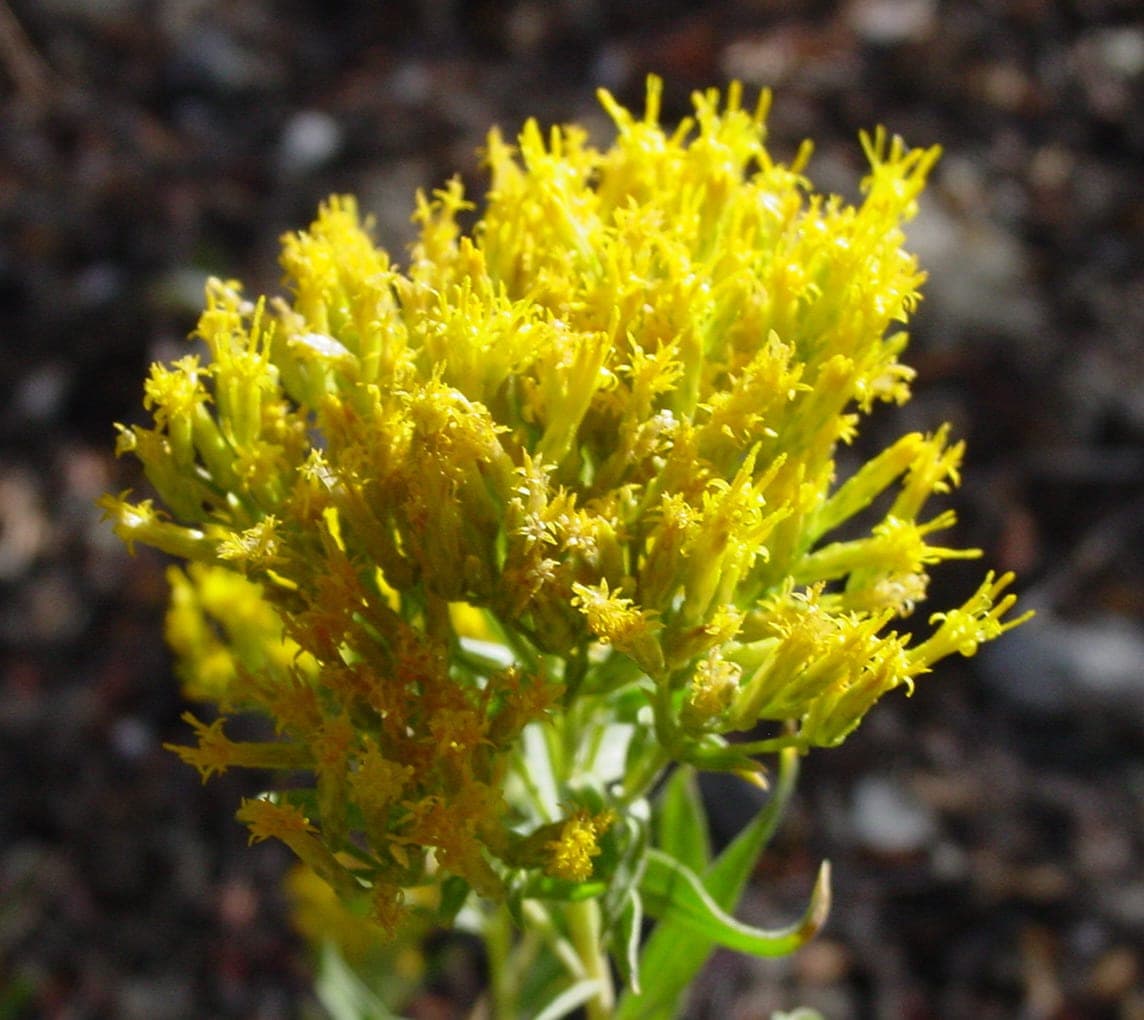
Yellow rabbitbrush is a low, spreading native shrub of the western North American intermountain region, found across Great Basin sagebrush steppe, desert scrub, and open pinyon-juniper woodland. It produces dense clusters of small bright yellow flower heads in late summer through fall, making it one of the most reliable late-season nectar sources for native bees, butterflies, and other pollinators before winter.
Built for harsh, dry conditions, it tolerates alkaline, sandy, and gravelly soils with very low organic matter and needs minimal water once established. It is widely used in restoration seeding of disturbed western rangelands and performs well for erosion control on slopes and roadsides. Avoid heavy clay or consistently moist soils, which rapidly cause root rot. Cold-hardiness is strong; plants enter full dormancy and withstand well-below-freezing temperatures without damage.
Some Native American peoples, including Navajo groups, used yellow rabbitbrush to treat coughs and colds. The flowers yield a bright yellow dye and were used for fiber and basketry coloring.
Ecoregions:Northwestern Forested MountainsGreat PlainsNorth American DesertsMediterranean California
Root rot
Plants wilt, yellow, and stunt even in moist soil; lower stems and roots turn brown, soft, and mushy and the plant may collapse. Most common in heavy, wet, or poorly drained ground.
Improve drainage and stop overwatering, and never plant too deep. Lift and destroy badly affected plants along with the soil around the roots. Grow in raised or free-draining beds to prevent it returning.
Powdery mildew
White or grey powdery coating on leaves - usually starting on older growth in humid conditions or when nights cool.
Improve air circulation by thinning plants. Apply neem oil or potassium bicarbonate spray at first sign. Avoid overhead watering.