
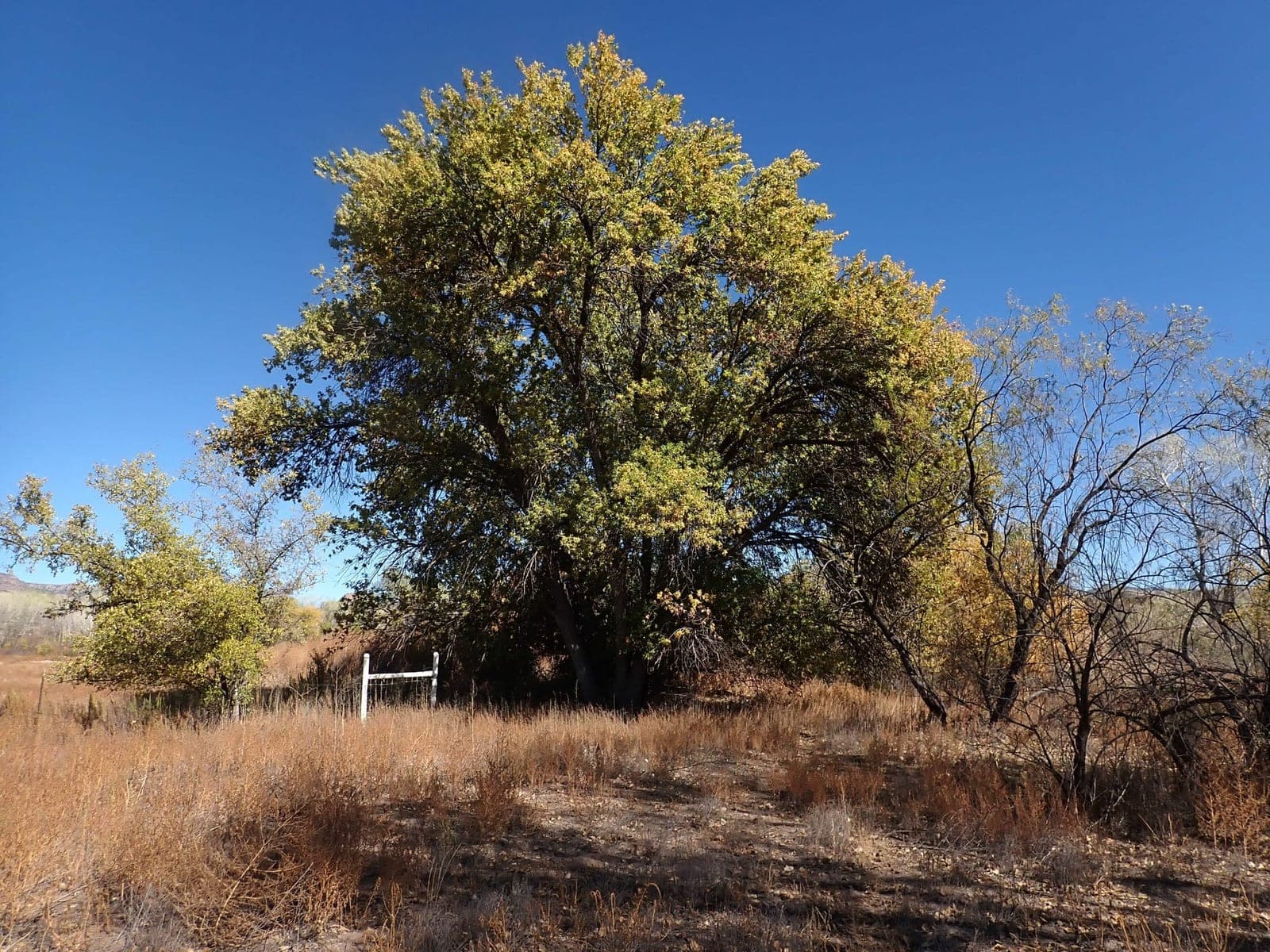
Velvet ash (Fraxinus velutina) is a medium to large deciduous tree native to the desert Southwest, ranging from southern California east to Texas and south into northern Mexico. It produces pinnately compound leaves with distinctly velvety undersides and delivers reliable yellow to purple fall color - one of the few deciduous trees that performs this well in hot, dry climates.
The species grows at a moderate to fast pace and tolerates alkaline soils, clay, and reflected heat from pavement, making it a practical choice for urban and suburban desert landscapes. It performs best in a pH range of 6.0–8.0. Supplemental irrigation during the first two to three growing seasons speeds establishment; once rooted deeply, it survives on significantly less water. Basal suckering is common and requires routine removal. Seed production can be heavy and volunteers may appear in irrigated beds nearby.
As a native canopy tree, velvet ash provides nesting cover and foraging habitat across a region where broadleaf deciduous trees are scarce. Planted on the west or southwest exposure of a structure, its dense summer canopy meaningfully reduces cooling loads.
Ecoregions:Great PlainsNorth American DesertsMediterranean CaliforniaSouthern Semi-Arid HighlandsTemperate Sierras
Verticillium Wilt
Lower leaves yellow and wilt, often on one side of the plant, with brown streaking in the stem and crown tissue when cut open. Plants are stunted and decline over the season.
Remove and destroy affected plants. Avoid planting in soil that has grown infected tomatoes, peppers, or other susceptible crops. Rotate beds and improve drainage; there is no cure once a plant is infected.
Fungal leaf spot
Brown or purplish spots on the leaves, often ringed with a yellow halo, that spread and merge in warm, humid, or wet weather; heavily spotted leaves yellow and drop early.
Pick off spotted leaves and clear fallen debris to remove overwintering spores. Improve air circulation by thinning, and water at the base so foliage dries quickly. If it persists, apply a copper- or sulfur-based fungicide at the first sign.
Texas Root Rot
Sudden wilting of branches or the entire canopy, often following a wet period. White cottony fungal mats develop on infected roots. Wood at the crown appears dark and water-soaked. Decline can progress to tree death within weeks.
No effective chemical cure exists. Ensure excellent drainage and avoid overwatering. Remove and destroy all infected plant material. Avoid replanting susceptible species in the same soil for several years.
Armillaria Root Rot
Thinning, yellowing canopy with progressive dieback; white, fan-shaped mycelial mats visible beneath bark at or just below the soil line; honey-colored mushroom clusters appearing at the trunk base or on surface roots in autumn.
No chemical cure exists. Improve drainage and avoid any injury to roots or trunk. Remove severely infected trees along with as much root material as possible. Do not replant susceptible species in the same spot.
Cytospora Canker
White or blue-white pitch masses ooze from bark on lower branches and the trunk. Affected branches die back progressively from the tip inward; bark beneath the resin is discolored brown and may have a resinous, sunken appearance.
Prune infected branches well below the canker margin into healthy wood and destroy all cuttings. Sterilize pruning tools with 70% isopropyl alcohol between each cut. No effective fungicide is available; prevent recurrence by avoiding drought stress, soil compaction, and mechanical bark injury.