
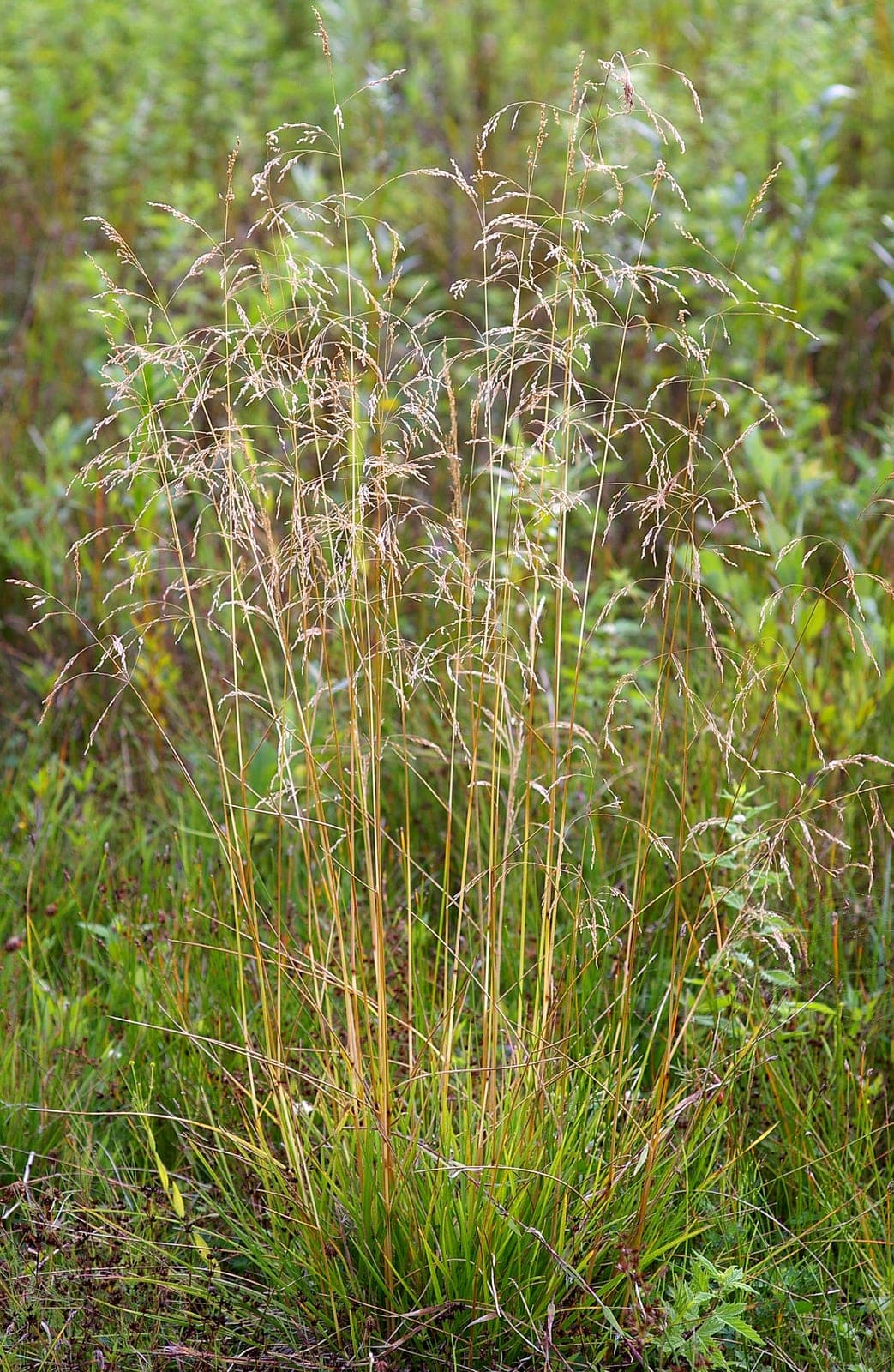
Tufted hairgrass is a cool-season perennial grass that forms dense, low, dark-green tufts with a circumboreal native range spanning North America, Eurasia, and parts of the Southern Hemisphere. One of the few ornamental grasses that performs reliably in partial shade, it fits woodland edges, rain gardens, and streamside plantings where other grasses fail. Airy flower stems rise 18–24 inches above the foliage in early summer, turn golden as seeds ripen, and persist as structural interest through winter.
This is a cool-season species: growth is most vigorous in spring and fall, and foliage may yellow or brown in midsummer heat in zones 7 and warmer before rebounding in cooler weather. It tolerates heavier, wetter soils than most ornamental grasses and performs best at a soil pH of 4.5–6.5. Mulch the root zone to maintain moisture and buffer soil temperature. Clumps eventually hollow out at the center; divide every 3–4 years in early spring to restore vigor. Cut back hard before new shoots emerge.
Ecoregions:TundraTaigaHudson PlainNorthern ForestsNorthwestern Forested MountainsMarine West Coast ForestEastern Temperate ForestsGreat PlainsNorth American DesertsMediterranean California
Rust
Orange to brown raised pustules on the undersides of leaves, with yellow spotting on the upper surface. Heavy infections cause leaves to yellow and drop.
Remove and destroy infected leaves. Avoid overhead watering and improve air circulation. Apply a sulfur or copper-based fungicide if it spreads. Clear plant debris in fall.
Crown Rot
Lower leaves yellow and wilt; the base of the rosette turns brown and soft, sometimes with white fungal threads at the soil line. Plants collapse in wet conditions.
Remove and destroy affected plants. Improve drainage and avoid overhead watering. Do not mulch directly against the crown. Space plants for airflow and avoid replanting in the same wet spot.
Fungal leaf spot
Brown or purplish spots on the leaves, often ringed with a yellow halo, that spread and merge in warm, humid, or wet weather; heavily spotted leaves yellow and drop early.
Pick off spotted leaves and clear fallen debris to remove overwintering spores. Improve air circulation by thinning, and water at the base so foliage dries quickly. If it persists, apply a copper- or sulfur-based fungicide at the first sign.