
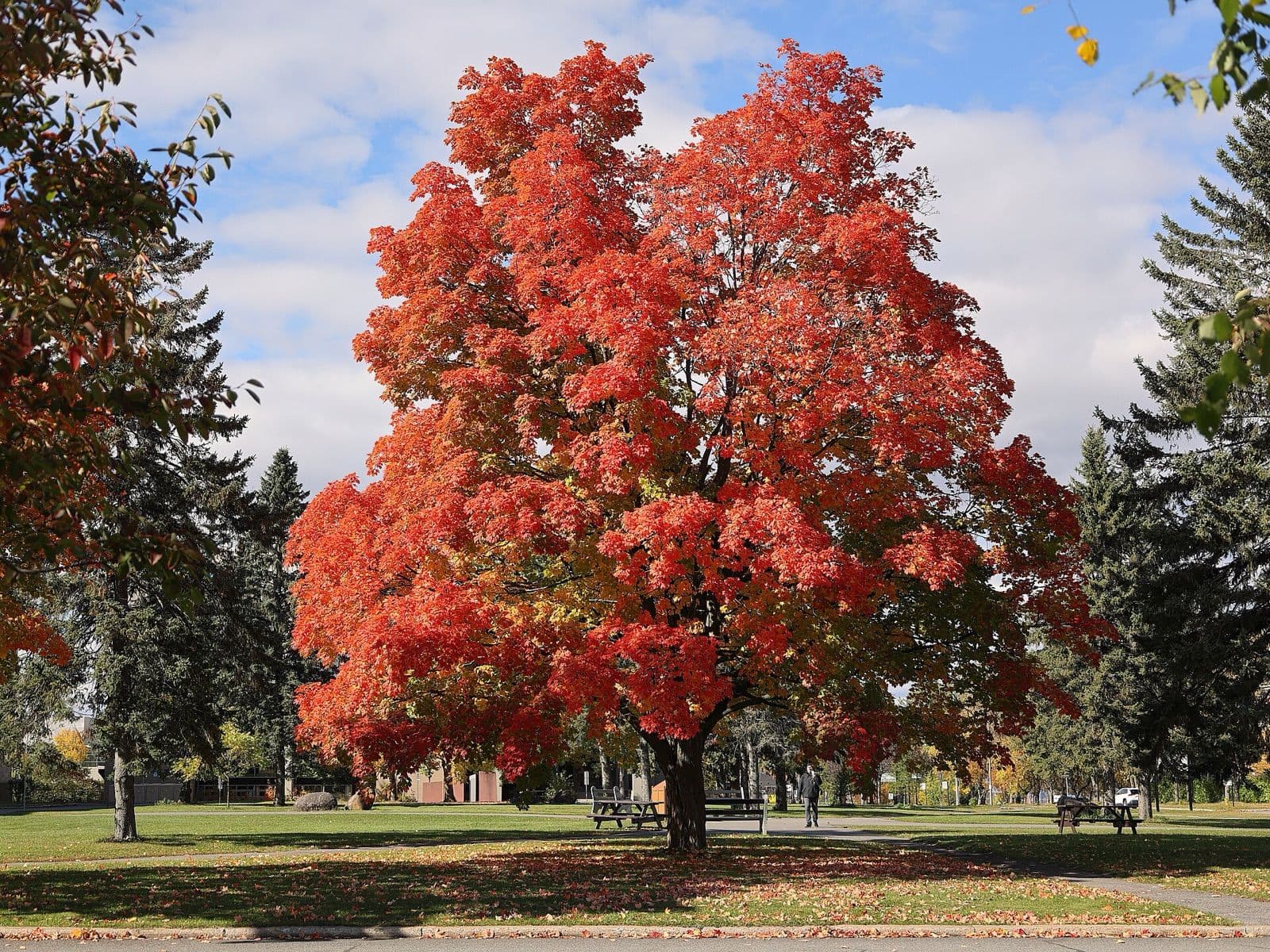
Sugar maple (Acer saccharum) is a large deciduous tree native to the hardwood forests of eastern Canada and the eastern United States, typically reaching 60–75 ft tall with a dense, rounded crown. It is the primary commercial source of maple syrup and produces some of the most vivid autumn foliage of any temperate tree - leaves turn clear yellow, burnt orange, and deep scarlet before dropping.
The tree is slow to establish but extremely long-lived, regularly exceeding 200 years in favorable conditions. It requires deep, well-drained, slightly acidic to neutral soil and is notably sensitive to soil compaction, road salt, and air pollution, which limits its viability as a street tree. Maintaining a wide mulch ring over the root zone, avoiding grade changes near the trunk, and preventing compaction from foot traffic or equipment are the most effective steps for long-term health. It performs best in the northern and middle parts of its range; heat and drought in zone 8 stress the tree considerably.
Sap is harvested in late winter to early spring when daytime temperatures rise above 40°F while nights remain below freezing - roughly 40 gallons of sap yield one gallon of syrup. Indigenous peoples of the northeastern woodlands used bark preparations for coughs, eye inflammation, and liver complaints, and refined maple sugar as both food and trade currency. The dense timber - marketed as hard maple or rock maple - ranks among the most commercially important hardwoods in North America, used for flooring, butcher blocks, furniture, and instrument bodies.
Ecoregions:Northern ForestsEastern Temperate ForestsGreat Plains
Maple Tar Spot
Pale yellow-green spots appear on upper leaf surfaces in early summer. By late summer they enlarge into raised, glossy black blotches up to 1 in across, closely resembling tar splashes. Caused by Rhytisma acerinum and related species.
Rake and destroy all fallen leaves in autumn to eliminate overwintering spores. Fungicide applications are rarely justified on established trees. Improve air circulation through selective pruning where practical.
Maple Anthracnose
Irregular brown or tan spots that follow and spread between leaf veins, giving leaves a scorched or blighted appearance. Severe infections cause premature leaf drop. In wet springs, small cankers may appear on young shoots.
Rake and remove fallen leaves each autumn to reduce overwintering fungal spores. Avoid overhead irrigation. Apply a copper-based fungicide at bud break during wet spring conditions. Prune selectively to improve canopy airflow.
Verticillium Wilt
Lower leaves yellow and wilt, often on one side of the plant, with brown streaking in the stem and crown tissue when cut open. Plants are stunted and decline over the season.
Remove and destroy affected plants. Avoid planting in soil that has grown infected tomatoes, peppers, or other susceptible crops. Rotate beds and improve drainage; there is no cure once a plant is infected.
Eutypella Canker
Large, target-shaped cankers on the trunk and major limbs, with concentric rings of callus tissue surrounding sunken, dead bark. Infected wood shows orange-brown discoloration in cross section. Cankers expand over multiple years and can girdle and kill major limbs or the entire tree.
No effective chemical control exists. Remove infected branches with at least 6 in margin into healthy wood and destroy the debris. Trunk cankers may be surgically excised by a certified arborist if the canker has not girdled the stem. Remove trees with girdling trunk cankers. Prevent bark wounds during mowing and maintenance. Maintain tree vigor through mulching and adequate soil moisture to slow canker expansion.