
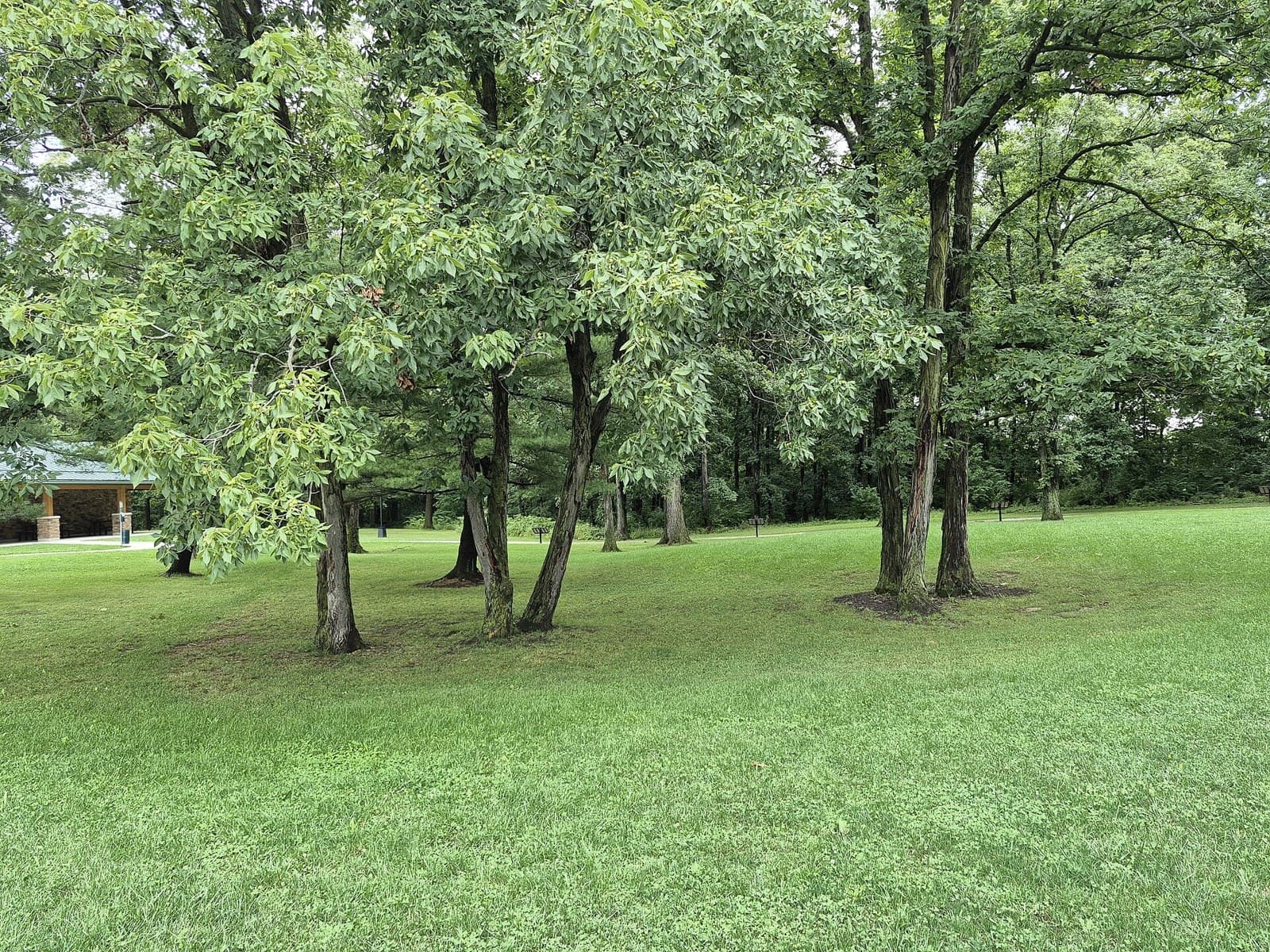
Shagbark hickory is a large deciduous tree native to eastern North America, instantly recognizable by its bark, which separates from the trunk in long, curved gray plates. It produces sweet, edible nuts valued by wildlife and people alike, and yields some of the hardest, most shock-resistant wood of any native North American species.
Growth is slow, but trees are exceptionally long-lived and can eventually reach 60–80 ft with a broad oval crown. A deep taproot forms early, making transplanting difficult; establish trees from seed or young containerized stock in deep, well-drained soil with full sun. Nut production typically begins at 10–15 years of age and is often irregular from year to year. Mature trees handle periodic drought once established, and cold hardiness extends into zone 4.
The nuts are sweet and calorie-dense, comparable in flavor to pecan, a close relative. They can be eaten raw, used in baking, or pressed for oil. Native American peoples pounded the kernels and mixed them with water to produce a fatty, nutritious liquid recorded by early colonists as pawcohiccora - the etymological root of the word hickory. The dense, springy wood remains in use for tool handles, ladder rungs, and sporting goods, and hickory smoke is widely used to flavor cured and barbecued meats.
Ecoregions:Northern ForestsEastern Temperate ForestsGreat Plains
Fungal leaf spot
Brown or purplish spots on the leaves, often ringed with a yellow halo, that spread and merge in warm, humid, or wet weather; heavily spotted leaves yellow and drop early.
Pick off spotted leaves and clear fallen debris to remove overwintering spores. Improve air circulation by thinning, and water at the base so foliage dries quickly. If it persists, apply a copper- or sulfur-based fungicide at the first sign.
Powdery mildew
White or grey powdery coating on leaves - usually starting on older growth in humid conditions or when nights cool.
Improve air circulation by thinning plants. Apply neem oil or potassium bicarbonate spray at first sign. Avoid overhead watering.
Armillaria Root Rot
Thinning, yellowing canopy with progressive dieback; white, fan-shaped mycelial mats visible beneath bark at or just below the soil line; honey-colored mushroom clusters appearing at the trunk base or on surface roots in autumn.
No chemical cure exists. Improve drainage and avoid any injury to roots or trunk. Remove severely infected trees along with as much root material as possible. Do not replant susceptible species in the same spot.
Botryosphaeria Canker
Dark, sunken cankers on stems and major branches, most often occurring after drought stress or mechanical wounding. Bark peeled back from affected areas reveals brown, discolored wood beneath. Branch tips wilt and die back progressively inward.
Prune infected branches at least 6 inches below the visible canker margin using sterilized tools, and dispose of all cuttings away from the garden. Reduce plant stress by maintaining consistent irrigation during dry periods and avoiding bark wounds during maintenance. No curative fungicide is available; keeping plants vigorous is the primary preventive strategy.
Hickory Bunch Disease
Tight clusters of short, crowded, broom-like shoots emerge from individual buds or branch tips. Affected shoots remain stunted and fail to develop normally; in severe cases multiple witches'-broom clusters appear across the same tree.
No cure exists for infected trees. Prune out affected branches at least 12 in below the visible symptom boundary; disinfect cutting tools between each cut with a 10% bleach solution or 70% isopropyl alcohol. Remove and dispose of pruned material off-site. Manage leafhopper populations, which are believed to vector the phytoplasma pathogen.