
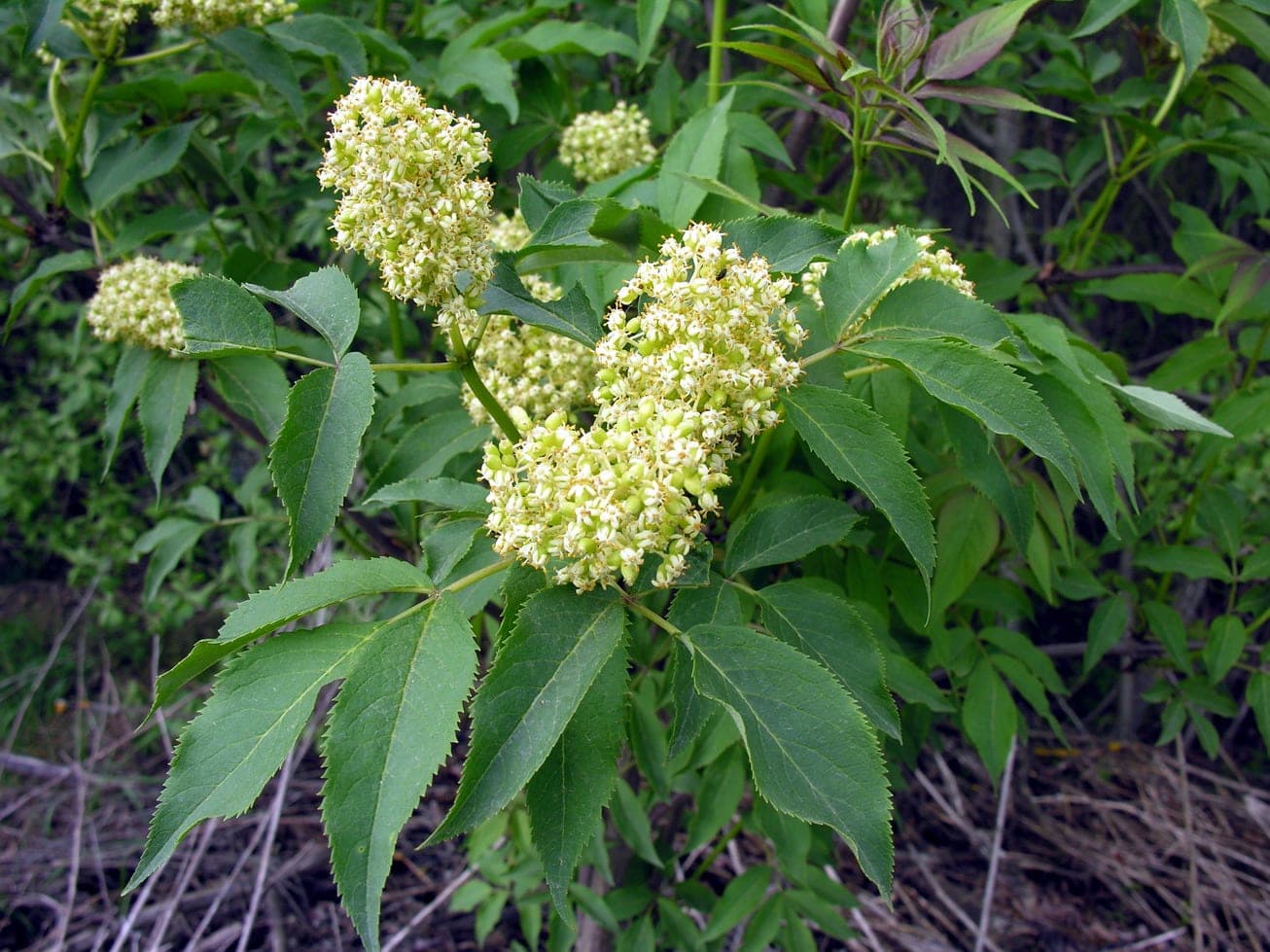
Sambucus racemosa is a fast-growing deciduous shrub native across northern North America, Europe, and Asia. In early spring it produces conical clusters of creamy-white flowers before most other shrubs leaf out, followed by dense bunches of vivid red berries in summer that cedar waxwings, thrushes, robins, and other birds consume heavily. Few native shrubs deliver comparable wildlife value so quickly after planting.
Red elderberry thrives on moist slopes, woodland edges, and stream banks and tolerates partial shade well, making it useful beneath high-canopy trees where many shrubs fail. Plants sucker freely and form dense thickets over time; removing suckers annually at the base controls spread. Slightly acidic to neutral soil pH of 5.5–7.0 suits it best. A consistent layer of wood-chip mulch retains soil moisture and suppresses competing weeds, reducing supplemental watering once established.
Raw berries contain cyanogenic glycosides that reliably cause nausea; thorough cooking neutralizes the compounds. Indigenous peoples across North America have cooked the berries into jams, jellies, and fermented beverages, and used bark preparations traditionally for fever, colds, and as a laxative.
Ecoregions:Northern ForestsNorthwestern Forested MountainsMarine West Coast ForestEastern Temperate ForestsGreat PlainsNorth American DesertsMediterranean California
Elderberry Cane Blight
Brown to black cankers form on canes, typically at nodes, pruning cuts, or insect entry points. Affected canes wilt and die back from the tip. A cross-section of infected wood shows dark discoloration in the pith and cambium.
Prune infected canes well below the visible canker margin. Disinfect tools with 70% isopropyl alcohol between each cut. Destroy removed material; do not compost it. Reduce overhead irrigation and thin the canopy to improve air circulation. No curative fungicide is consistently effective - prompt removal of affected wood and clean pruning practice are the primary controls.
Powdery mildew
White or grey powdery coating on leaves - usually starting on older growth in humid conditions or when nights cool.
Improve air circulation by thinning plants. Apply neem oil or potassium bicarbonate spray at first sign. Avoid overhead watering.
Fungal leaf spot
Brown or purplish spots on the leaves, often ringed with a yellow halo, that spread and merge in warm, humid, or wet weather; heavily spotted leaves yellow and drop early.
Pick off spotted leaves and clear fallen debris to remove overwintering spores. Improve air circulation by thinning, and water at the base so foliage dries quickly. If it persists, apply a copper- or sulfur-based fungicide at the first sign.
Root rot
Plants wilt, yellow, and stunt even in moist soil; lower stems and roots turn brown, soft, and mushy and the plant may collapse. Most common in heavy, wet, or poorly drained ground.
Improve drainage and stop overwatering, and never plant too deep. Lift and destroy badly affected plants along with the soil around the roots. Grow in raised or free-draining beds to prevent it returning.