
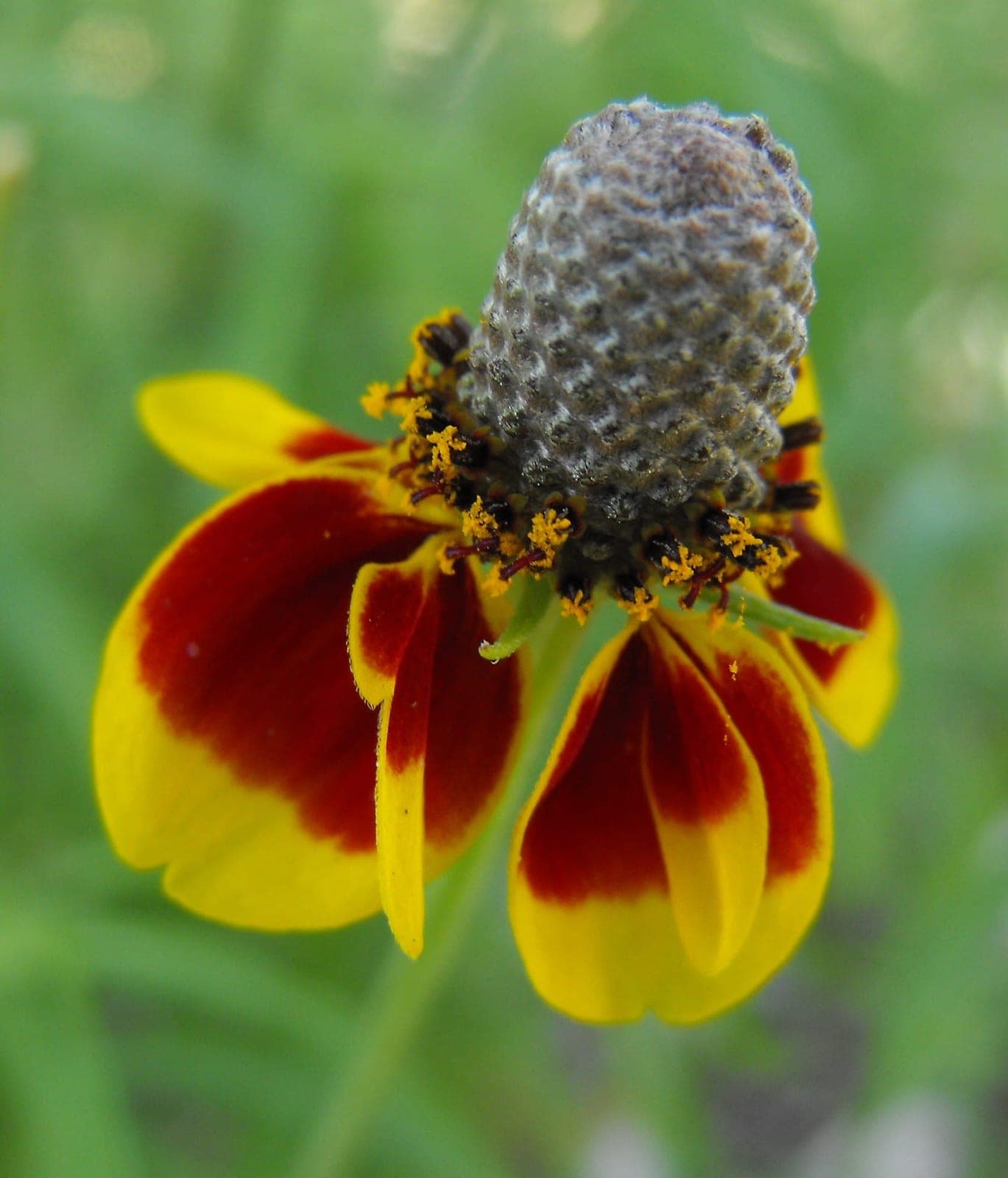
Ratibida columnifera is a native North American prairie perennial recognized by its elongated cylindrical disk and reflexed ray petals - a silhouette that earns it the name Mexican hat. It grows naturally on prairies, plains, roadsides, and disturbed ground across much of the continent and provides nectar and pollen for native bees and butterflies from midsummer through fall.
A short-lived perennial, it persists in the garden by self-seeding readily into surrounding soil. It tolerates poor, rocky, or sandy soils and survives extended drought once established. Seedlings establish quickly and often reach blooming size in their first or second year. Removing spent flower heads controls spread; leaving some allows naturalization across a planting. Plants benefit from no supplemental fertilizer - rich soil promotes lax stems and reduced flowering.
Several Plains tribes, including the Lakota, used R. columnifera medicinally. Leaves and flower heads were brewed as a tea to address headaches and fever, and plant material was applied topically for pain relief and insect stings.
Ecoregions:Northwestern Forested MountainsEastern Temperate ForestsGreat PlainsNorth American DesertsTemperate Sierras
Aster Yellows
Deformed, greenish flowers, stunted growth, and yellowed foliage. Flower centers may produce tufts of leafy growth instead of normal petals.
No cure. Remove and destroy infected plants immediately to stop spread. Control leafhoppers, which transmit the disease, and remove nearby weed hosts.
Fungal leaf spot
Brown or purplish spots on the leaves, often ringed with a yellow halo, that spread and merge in warm, humid, or wet weather; heavily spotted leaves yellow and drop early.
Pick off spotted leaves and clear fallen debris to remove overwintering spores. Improve air circulation by thinning, and water at the base so foliage dries quickly. If it persists, apply a copper- or sulfur-based fungicide at the first sign.
Powdery mildew
White or grey powdery coating on leaves - usually starting on older growth in humid conditions or when nights cool.
Improve air circulation by thinning plants. Apply neem oil or potassium bicarbonate spray at first sign. Avoid overhead watering.