
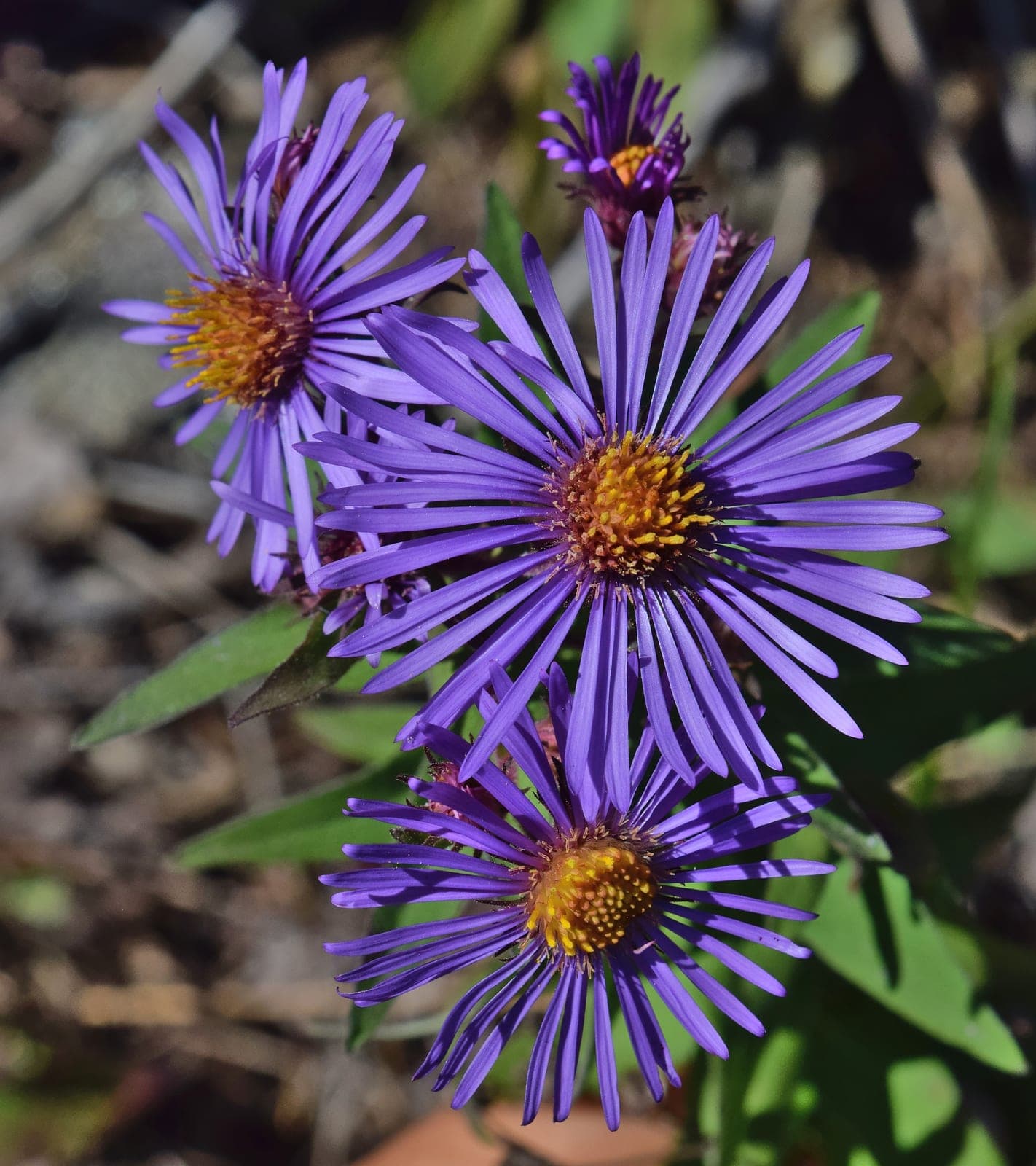
New England aster is a native perennial of central and eastern North America that produces dense clusters of purple, pink, or white ray flowers with yellow centers from late summer through hard frost. It is among the most important late-season nectar sources in the region, supporting pollinators at a time when few other species are still in flower.
Without cutting back, plants commonly reach 4–5 feet and flop. Pinching stems back by one-third to one-half in late spring produces a shorter, bushier, self-supporting plant with only a slight delay in flowering. Clumps expand rapidly; dividing every 2–3 years in early spring maintains vigor. The species tolerates average to slightly moist soils and spreads naturally at meadow edges, roadsides, and streambanks. Powdery mildew on lower foliage is common by late summer but cosmetic and rarely affects performance. In the garden, a 2–3 inch mulch layer helps retain moisture and suppress weeds around the base.
Several Native American nations used root decoctions to treat fever and respiratory complaints and burned dried material as a smudge. The species is a documented host for specialist native bees in the genus Andrena and a critical late-season fueling stop for migrating monarch butterflies.
Ecoregions:Northern ForestsEastern Temperate ForestsGreat Plains
Powdery mildew
White or grey powdery coating on leaves - usually starting on older growth in humid conditions or when nights cool.
Improve air circulation by thinning plants. Apply neem oil or potassium bicarbonate spray at first sign. Avoid overhead watering.
Aster Yellows
Deformed, greenish flowers, stunted growth, and yellowed foliage. Flower centers may produce tufts of leafy growth instead of normal petals.
No cure. Remove and destroy infected plants immediately to stop spread. Control leafhoppers, which transmit the disease, and remove nearby weed hosts.
Fungal leaf spot
Brown or purplish spots on the leaves, often ringed with a yellow halo, that spread and merge in warm, humid, or wet weather; heavily spotted leaves yellow and drop early.
Pick off spotted leaves and clear fallen debris to remove overwintering spores. Improve air circulation by thinning, and water at the base so foliage dries quickly. If it persists, apply a copper- or sulfur-based fungicide at the first sign.