
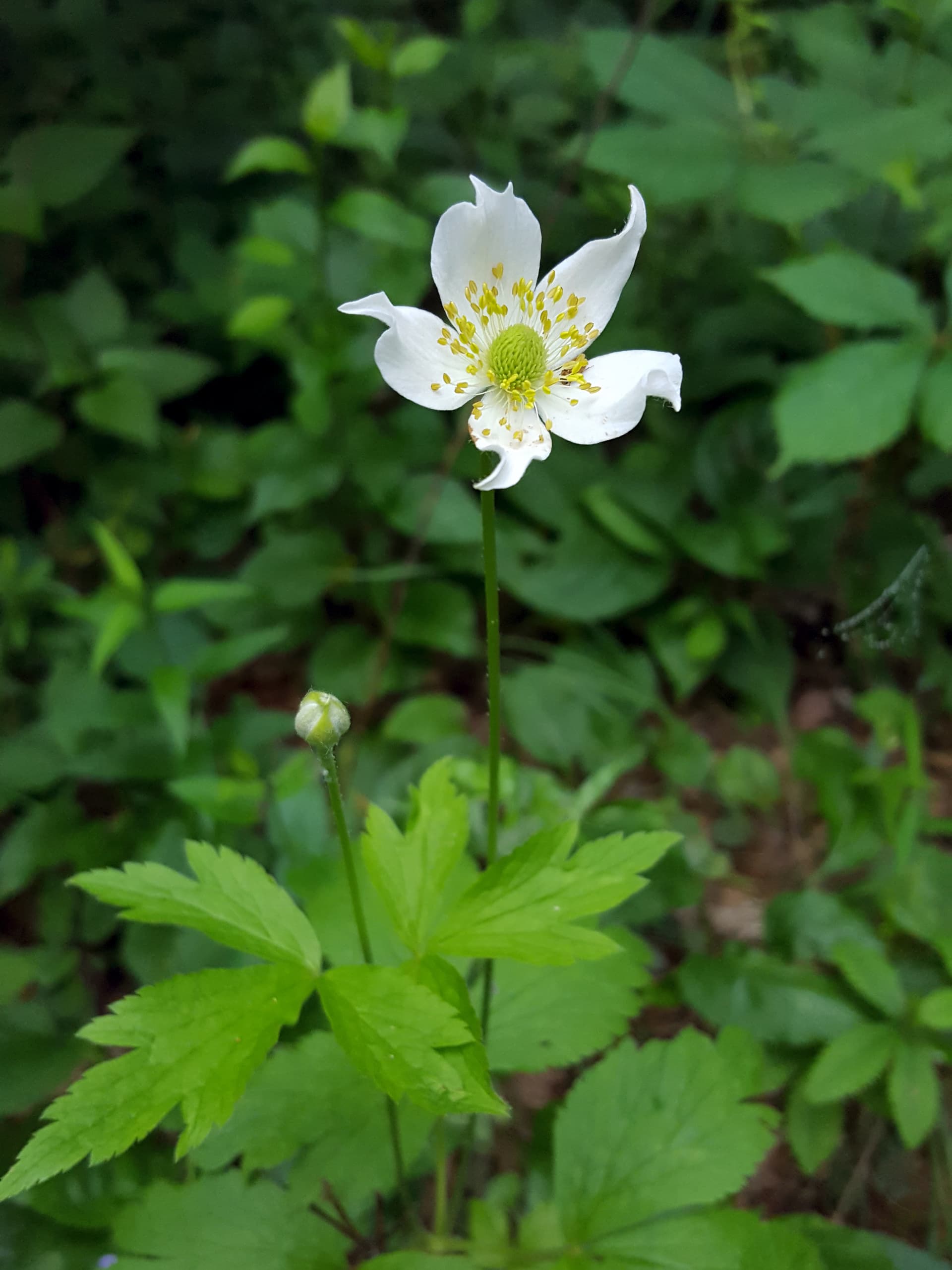
A native woodland wildflower found across most of the eastern and central US and southern Canada, tall thimbleweed carries small, greenish-white flowers in late spring on wiry stems above deeply lobed basal leaves. The real show comes after bloom, when the thimble-shaped seed heads elongate and eventually burst into cottony white tufts that persist into fall.
It's happy in the moist, humusy, dappled-shade conditions of a woodland edge and tolerates dry shade once established. Toxic, bitter-tasting foliage (like other anemones) keeps deer and rabbits from browsing it.
Ecoregions:Northern ForestsEastern Temperate ForestsGreat Plains
Anemone Leaf Smut
Raised dark streaks and blisters on leaves and stems that rupture to release black powdery spores; affected leaves distort and die back.
Remove and destroy infected foliage as it appears. Avoid overhead watering and crowding. Dispose of all debris in fall rather than composting it, and divide congested clumps to improve air circulation.