
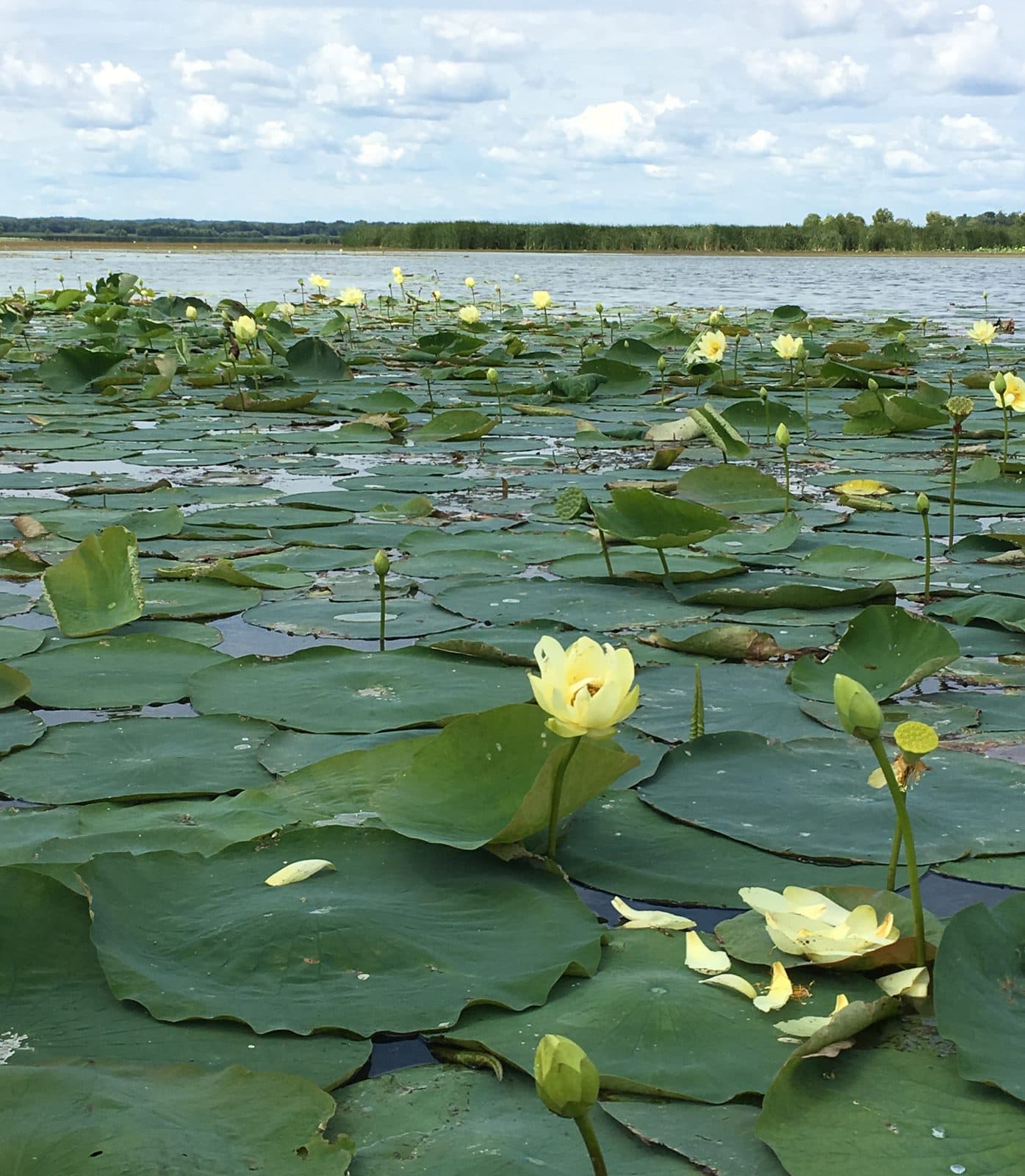
 A wild colony at Dixon Waterfowl Refuge, Illinois. Photo: Trevor Edmonson, CC BY 4.0.
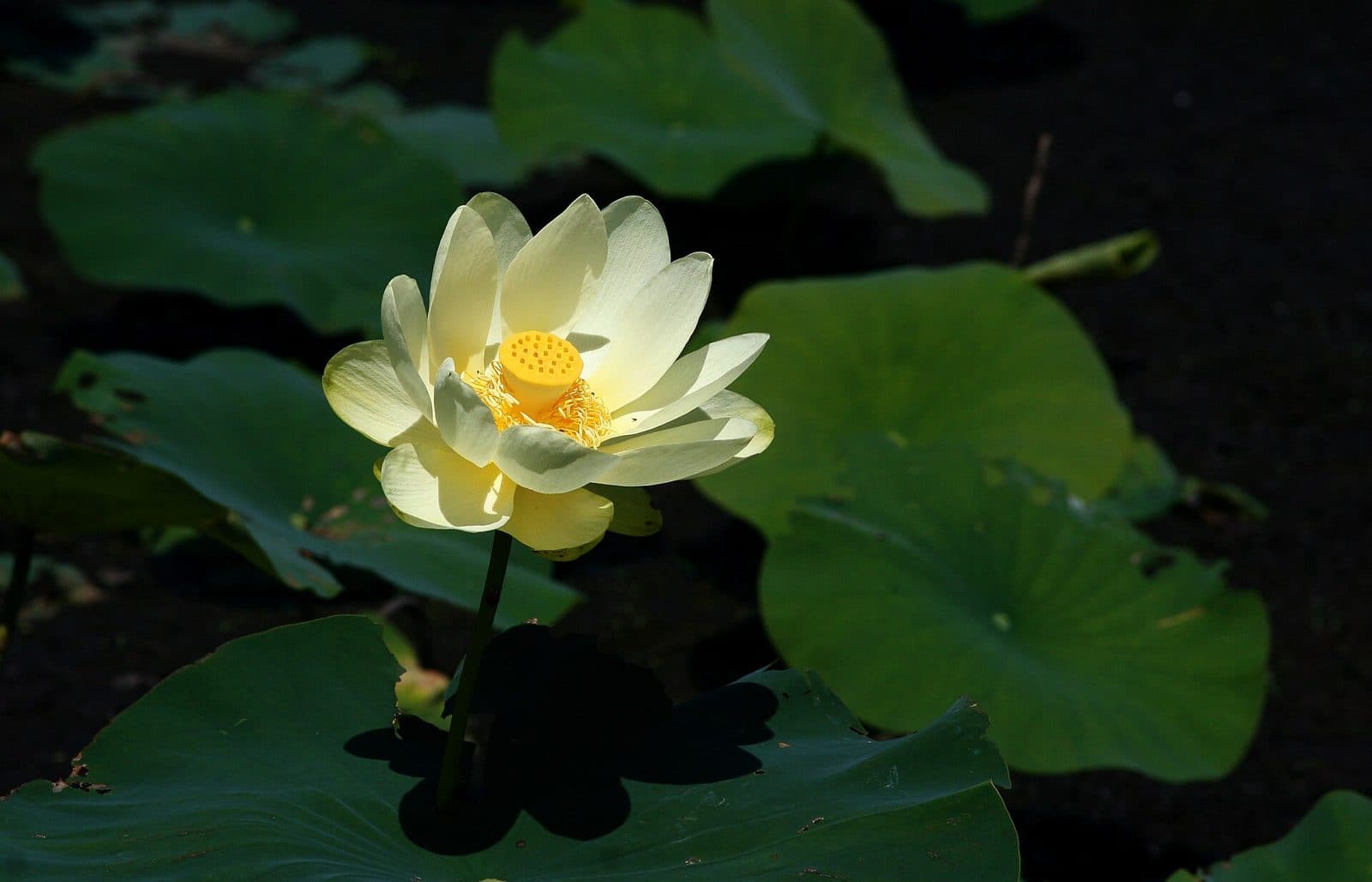 Flower. Photo: liz west, CC BY 2.0.
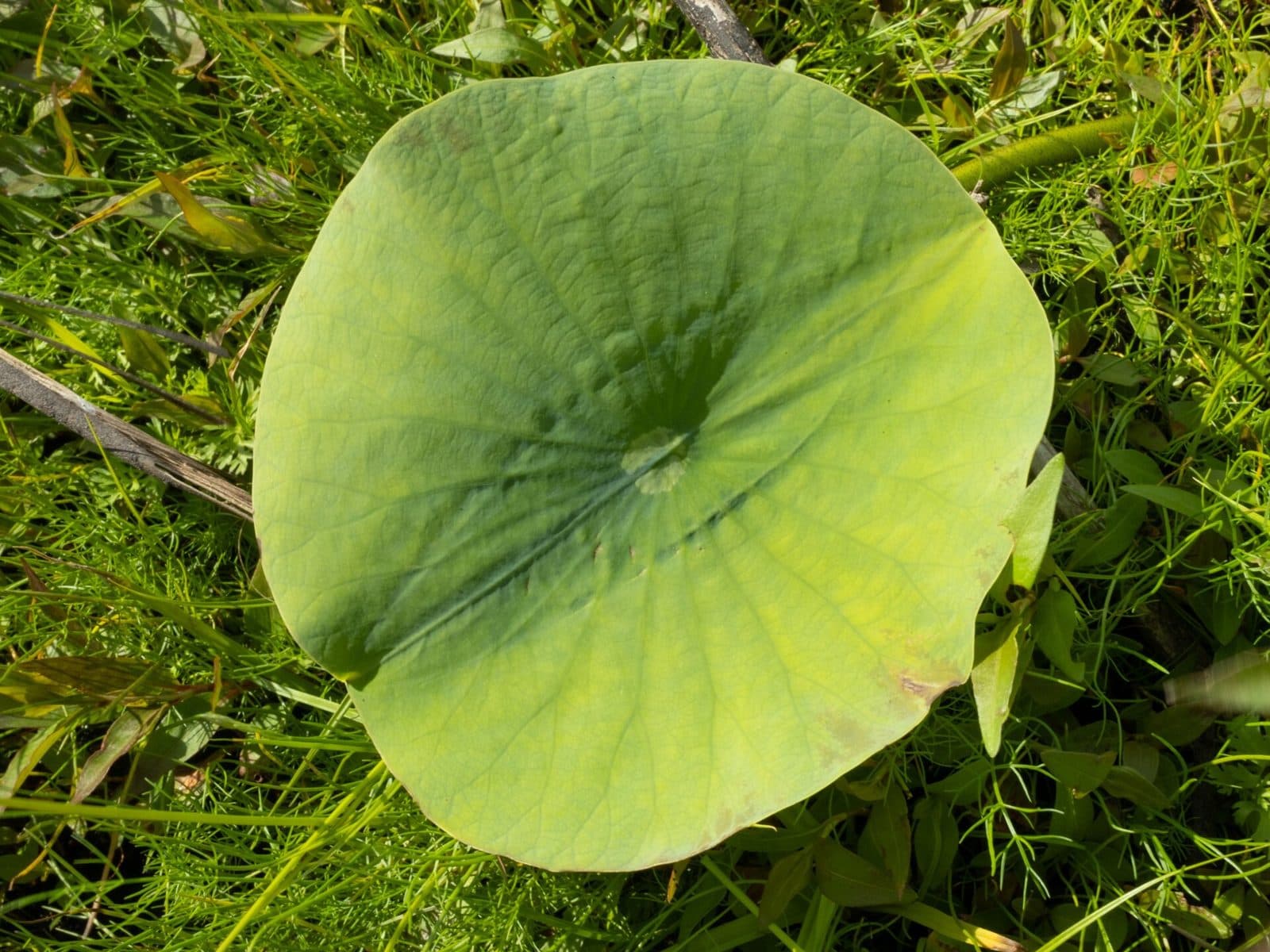 Leaf. Photo: Alex Abair, CC BY 4.0.
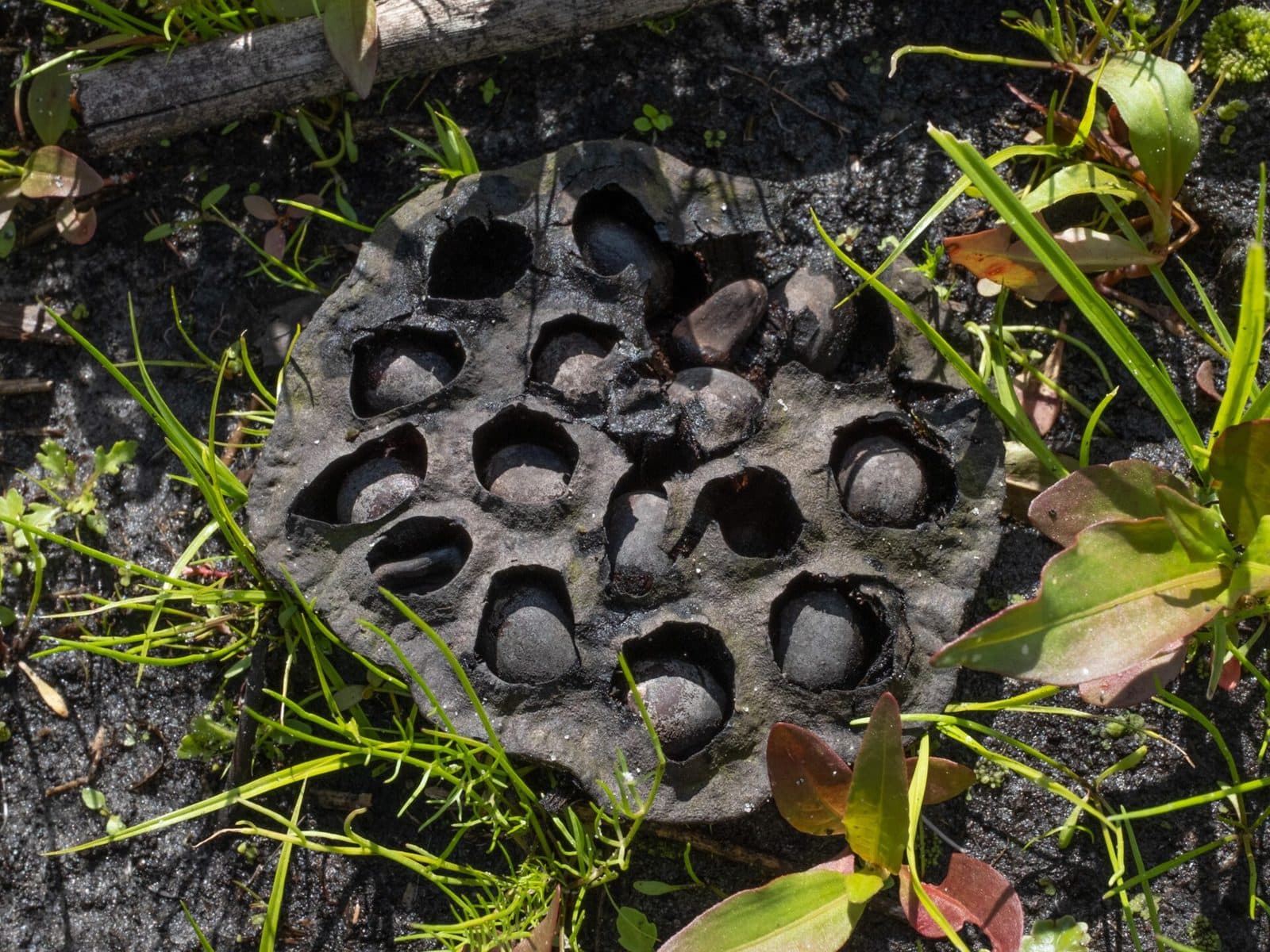 Dried seed pod. Photo: Alex Abair, CC BY 4.0.
American Lotus (Nelumbo lutea) is a native aquatic perennial found in ponds, lakes, and slow-moving rivers from the Great Plains east to the Atlantic coast. Circular leaves up to 2 feet across repel water through a microscopically textured surface. Pale yellow flowers up to 10 inches wide open above the water in summer, followed by flat-topped seed pods that dry on the stem and persist through winter.
Rhizomes are planted horizontally in heavy clay soil on the pond floor or in submerged containers once water temperatures reach 60°F. In open water the plant colonizes large areas quickly; container culture controls spread. Above-water growth stands 3–5 feet tall. Rhizomes survive winters in zones as cold as 4a provided they remain below the ice layer, and the plant tolerates heat through zone 10b. Seed pods are widely used in dried arrangements.
All major plant parts are edible. Indigenous peoples of eastern North America harvested the starchy rhizomes as a food staple, ate seeds raw or ground them into flour, and cooked young leaves and leaf-stem bases. Rhizomes and seeds have a documented history of use in traditional medicine for diarrhea and fever, and the plant's astringent properties were applied to slow bleeding.
Crown Rot
Lower leaves yellow and wilt; the base of the rosette turns brown and soft, sometimes with white fungal threads at the soil line. Plants collapse in wet conditions.
Remove and destroy affected plants. Improve drainage and avoid overhead watering. Do not mulch directly against the crown. Space plants for airflow and avoid replanting in the same wet spot.
Root rot
Plants wilt, yellow, and stunt even in moist soil; lower stems and roots turn brown, soft, and mushy and the plant may collapse. Most common in heavy, wet, or poorly drained ground.
Improve drainage and stop overwatering, and never plant too deep. Lift and destroy badly affected plants along with the soil around the roots. Grow in raised or free-draining beds to prevent it returning.
Fungal leaf spot
Brown or purplish spots on the leaves, often ringed with a yellow halo, that spread and merge in warm, humid, or wet weather; heavily spotted leaves yellow and drop early.
Pick off spotted leaves and clear fallen debris to remove overwintering spores. Improve air circulation by thinning, and water at the base so foliage dries quickly. If it persists, apply a copper- or sulfur-based fungicide at the first sign.