
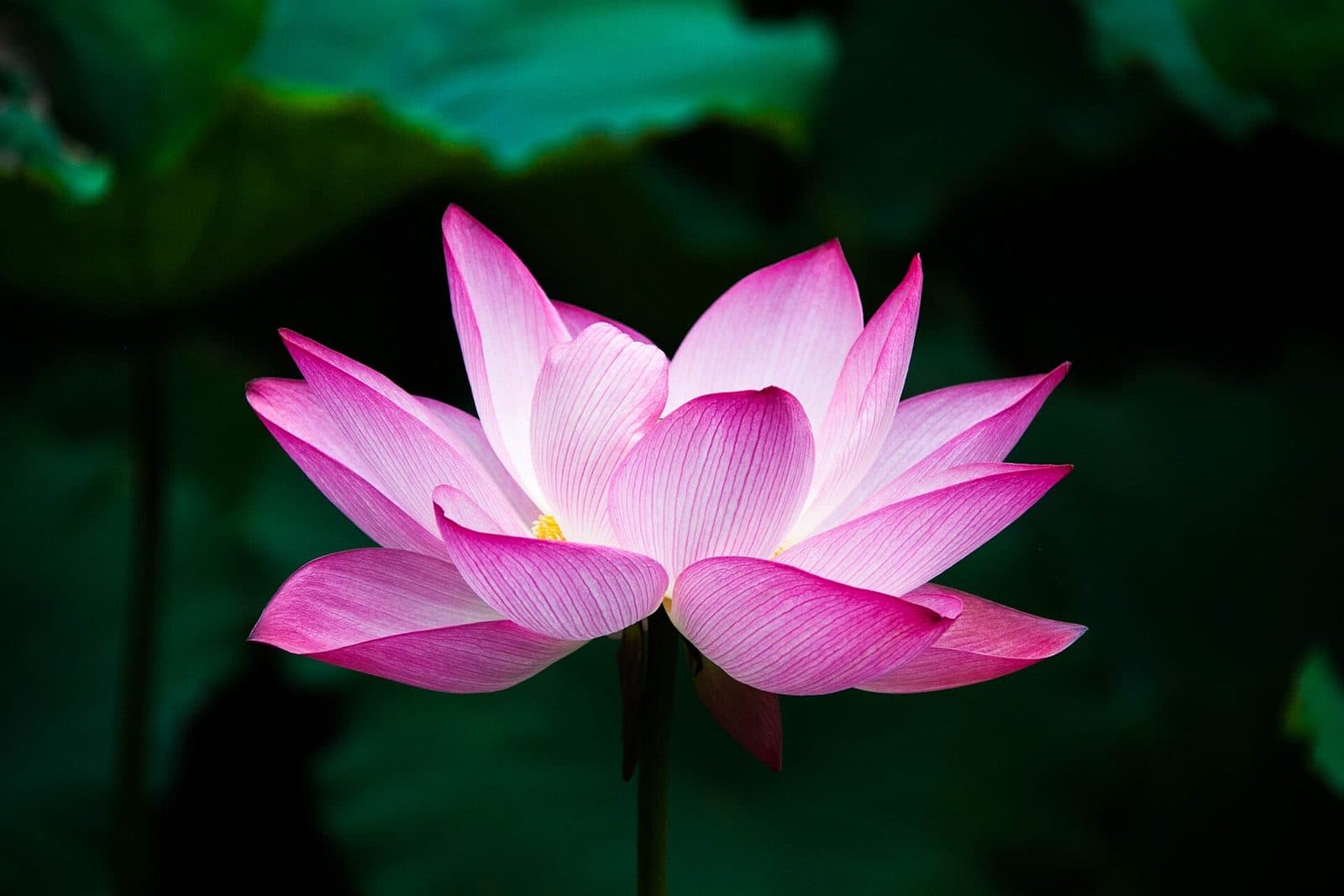
 Open flower. Photo: Hong Zhang (jennyzhh2008), CC0.
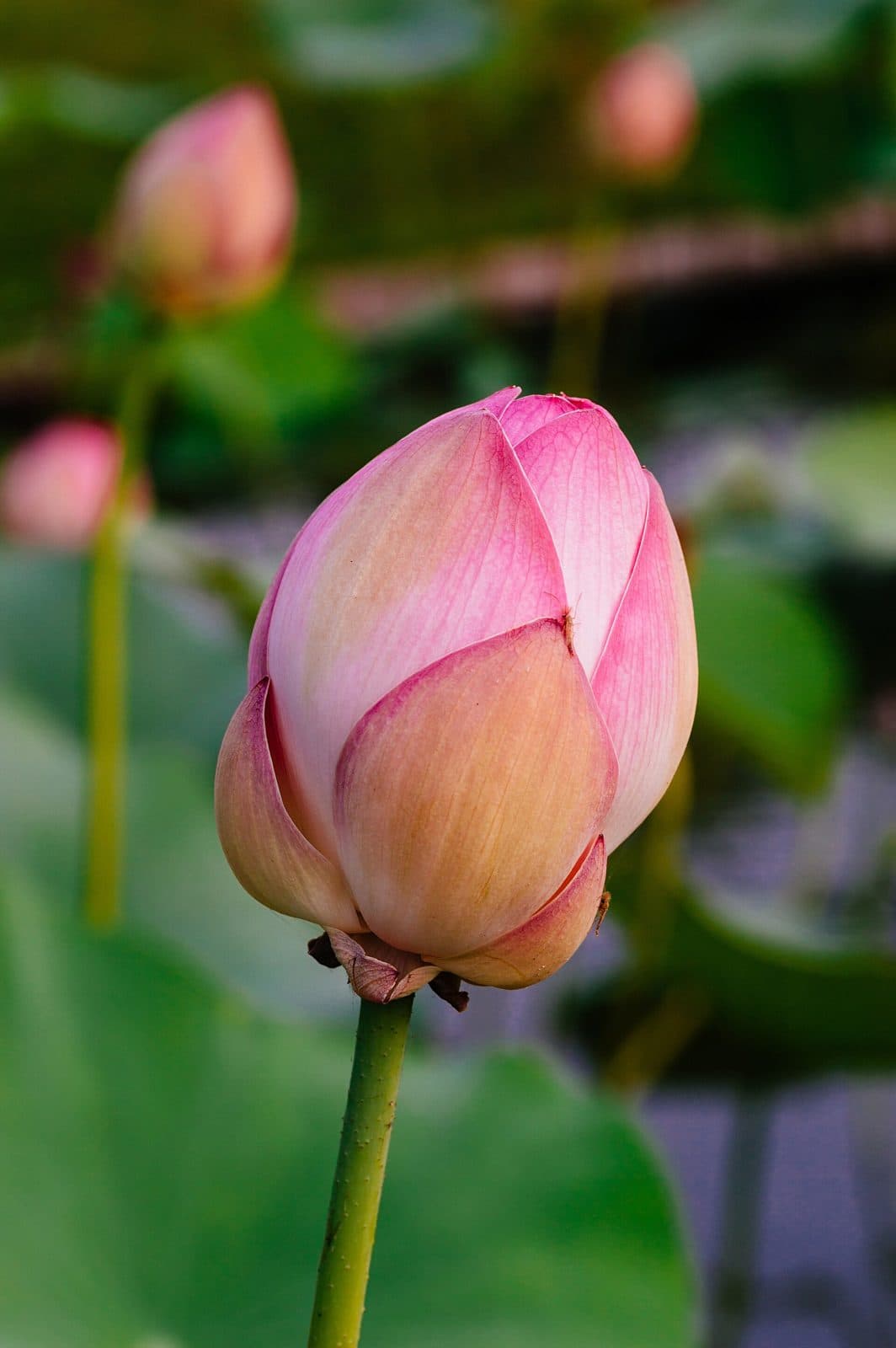 Bud stage. Photo: Subhrajyoti07, CC BY-SA 4.0.
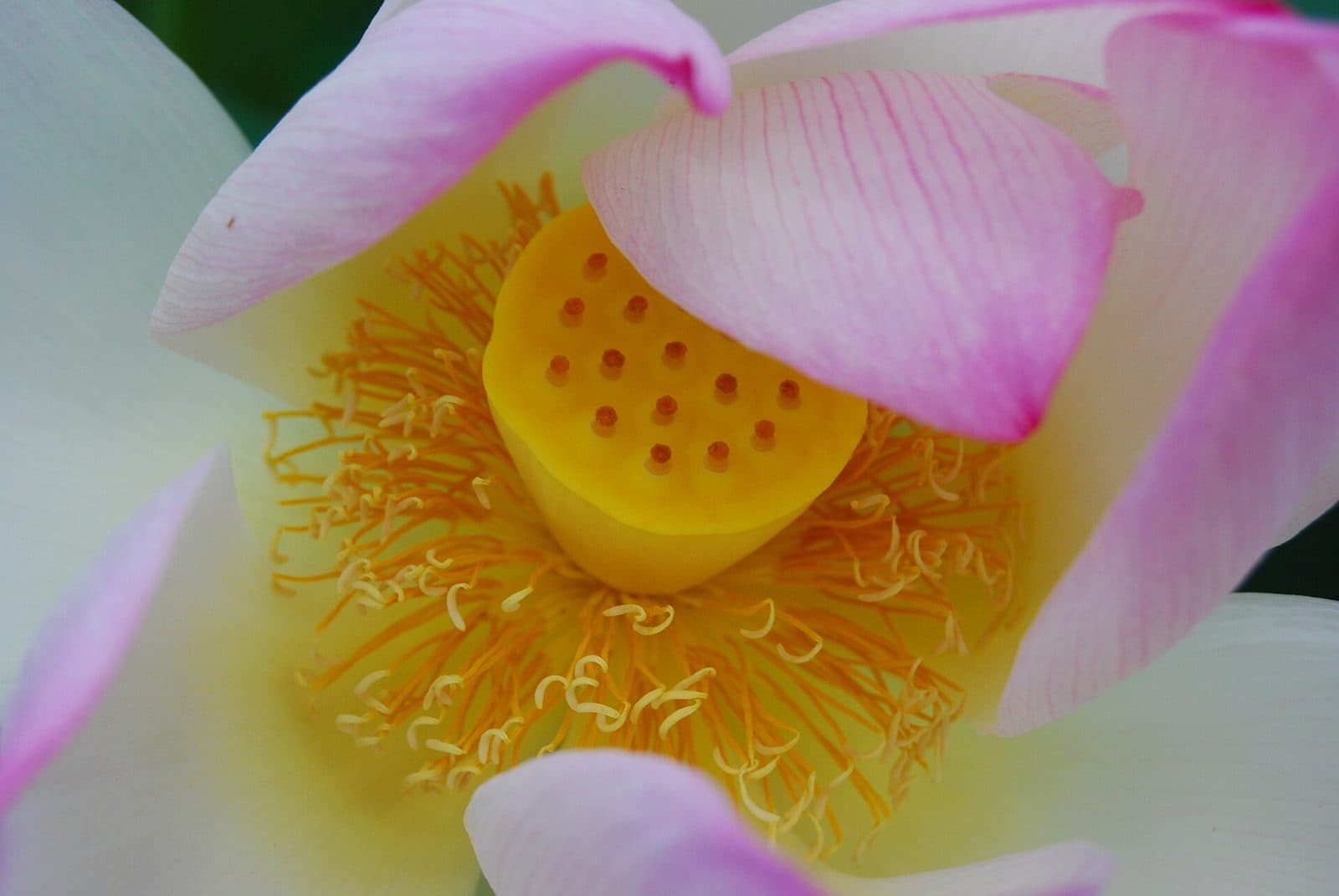 The seed head forms at the flower's center. Photo: NPS, public domain.
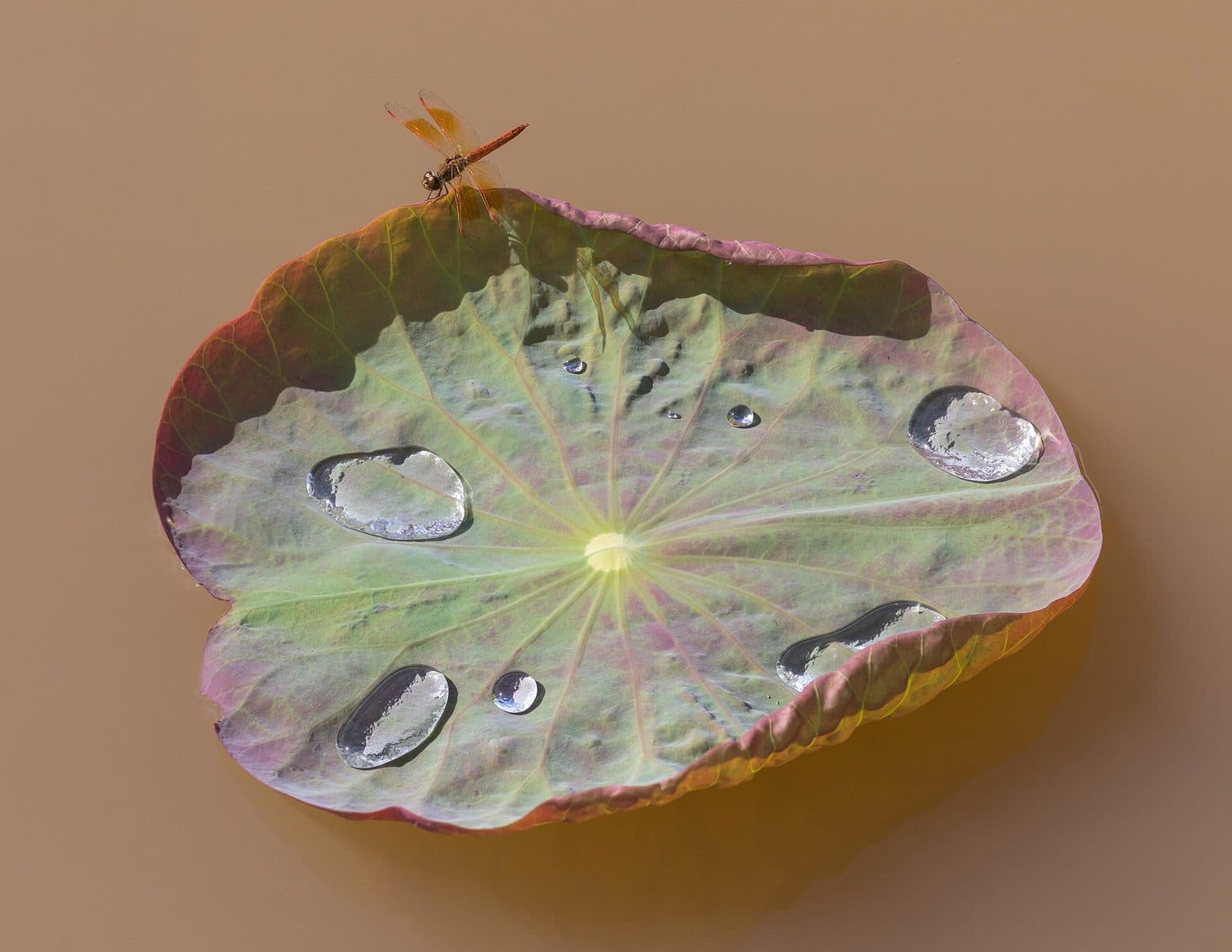 Water beads on the self-cleaning leaf surface. Photo: Basile Morin, CC BY-SA 4.0.
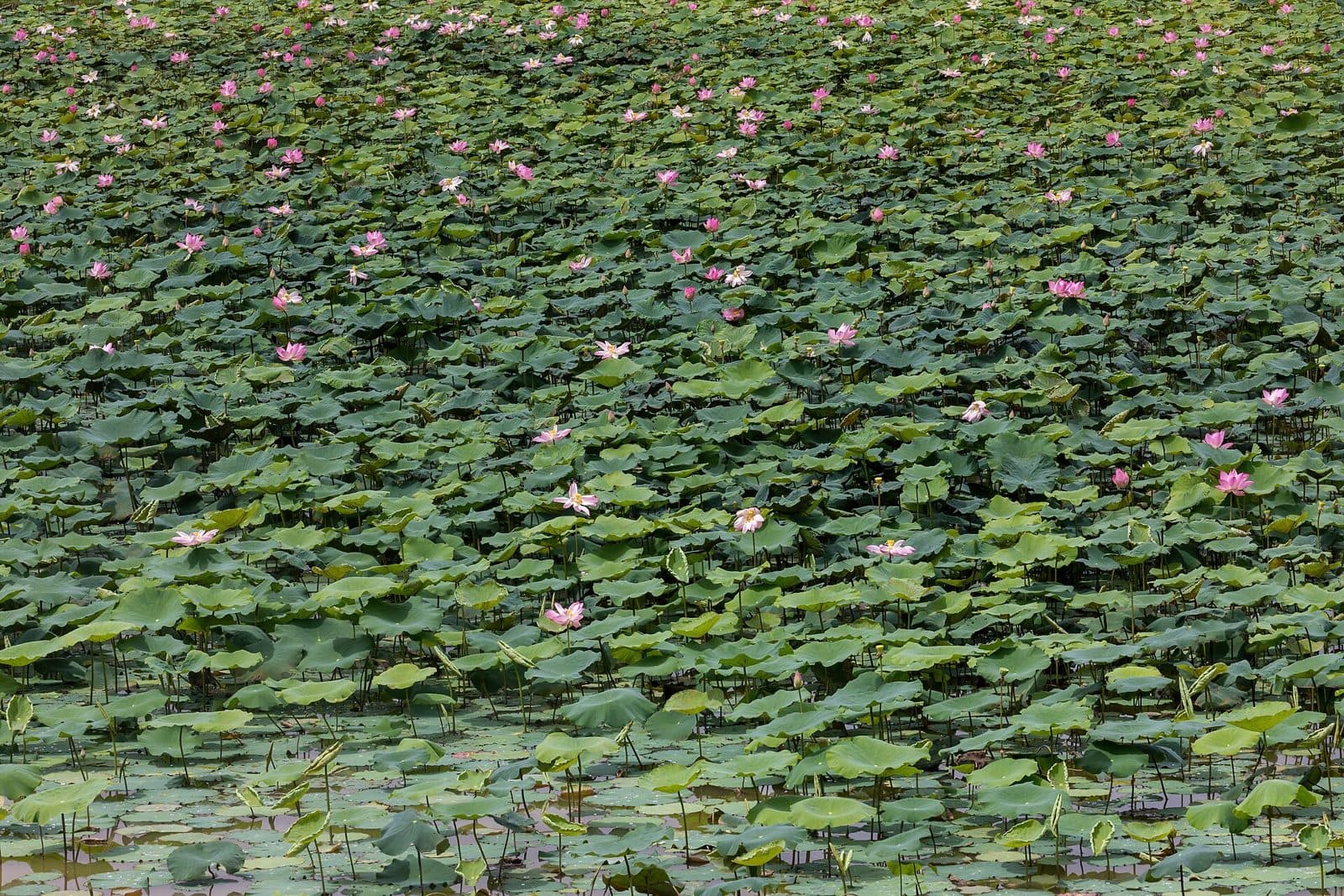 A pond colony in Laos. Photo: Basile Morin, CC BY-SA 4.0.
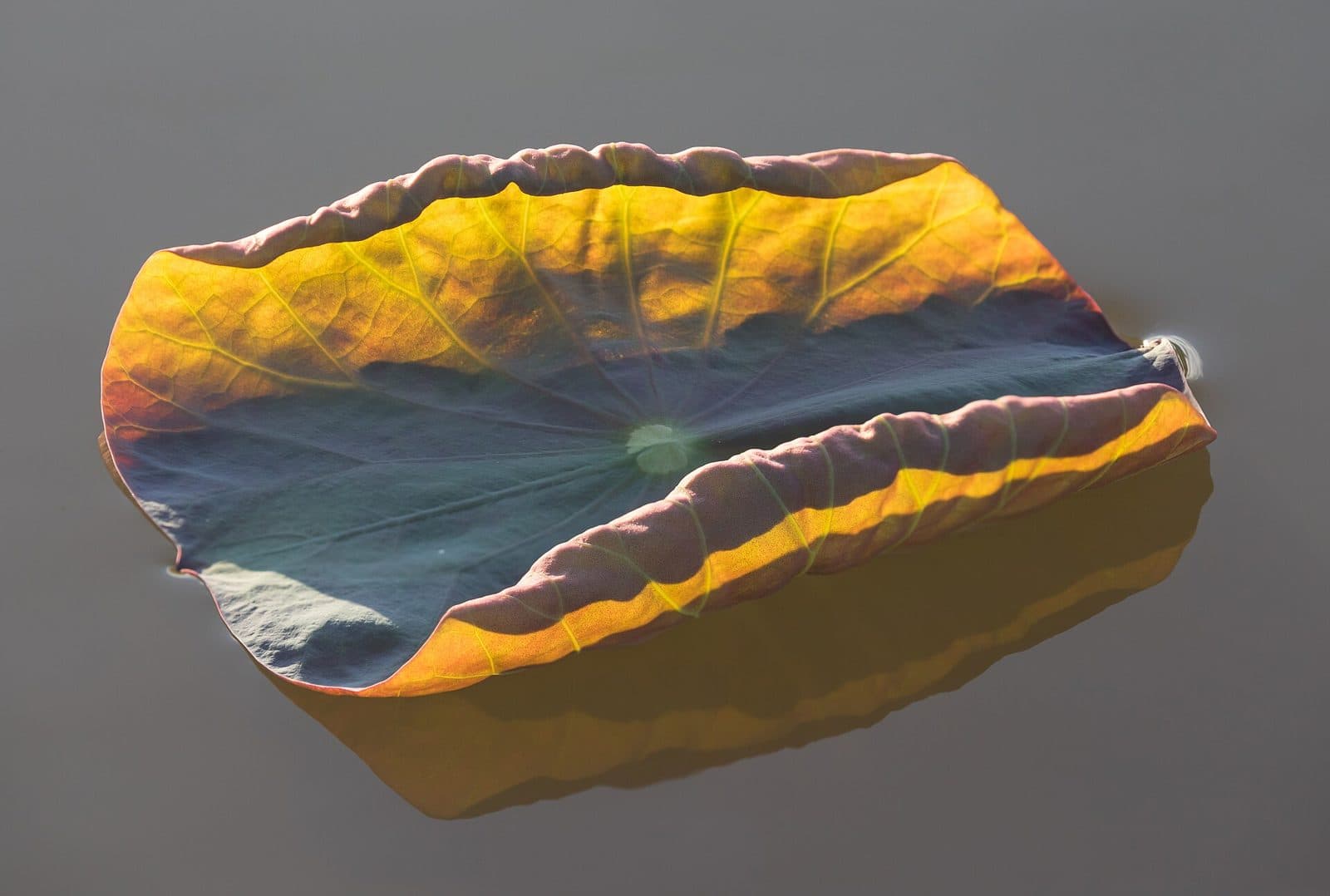 Leaf in fall. Photo: Basile Morin, CC BY-SA 4.0.
Sacred lotus (Nelumbo nucifera) is a perennial aquatic plant native to tropical Asia and northern Australia, culturally central to Buddhist and Hindu traditions for millennia. Its large, cupped leaves repel water through a superhydrophobic surface structure — the phenomenon scientists named the lotus effect — and broad pink or white flowers open each morning and close each evening over three consecutive days. The plant grows from thick, segmented rhizomes anchored in bottom sediment and is well suited to ornamental ponds, dedicated water gardens, and half-barrel tub ponds.
Lotus requires full sun and warm water; rhizomes should not be placed until water temperature reaches 60°F. In zones 4–6, overwinter rhizomes at a depth that stays below the ice line or lift them, wrap in barely moist sphagnum, and store above 50°F. In open ponds the plant spreads aggressively via lateral rhizome growth; submerged containers limit spread and simplify division. Divide every 2–3 years in early spring before new growth begins. Lotus seeds are extraordinarily long-lived — documented viability exceeds 1,000 years in excavated specimens.
All major parts are edible and used across South and East Asian cuisines: the crunchy, segmented rhizome (lotus root), young leaves, petals, stamens, and seeds. Traditional medicine employs seeds to calm the mind and improve sleep, leaf preparations to reduce fever and check diarrhea, and stamen preparations for cardiovascular support. The alkaloid nuciferine and related compounds have been studied for antioxidant and anti-inflammatory activity.
Fungal leaf spot
Brown or purplish spots on the leaves, often ringed with a yellow halo, that spread and merge in warm, humid, or wet weather; heavily spotted leaves yellow and drop early.
Pick off spotted leaves and clear fallen debris to remove overwintering spores. Improve air circulation by thinning, and water at the base so foliage dries quickly. If it persists, apply a copper- or sulfur-based fungicide at the first sign.
Root rot
Plants wilt, yellow, and stunt even in moist soil; lower stems and roots turn brown, soft, and mushy and the plant may collapse. Most common in heavy, wet, or poorly drained ground.
Improve drainage and stop overwatering, and never plant too deep. Lift and destroy badly affected plants along with the soil around the roots. Grow in raised or free-draining beds to prevent it returning.
Crown Rot
Lower leaves yellow and wilt; the base of the rosette turns brown and soft, sometimes with white fungal threads at the soil line. Plants collapse in wet conditions.
Remove and destroy affected plants. Improve drainage and avoid overhead watering. Do not mulch directly against the crown. Space plants for airflow and avoid replanting in the same wet spot.