
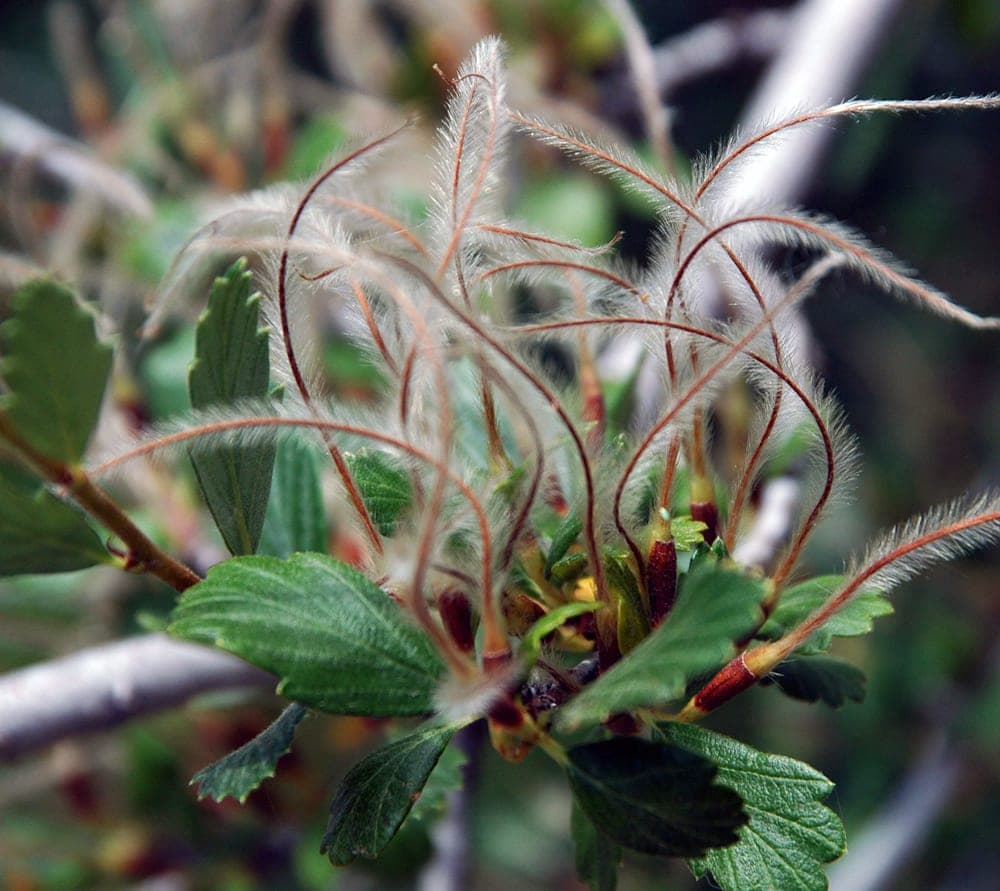
Cercocarpus montanus is a native shrub or small tree of the Rocky Mountain West and Great Basin, found on dry slopes, rocky hillsides, and canyon rims from the Dakotas south to Texas and west to the Pacific states. It earns a place in xeric gardens through exceptional drought tolerance, year-round structure, and the plant's most distinctive trait - long, spiraling, feathery-tailed achenes that develop through summer and persist into fall, giving the shrub a soft, silvery appearance from a distance.
It thrives on rocky, gravelly, or sandy soils with low fertility and handles alkaline pH well. Once established, supplemental irrigation is rarely needed. The natural growth form is multi-stemmed and dense, making it practical as a windbreak, informal screen, or slope stabilizer for erosion-prone sites. Clay-heavy or poorly drained soils are the primary cultural pitfall; waterlogged roots invite rot and decline. Prefer lean, open ground and avoid amended planting pits that retain moisture. pH between 6.5 and 8.0 is acceptable.
Mountain mahogany is actinorhizal - it forms root nodules with Frankia bacteria, fixing atmospheric nitrogen and gradually improving soil fertility on degraded or disturbed sites. It is a critical winter browse species for mule deer, elk, bighorn sheep, and pronghorn across its range, making it highly valued in wildlife plantings. Several Indigenous peoples of the Southwest used bark preparations for skin ailments and as a source of reddish-brown dye.
Ecoregions:Northwestern Forested MountainsGreat PlainsNorth American DesertsTemperate Sierras
Powdery mildew
White or grey powdery coating on leaves - usually starting on older growth in humid conditions or when nights cool.
Improve air circulation by thinning plants. Apply neem oil or potassium bicarbonate spray at first sign. Avoid overhead watering.
Root rot
Plants wilt, yellow, and stunt even in moist soil; lower stems and roots turn brown, soft, and mushy and the plant may collapse. Most common in heavy, wet, or poorly drained ground.
Improve drainage and stop overwatering, and never plant too deep. Lift and destroy badly affected plants along with the soil around the roots. Grow in raised or free-draining beds to prevent it returning.