
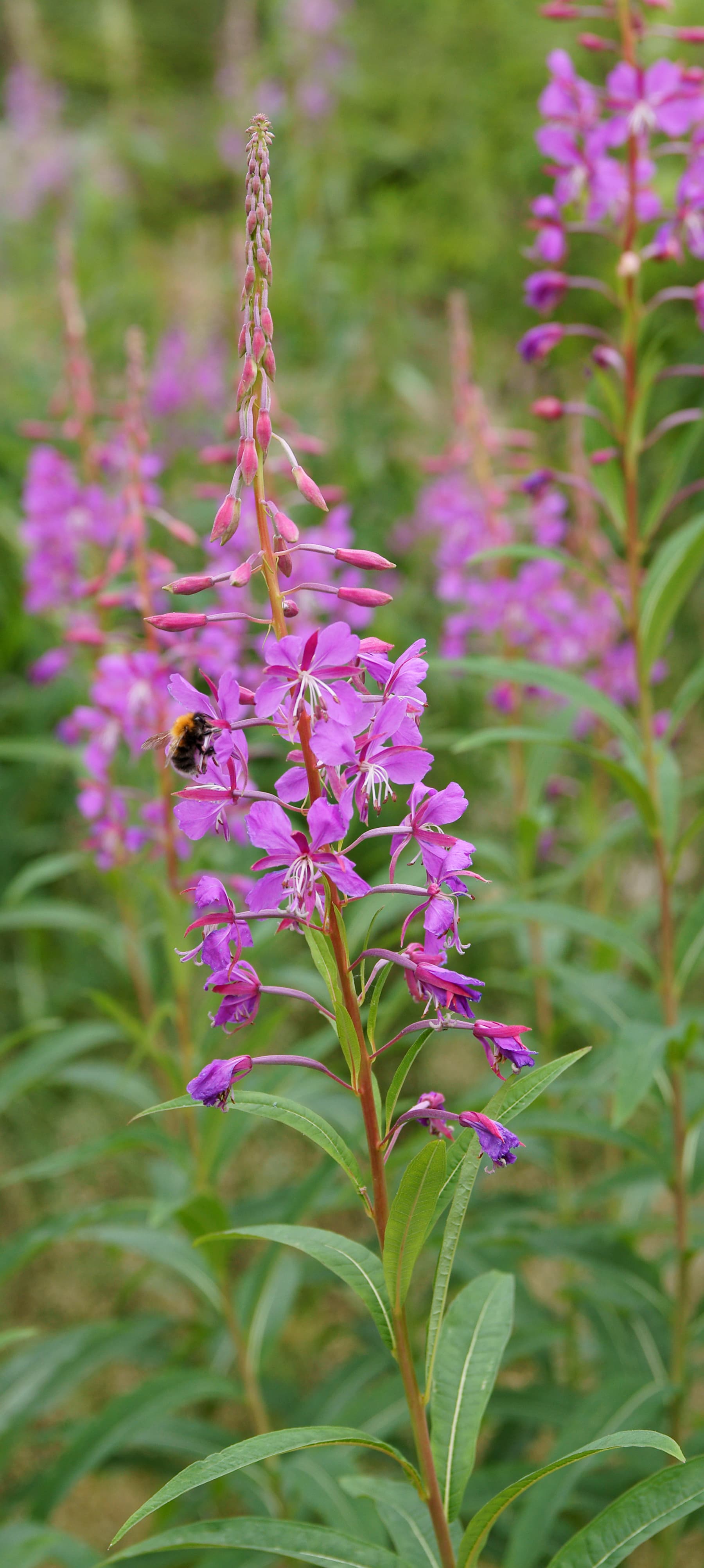
Chamaenerion angustifolium 'Album' is the white-flowered cultivar of common fireweed, a tall herbaceous perennial native across northern North America, Europe, and Asia. While the species produces magenta-pink racemes, 'Album' bears pure white flowers on upright stems from midsummer through early fall, useful for adding height and pale contrast to naturalistic plantings, cottage gardens, and pollinator beds.
Fireweed spreads by both creeping rhizomes and wind-dispersed seeds and can colonize aggressively if unmanaged. Removing stems before seed pods split is the most effective check on self-seeding; physical edging or root barriers manage rhizome spread. The plant tolerates poor and disturbed soils, performs well in cool climates, and is among the hardiest tall perennials in its zone range. A light mulch at the root zone conserves moisture without encouraging crown rot. Slightly acidic to neutral pH suits it, but soil chemistry is not critical.
Young shoots and leaves of the species were eaten as a potherb across northern latitudes, and in Russia dried leaves are brewed as Ivan Chai, traditionally used for digestive and urinary support. Modern research has examined fireweed leaf extracts for activity relevant to benign prostatic hyperplasia. Flowers and stem pith are edible raw or cooked.
Ecoregions:TundraTaigaHudson PlainNorthern ForestsNorthwestern Forested MountainsMarine West Coast ForestEastern Temperate ForestsGreat PlainsNorth American DesertsMediterranean California
Powdery mildew
White or grey powdery coating on leaves - usually starting on older growth in humid conditions or when nights cool.
Improve air circulation by thinning plants. Apply neem oil or potassium bicarbonate spray at first sign. Avoid overhead watering.
Rust
Orange to brown raised pustules on the undersides of leaves, with yellow spotting on the upper surface. Heavy infections cause leaves to yellow and drop.
Remove and destroy infected leaves. Avoid overhead watering and improve air circulation. Apply a sulfur or copper-based fungicide if it spreads. Clear plant debris in fall.
Botrytis (grey mould)
Grey fuzzy mould on petals and stems, worst in cool wet conditions.
Remove affected parts immediately. Improve air circulation. Avoid overhead watering. Apply copper fungicide if severe.
Root rot
Plants wilt, yellow, and stunt even in moist soil; lower stems and roots turn brown, soft, and mushy and the plant may collapse. Most common in heavy, wet, or poorly drained ground.
Improve drainage and stop overwatering, and never plant too deep. Lift and destroy badly affected plants along with the soil around the roots. Grow in raised or free-draining beds to prevent it returning.