
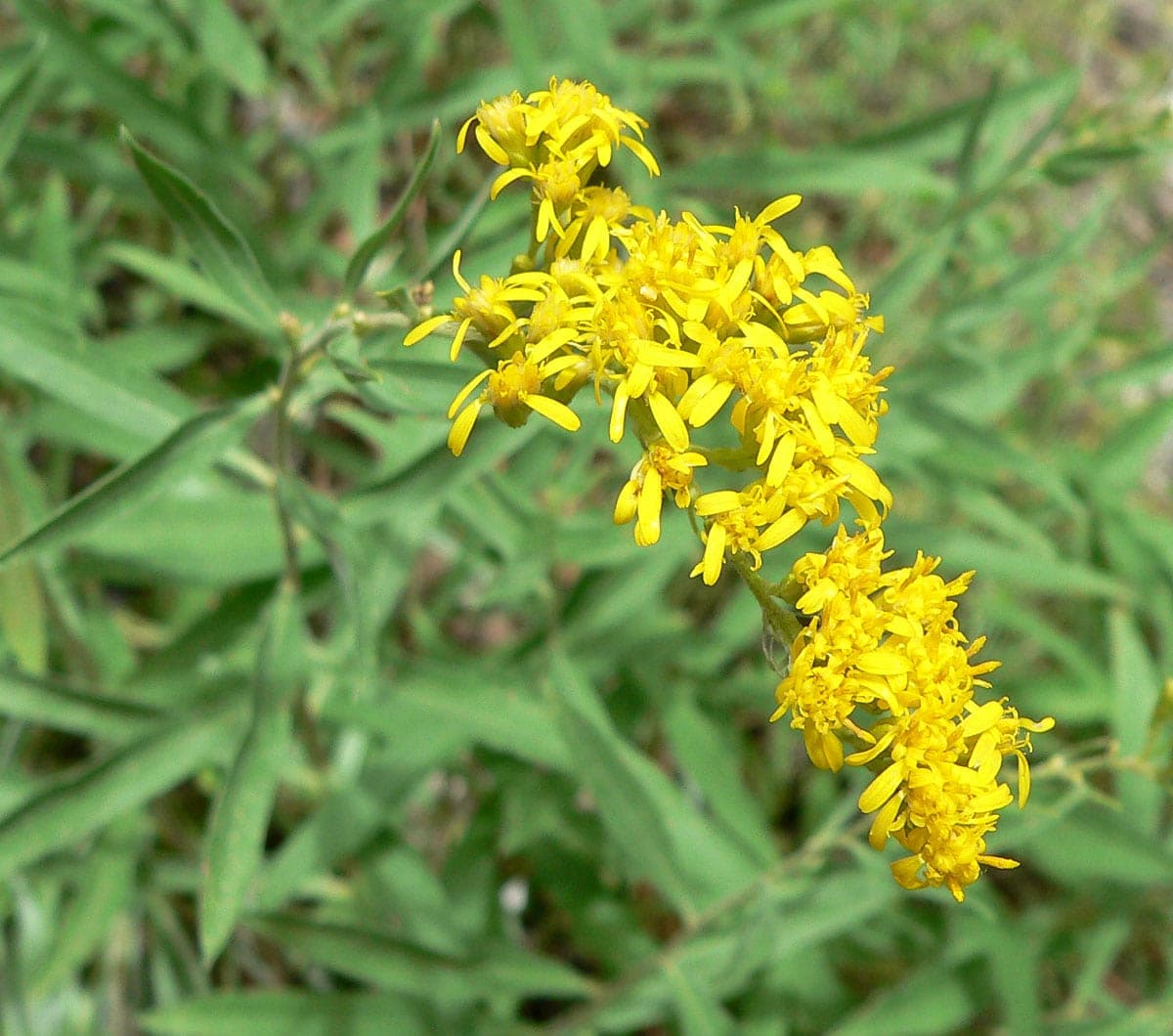
Solidago velutina is a perennial wildflower native to the western United States and northern Mexico, ranging from southwestern Oregon east to the Black Hills of South Dakota. Its common name reflects the distinctly soft, velvety texture of its stems and leaves - a tactile and visual difference from most other goldenrods. It produces dense arching clusters of small yellow flowers from late summer into fall and fits well in naturalistic, meadow, or xeric garden settings.
Grows best in full sun and lean, well-drained soil with minimal irrigation once established. Rich soils promote floppy stems; poor to average soils produce sturdier, more upright plants. It spreads slowly by rhizomes and benefits from division every three to four years to maintain vigor. Cold-hardy through zone 4, it dies back fully in winter and re-emerges in mid-spring. A light organic mulch over winter helps in the coldest end of its range.
Goldenrods rank among the most ecologically significant plants for late-season pollinators in North America, supporting specialist native bees, butterflies, and beneficial wasps when few other nectar sources remain. Solidago species have a well-documented ethnobotanical record among Indigenous peoples of North America, with traditional applications as a diuretic, anti-inflammatory, and topical wound treatment.
Ecoregions:Northwestern Forested MountainsMarine West Coast ForestGreat PlainsNorth American DesertsMediterranean CaliforniaSouthern Semi-Arid HighlandsTemperate Sierras
Powdery mildew
White or grey powdery coating on leaves - usually starting on older growth in humid conditions or when nights cool.
Improve air circulation by thinning plants. Apply neem oil or potassium bicarbonate spray at first sign. Avoid overhead watering.
Rust
Orange to brown raised pustules on the undersides of leaves, with yellow spotting on the upper surface. Heavy infections cause leaves to yellow and drop.
Remove and destroy infected leaves. Avoid overhead watering and improve air circulation. Apply a sulfur or copper-based fungicide if it spreads. Clear plant debris in fall.
Fungal leaf spot
Brown or purplish spots on the leaves, often ringed with a yellow halo, that spread and merge in warm, humid, or wet weather; heavily spotted leaves yellow and drop early.
Pick off spotted leaves and clear fallen debris to remove overwintering spores. Improve air circulation by thinning, and water at the base so foliage dries quickly. If it persists, apply a copper- or sulfur-based fungicide at the first sign.
Aster Yellows
Deformed, greenish flowers, stunted growth, and yellowed foliage. Flower centers may produce tufts of leafy growth instead of normal petals.
No cure. Remove and destroy infected plants immediately to stop spread. Control leafhoppers, which transmit the disease, and remove nearby weed hosts.