
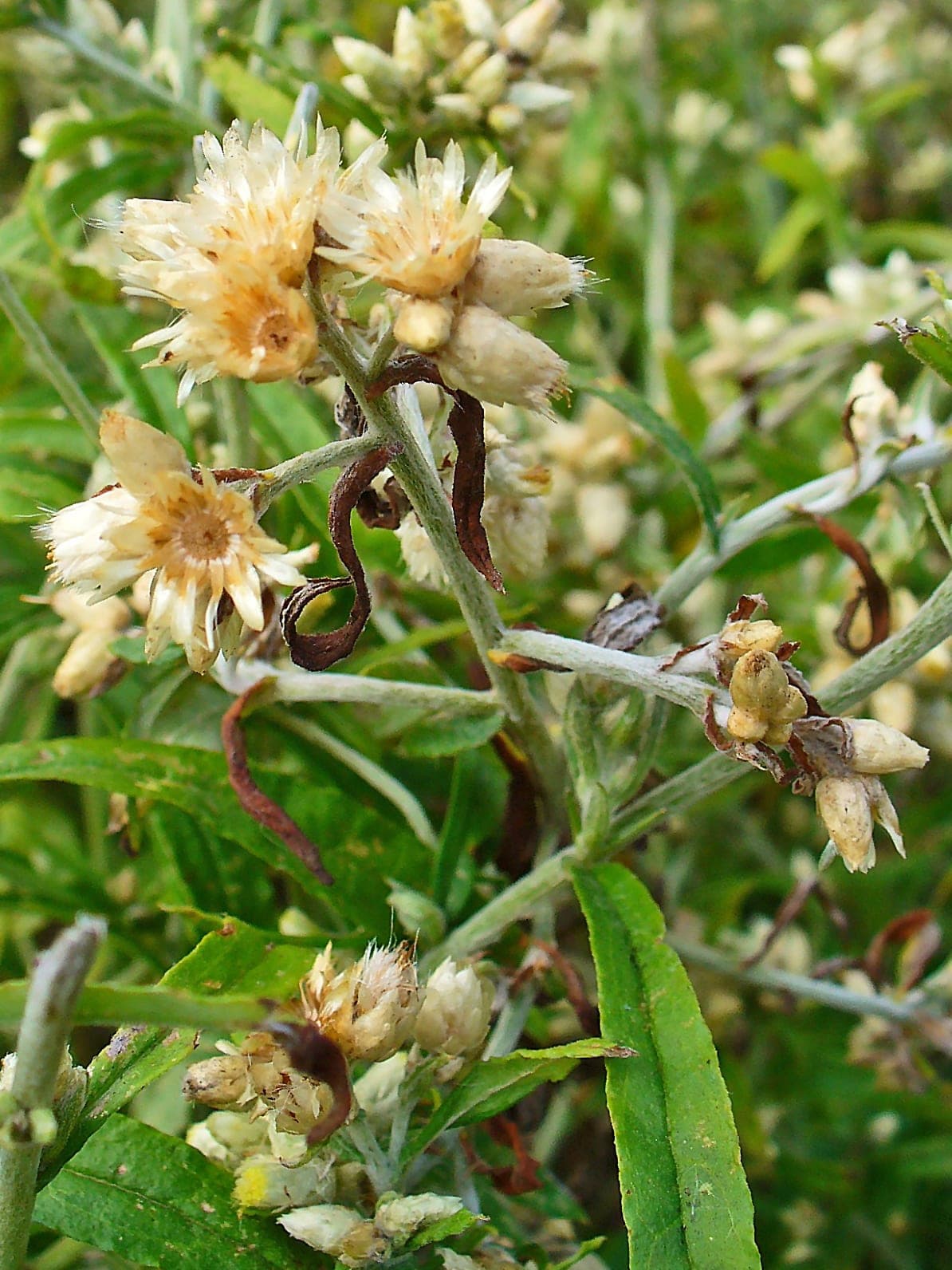
Sweet Everlasting is a native annual or biennial in the Asteraceae family, widespread across dry, open, sandy habitats in eastern North America. Its stems and leaves are densely white-woolly, and crushing any part releases a pronounced maple-syrup scent. The small papery white heads hold their form long after maturity, making it a reliable choice for naturalistic plantings and dried-stem arrangements.
This species thrives in poor, sandy, or gravelly soil with full sun and demands almost no supplemental water once established. It self-seeds freely into disturbed or thin-soiled sites-old fields, roadsides, and open woodland edges are typical habitat. Seeds require light to germinate, so surface sowing without covering is essential. Soil pH tolerance is broad. A biennial rosette may overwinter in cooler zones before sending up a flowering stem the following year.
Known regionally as rabbit tobacco, this species has documented use among Indigenous peoples of eastern North America for respiratory complaints including coughs, colds, congestion, and asthma. Leaves were smoked, brewed as tea, or used in steam inhalations. Laboratory studies have confirmed antimicrobial and anti-inflammatory activity in plant extracts.
Ecoregions:Northern ForestsEastern Temperate ForestsGreat Plains
Damping Off
Seedlings collapse at the soil line with thin, water-soaked stems; seeds may fail to emerge or rot before sprouting.
Sow in well-draining mix, avoid overwatering, and ensure good airflow. Remove affected seedlings and let the surface dry between waterings.
Fungal leaf spot
Brown or purplish spots on the leaves, often ringed with a yellow halo, that spread and merge in warm, humid, or wet weather; heavily spotted leaves yellow and drop early.
Pick off spotted leaves and clear fallen debris to remove overwintering spores. Improve air circulation by thinning, and water at the base so foliage dries quickly. If it persists, apply a copper- or sulfur-based fungicide at the first sign.
Root rot
Plants wilt, yellow, and stunt even in moist soil; lower stems and roots turn brown, soft, and mushy and the plant may collapse. Most common in heavy, wet, or poorly drained ground.
Improve drainage and stop overwatering, and never plant too deep. Lift and destroy badly affected plants along with the soil around the roots. Grow in raised or free-draining beds to prevent it returning.