
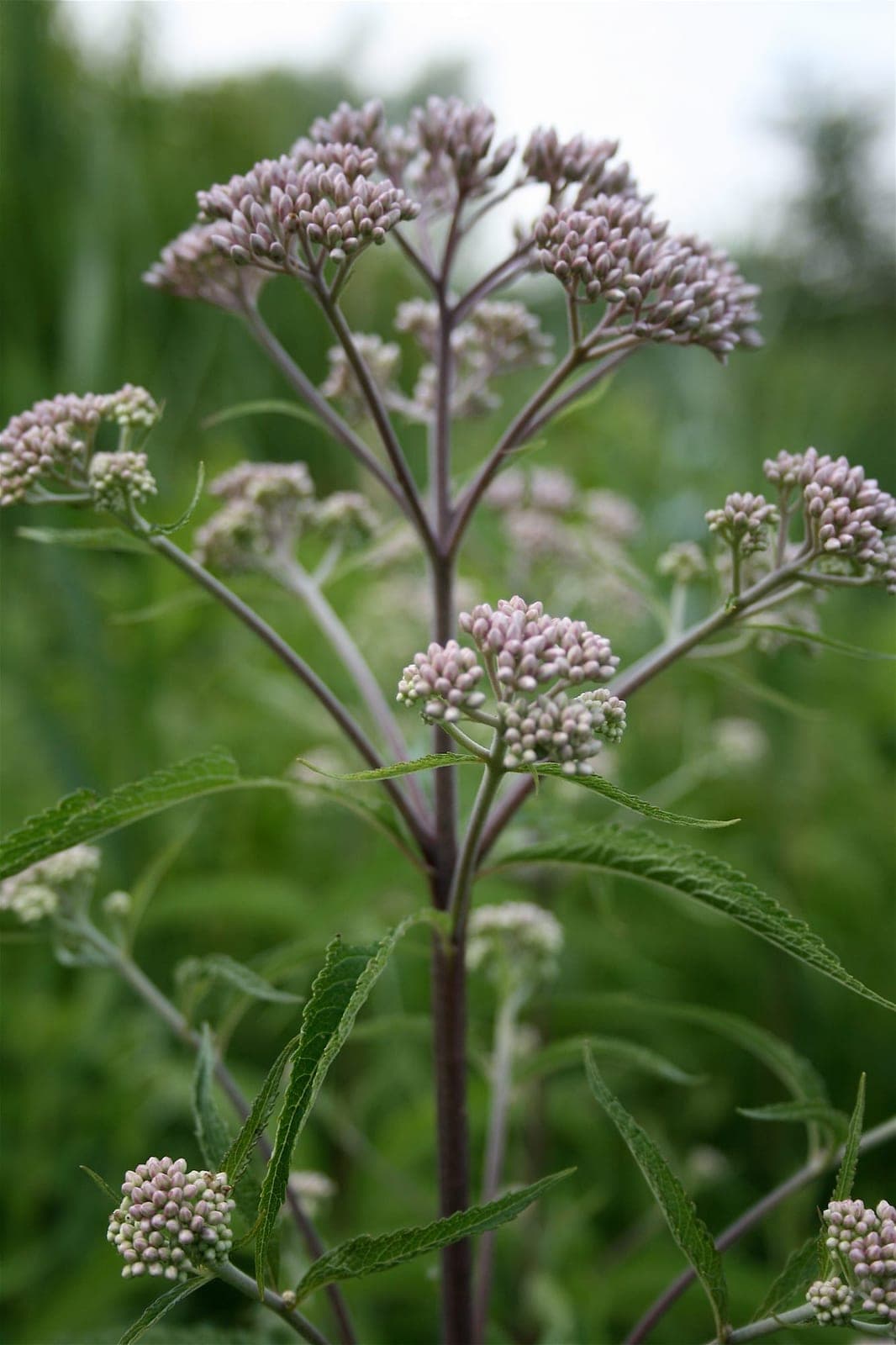
Eutrochium maculatum is a tall, clump-forming native perennial with hollow, purple-spotted stems reaching 4–7 feet. In late summer it produces broad, flat-topped clusters of dusty mauve-pink that attract monarch butterflies, tiger swallowtails, and native bees in numbers few other plants match. It is the only Eutrochium species found west of the Great Plains.
Native to moist meadows, stream banks, and wet woodland edges across much of North America, it naturalizes well in rain gardens and wet borders. The plant spreads slowly by rhizome and self-seeds under ideal conditions. Cutting stems back by one-third in early June reduces final height and staggers the flowering period without sacrificing nectar value. Hollow stems left standing through winter shelter cavity-nesting bees, and seed heads feed goldfinches. A 2–3 inch mulch layer helps maintain the consistent moisture this species requires.
Several Indigenous nations used this plant and close relatives for fevers and kidney complaints; these are ethnobotanical records, not clinical recommendations.
Ecoregions:Northern ForestsNorthwestern Forested MountainsEastern Temperate ForestsGreat Plains
Powdery mildew
White or grey powdery coating on leaves - usually starting on older growth in humid conditions or when nights cool.
Improve air circulation by thinning plants. Apply neem oil or potassium bicarbonate spray at first sign. Avoid overhead watering.
Aster Yellows
Deformed, greenish flowers, stunted growth, and yellowed foliage. Flower centers may produce tufts of leafy growth instead of normal petals.
No cure. Remove and destroy infected plants immediately to stop spread. Control leafhoppers, which transmit the disease, and remove nearby weed hosts.
Fungal leaf spot
Brown or purplish spots on the leaves, often ringed with a yellow halo, that spread and merge in warm, humid, or wet weather; heavily spotted leaves yellow and drop early.
Pick off spotted leaves and clear fallen debris to remove overwintering spores. Improve air circulation by thinning, and water at the base so foliage dries quickly. If it persists, apply a copper- or sulfur-based fungicide at the first sign.