
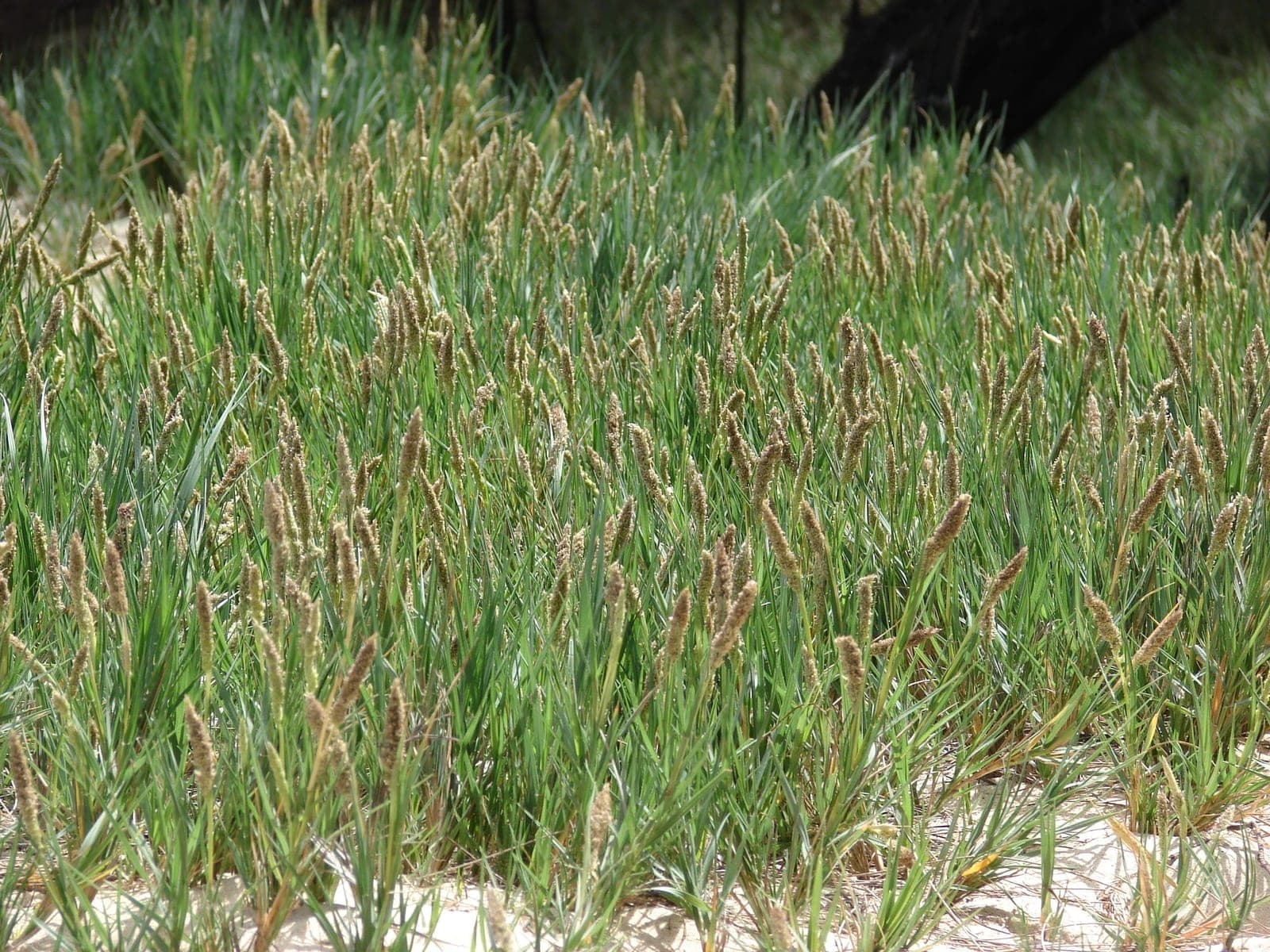
Prairie Dropseed 'Cloud' is a cultivar of Sporobolus heterolepis, a fine-textured warm-season bunchgrass native to tallgrass and mixed-grass prairies across central and eastern North America. 'Cloud' is selected for its exceptionally slender, arching leaves and airy seed heads that form a hazy, cloud-like mass when fully developed in late summer. Foliage turns orange-copper after frost, giving the plant strong autumn presence.
Slow to establish in its first one to two seasons, prairie dropseed becomes exceptionally drought-tolerant and long-lived once settled. Full sun and well-drained to dry soil produce the tightest, most upright growth; fertile or consistently moist ground results in floppy, open clumps. Prefers neutral to slightly alkaline pH and tolerates lean, clay-heavy soils. Cut foliage back to 3–4 inches in late winter before new growth begins. The genus name, from the Greek for 'seed-thrower,' reflects how ripe seeds are forcibly expelled from the plant. Prairie dropseed is a larval host for several skipper butterflies and a component of native prairie restoration plantings.
The seed heads emit a distinctive fragrance commonly described as cilantro or soap when brushed. Seeds of the species were historically harvested and ground into flour by Indigenous peoples of the Great Plains.
Ecoregions:Northern ForestsNorthwestern Forested MountainsEastern Temperate ForestsGreat Plains
Rust
Orange to brown raised pustules on the undersides of leaves, with yellow spotting on the upper surface. Heavy infections cause leaves to yellow and drop.
Remove and destroy infected leaves. Avoid overhead watering and improve air circulation. Apply a sulfur or copper-based fungicide if it spreads. Clear plant debris in fall.
Root rot
Plants wilt, yellow, and stunt even in moist soil; lower stems and roots turn brown, soft, and mushy and the plant may collapse. Most common in heavy, wet, or poorly drained ground.
Improve drainage and stop overwatering, and never plant too deep. Lift and destroy badly affected plants along with the soil around the roots. Grow in raised or free-draining beds to prevent it returning.