
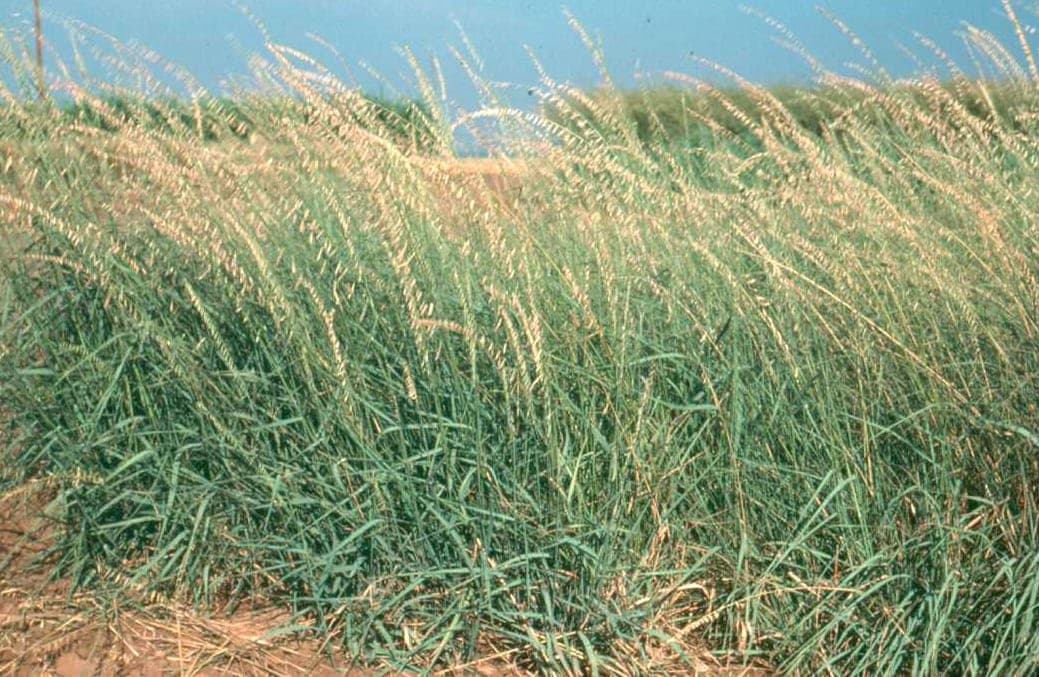
Sideoats grama is a native perennial warm-season grass found from Canada to Argentina and is the state grass of Texas. It takes its name from the oat-like spikelets that dangle along one side of each stem, giving the plant a distinctive silhouette from midsummer through fall.
It establishes well in poor, rocky, or sandy soils with good drainage and becomes highly drought tolerant once rooted. Foliage is blue-green through the growing season, turning bronze to copper in fall. The plant spreads slowly by short rhizomes, forming stable clumps suited to slopes and eroding banks. Seed heads persist through winter and are a reliable food source for grassland birds. It tolerates a wide pH range and performs well in the alkaline soils common to the Great Plains.
Sideoats grama is a dominant species in mixed-grass and shortgrass prairie ecosystems across North America. In restorations and naturalistic plantings it supports high invertebrate diversity and provides dense basal cover used by ground-nesting birds.
Ecoregions:Northwestern Forested MountainsEastern Temperate ForestsGreat PlainsNorth American DesertsSouthern Semi-Arid HighlandsTemperate Sierras
Rust
Orange to brown raised pustules on the undersides of leaves, with yellow spotting on the upper surface. Heavy infections cause leaves to yellow and drop.
Remove and destroy infected leaves. Avoid overhead watering and improve air circulation. Apply a sulfur or copper-based fungicide if it spreads. Clear plant debris in fall.
Fungal leaf spot
Brown or purplish spots on the leaves, often ringed with a yellow halo, that spread and merge in warm, humid, or wet weather; heavily spotted leaves yellow and drop early.
Pick off spotted leaves and clear fallen debris to remove overwintering spores. Improve air circulation by thinning, and water at the base so foliage dries quickly. If it persists, apply a copper- or sulfur-based fungicide at the first sign.
Root rot
Plants wilt, yellow, and stunt even in moist soil; lower stems and roots turn brown, soft, and mushy and the plant may collapse. Most common in heavy, wet, or poorly drained ground.
Improve drainage and stop overwatering, and never plant too deep. Lift and destroy badly affected plants along with the soil around the roots. Grow in raised or free-draining beds to prevent it returning.