
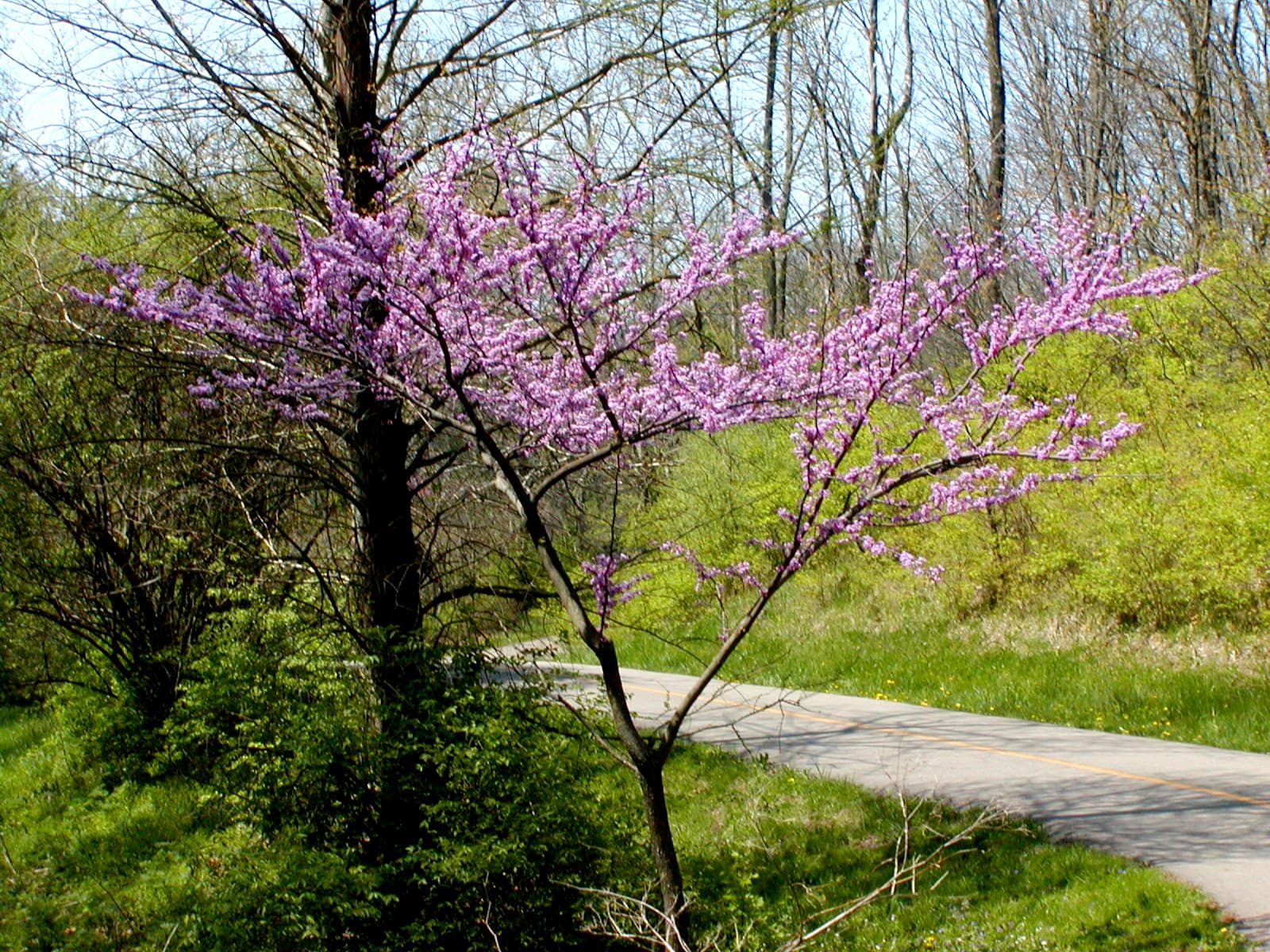
Lavender Twist Redbud (Cercis canadensis 'Lavender Twist') is a weeping cultivar of eastern redbud, typically reaching 5–8 ft tall with a spread that equals or exceeds its height. In early spring, bare branches carry dense clusters of rosy-pink flowers before the heart-shaped leaves emerge - a phenomenon called cauliflory, in which flowers arise directly from wood and older stems. The mounded, cascading branch structure suits it well as a specimen in small gardens, courtyard plantings, and slopes where a focal point is needed without bulk.
It grows best in full sun to part shade with moist, well-drained soil and tolerates clay better than most ornamental trees. In zones 8–9, afternoon shade reduces summer stress and extends the planting window. The tree requires little pruning; remove dead or crossing branches immediately after flowering when the weeping structure is unobscured by foliage. Redbud resents root disturbance once established - site selection before planting is critical. Cold-hardy to zone 5a, it benefits from wind protection in the first few winters. Mulching the root zone conserves moisture and moderates soil temperature without raising it above grade.
The flowers of Cercis canadensis are edible and have been used fresh in salads or lightly pickled. Cherokee and other Native American groups used the bark as an astringent and to treat dysentery. Early spring flowers are among the first nectar sources available to native bees before most woody plants are in active growth.
Ecoregions:Eastern Temperate ForestsGreat Plains
Redbud Canker
Sunken, discolored lesions on stems or trunk with cracked or peeling bark at the margins. Branches beyond the canker wilt and die back from the tip inward. Affected bark may reveal dark staining in the wood beneath.
Prune affected branches 6–8 inches below the visible canker margin using sterilized tools. Dispose of removed wood away from the site. Maintain tree vigor with consistent moisture and mulching. No effective fungicide treatment once canker is established; prevention relies on avoiding mechanical injury to bark and minimizing drought stress.
Verticillium Wilt
Lower leaves yellow and wilt, often on one side of the plant, with brown streaking in the stem and crown tissue when cut open. Plants are stunted and decline over the season.
Remove and destroy affected plants. Avoid planting in soil that has grown infected tomatoes, peppers, or other susceptible crops. Rotate beds and improve drainage; there is no cure once a plant is infected.
Root rot
Plants wilt, yellow, and stunt even in moist soil; lower stems and roots turn brown, soft, and mushy and the plant may collapse. Most common in heavy, wet, or poorly drained ground.
Improve drainage and stop overwatering, and never plant too deep. Lift and destroy badly affected plants along with the soil around the roots. Grow in raised or free-draining beds to prevent it returning.
Fungal leaf spot
Brown or purplish spots on the leaves, often ringed with a yellow halo, that spread and merge in warm, humid, or wet weather; heavily spotted leaves yellow and drop early.
Pick off spotted leaves and clear fallen debris to remove overwintering spores. Improve air circulation by thinning, and water at the base so foliage dries quickly. If it persists, apply a copper- or sulfur-based fungicide at the first sign.