
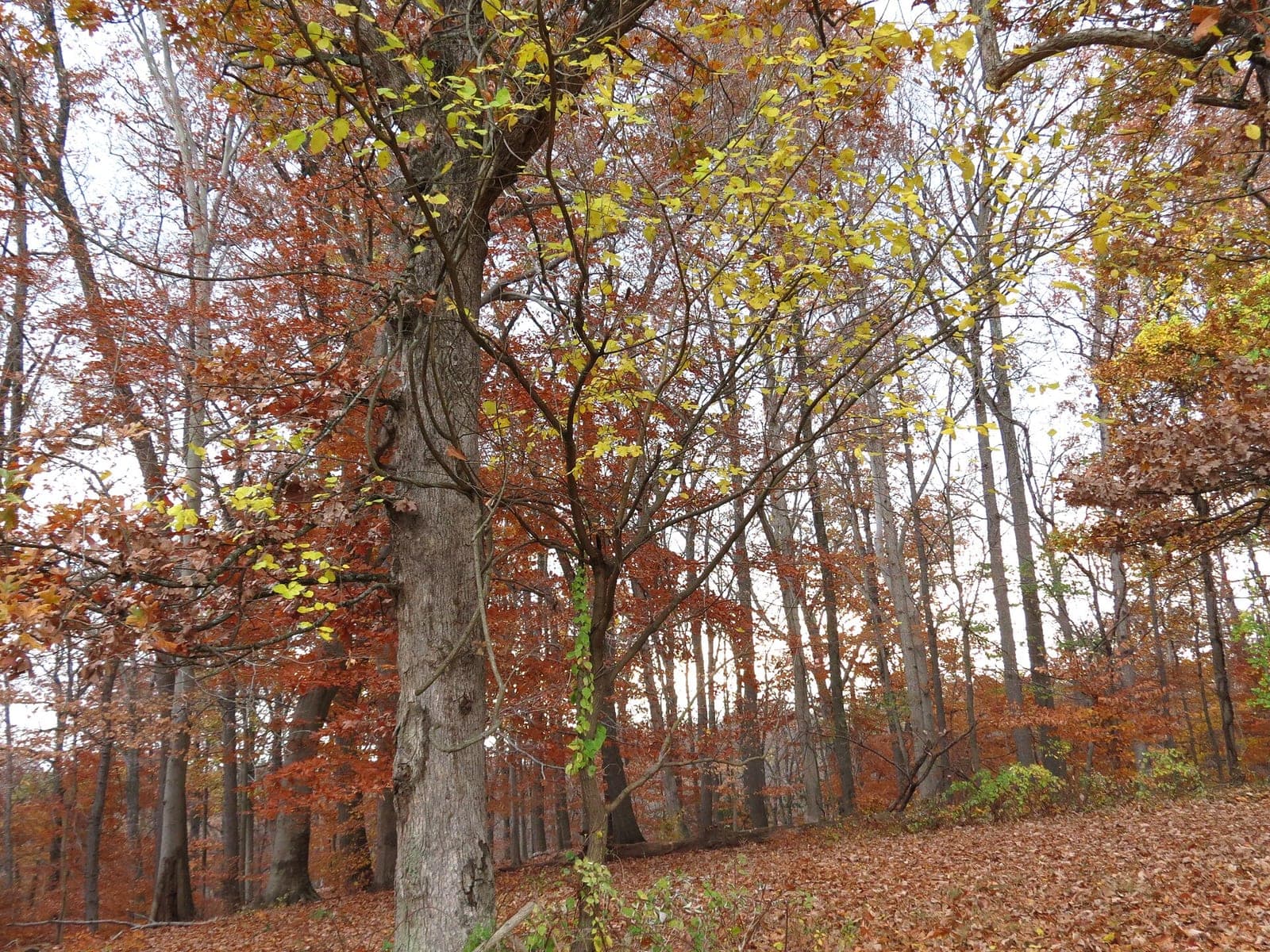
Red mulberry (Morus rubra) is a deciduous fruit tree native to eastern and central North America, ranging from Ontario south to Florida and west to Nebraska and central Texas. It produces abundant fruit in early summer that ripens from red to near-black and is noticeably sweeter than fruit from the introduced white mulberry. Its combination of edible yield, wildlife value, and native provenance makes it a strong candidate for edible and habitat-focused landscapes.
The tree grows quickly when young, eventually reaching 35–65 feet with a broad, spreading crown. It tolerates periodic flooding and performs on a wide range of soils, though moist, fertile bottomland ground produces the best growth and fruit set. A significant concern across most of its range is hybridization with white mulberry (Morus alba), which has naturalized widely and readily crosses with red mulberry; sourcing plants from reputable native nurseries preserves genetic integrity. The fruit is consumed by over 50 bird species and numerous mammals, and the tree is a larval host for many Lepidoptera. Root suckers should be removed promptly to prevent thicket formation.
Ripe fruit is used fresh and in jams, jellies, pies, and wine, and was a significant food resource for Native American peoples across the tree's range. Various tribes used bark decoctions to treat dysentery and as a laxative.
Ecoregions:Eastern Temperate ForestsGreat Plains
Powdery mildew
White or grey powdery coating on leaves - usually starting on older growth in humid conditions or when nights cool.
Improve air circulation by thinning plants. Apply neem oil or potassium bicarbonate spray at first sign. Avoid overhead watering.
Fungal leaf spot
Brown or purplish spots on the leaves, often ringed with a yellow halo, that spread and merge in warm, humid, or wet weather; heavily spotted leaves yellow and drop early.
Pick off spotted leaves and clear fallen debris to remove overwintering spores. Improve air circulation by thinning, and water at the base so foliage dries quickly. If it persists, apply a copper- or sulfur-based fungicide at the first sign.
Armillaria Root Rot
Thinning, yellowing canopy with progressive dieback; white, fan-shaped mycelial mats visible beneath bark at or just below the soil line; honey-colored mushroom clusters appearing at the trunk base or on surface roots in autumn.
No chemical cure exists. Improve drainage and avoid any injury to roots or trunk. Remove severely infected trees along with as much root material as possible. Do not replant susceptible species in the same spot.
Bacterial Leaf Scorch
Browning at leaf margins progresses inward, often with a yellow or reddish border between healthy and necrotic tissue. Symptoms first appear on older leaves in late summer and worsen each subsequent year as the pathogen spreads through the xylem.
No cure exists. Prune affected branches, maintain tree vigor with deep watering and a wide mulch ring, and manage sharpshooter leafhopper populations where feasible. Oxytetracycline trunk injections by a licensed arborist may suppress symptoms temporarily but do not eliminate Xylella fastidiosa.
Mulberry Popcorn Disease
Individual drupelets or entire fruit clusters enlarge abnormally, turning whitish to tan with a rubbery or spongy texture. Affected fruit fails to ripen, drops early, and may emit a faint fermented odor. Heavily infected trees can lose most of their fruit crop in a single season.
No fungicide is effective once symptoms appear. Remove and bag all infected fruit as soon as it is noticed; do not compost. At season's end, rake and dispose of all fallen fruit and leaf debris beneath the canopy to eliminate overwintering fungal bodies (sclerotia). In sites with a persistent history of heavy infection, a copper-based fungicide applied at early fruit set may reduce incidence in subsequent seasons.