
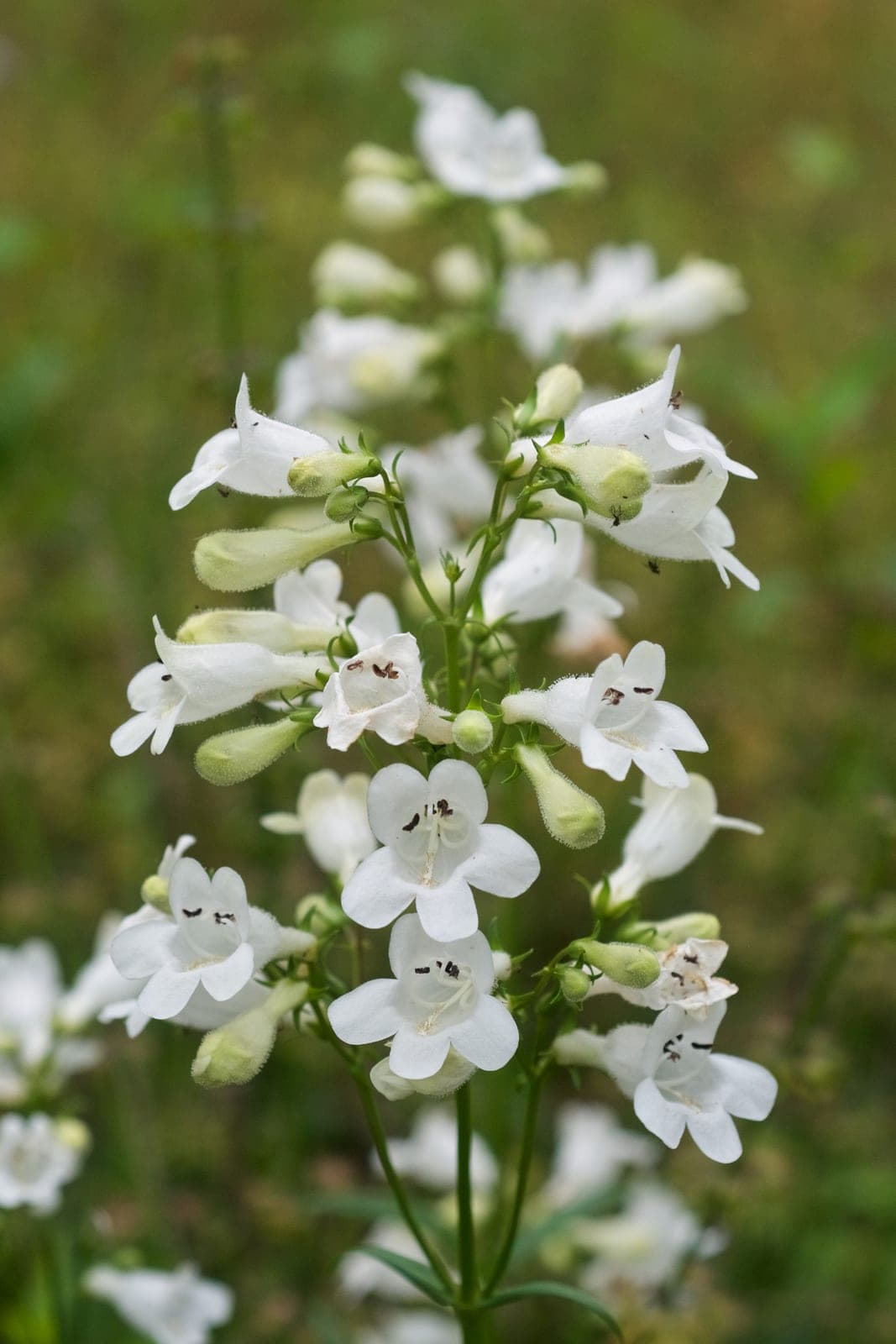
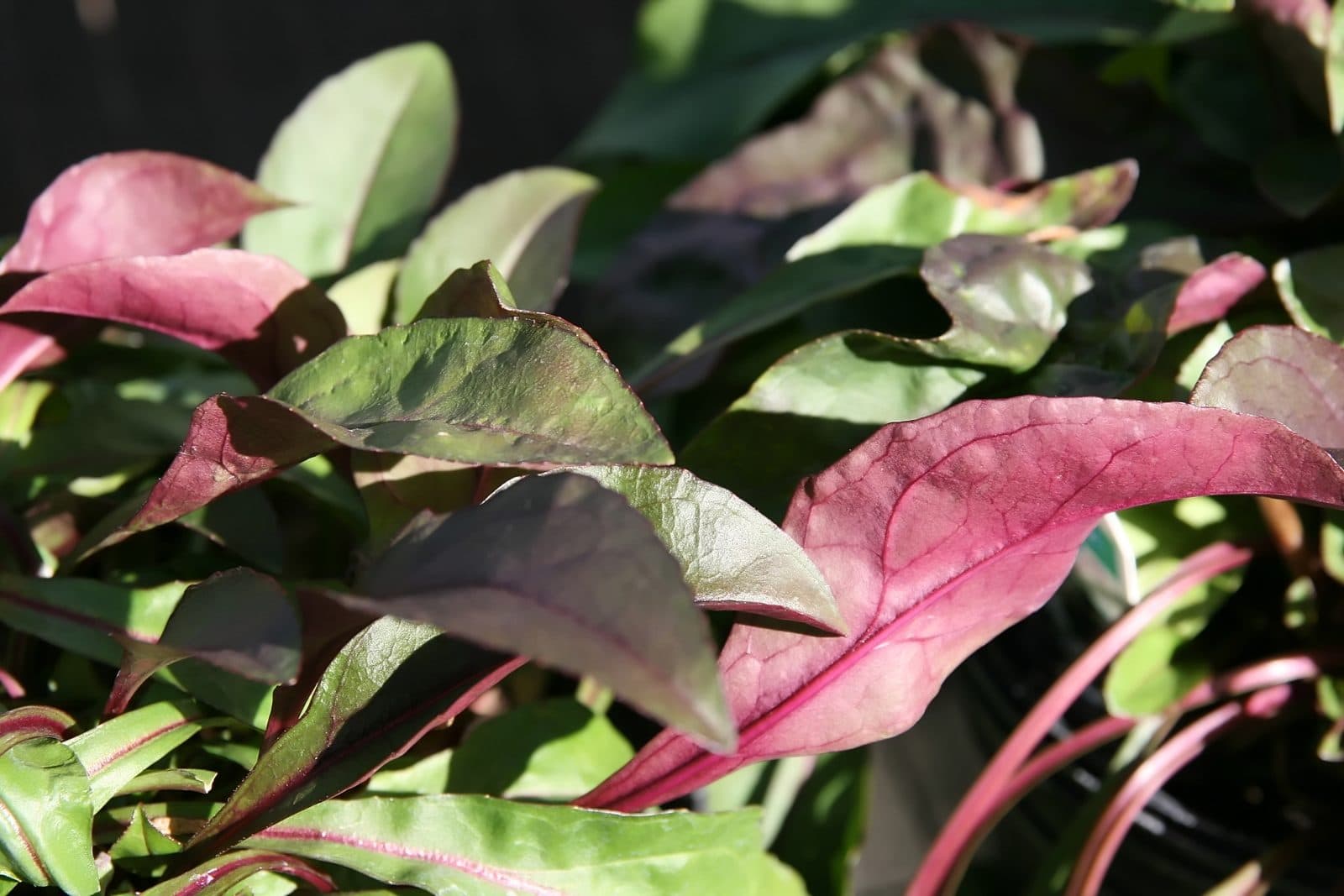
 'Husker Red' - the widely grown cultivar selected for dark burgundy foliage and red stems; same white flowers, habit, and hardiness as the species. Photo: David J. Stang, CC BY-SA 4.0.
Penstemon digitalis is a native North American perennial producing upright stems of white, tubular flowers in early summer. Native to the Mississippi basin and now naturalized broadly across eastern North America, it is one of the most cold-hardy and widely adapted species in the genus. The cultivar 'Husker Red', selected for dark burgundy foliage, is widely available and more ornamentally striking than the straight species.
Plants tolerate clay and average soils and hold up well to periodic drought once established. Basal foliage often develops burgundy tones in fall and may persist through mild winters. Individual plants typically live 3–5 years, but moderate self-seeding sustains populations; cutting stems before seeds disperse limits unwanted spread. Long-tongued native bees, particularly bumblebees and miner bees, are the primary pollinators, and ruby-throated hummingbirds visit regularly.
Ecoregions:Northern ForestsEastern Temperate ForestsGreat Plains
Powdery mildew
White or grey powdery coating on leaves - usually starting on older growth in humid conditions or when nights cool.
Improve air circulation by thinning plants. Apply neem oil or potassium bicarbonate spray at first sign. Avoid overhead watering.
Crown Rot
Lower leaves yellow and wilt; the base of the rosette turns brown and soft, sometimes with white fungal threads at the soil line. Plants collapse in wet conditions.
Remove and destroy affected plants. Improve drainage and avoid overhead watering. Do not mulch directly against the crown. Space plants for airflow and avoid replanting in the same wet spot.
Fungal leaf spot
Brown or purplish spots on the leaves, often ringed with a yellow halo, that spread and merge in warm, humid, or wet weather; heavily spotted leaves yellow and drop early.
Pick off spotted leaves and clear fallen debris to remove overwintering spores. Improve air circulation by thinning, and water at the base so foliage dries quickly. If it persists, apply a copper- or sulfur-based fungicide at the first sign.