
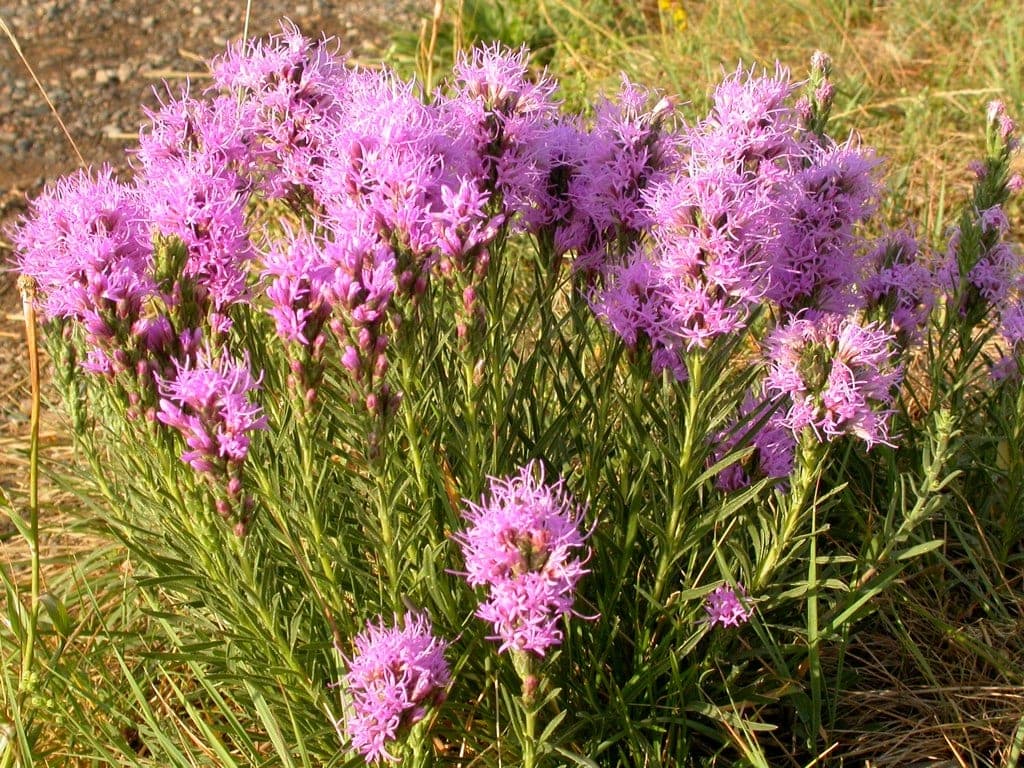
Dotted blazing star is a native perennial of the central North American plains, ranging from southern Canada through the Great Plains to northern Mexico. It produces narrow, resin-dotted leaves - the source of the Latin epithet punctata - and dense rose-purple spikes in late summer and early fall, making it one of the more drought-adapted Liatris species and a strong choice for xeric, prairie-style, and pollinator gardens.
The plant grows from a deep, fleshy taproot that enables it to survive extended drought and severe winters. It blooms from the top of the spike downward, a trait shared across Liatris, and serves as a significant nectar source for monarch butterflies, bumblebees, and skippers. It spreads slowly by seed and is long-lived once established. Performance is best in lean, well-drained to dry soils; rich or persistently moist soils shorten its life and invite crown rot. In colder zones, a light mulch over the crown eases freeze-thaw stress without holding excess moisture against the base.
Plains tribes used the corms as food, roasting or boiling them. Roots were applied in traditional medicine for kidney complaints and sore throats.
Ecoregions:Northwestern Forested MountainsEastern Temperate ForestsGreat Plains
Aster Yellows
Deformed, greenish flowers, stunted growth, and yellowed foliage. Flower centers may produce tufts of leafy growth instead of normal petals.
No cure. Remove and destroy infected plants immediately to stop spread. Control leafhoppers, which transmit the disease, and remove nearby weed hosts.
Crown Rot
Lower leaves yellow and wilt; the base of the rosette turns brown and soft, sometimes with white fungal threads at the soil line. Plants collapse in wet conditions.
Remove and destroy affected plants. Improve drainage and avoid overhead watering. Do not mulch directly against the crown. Space plants for airflow and avoid replanting in the same wet spot.
Root rot
Plants wilt, yellow, and stunt even in moist soil; lower stems and roots turn brown, soft, and mushy and the plant may collapse. Most common in heavy, wet, or poorly drained ground.
Improve drainage and stop overwatering, and never plant too deep. Lift and destroy badly affected plants along with the soil around the roots. Grow in raised or free-draining beds to prevent it returning.
Fungal leaf spot
Brown or purplish spots on the leaves, often ringed with a yellow halo, that spread and merge in warm, humid, or wet weather; heavily spotted leaves yellow and drop early.
Pick off spotted leaves and clear fallen debris to remove overwintering spores. Improve air circulation by thinning, and water at the base so foliage dries quickly. If it persists, apply a copper- or sulfur-based fungicide at the first sign.