
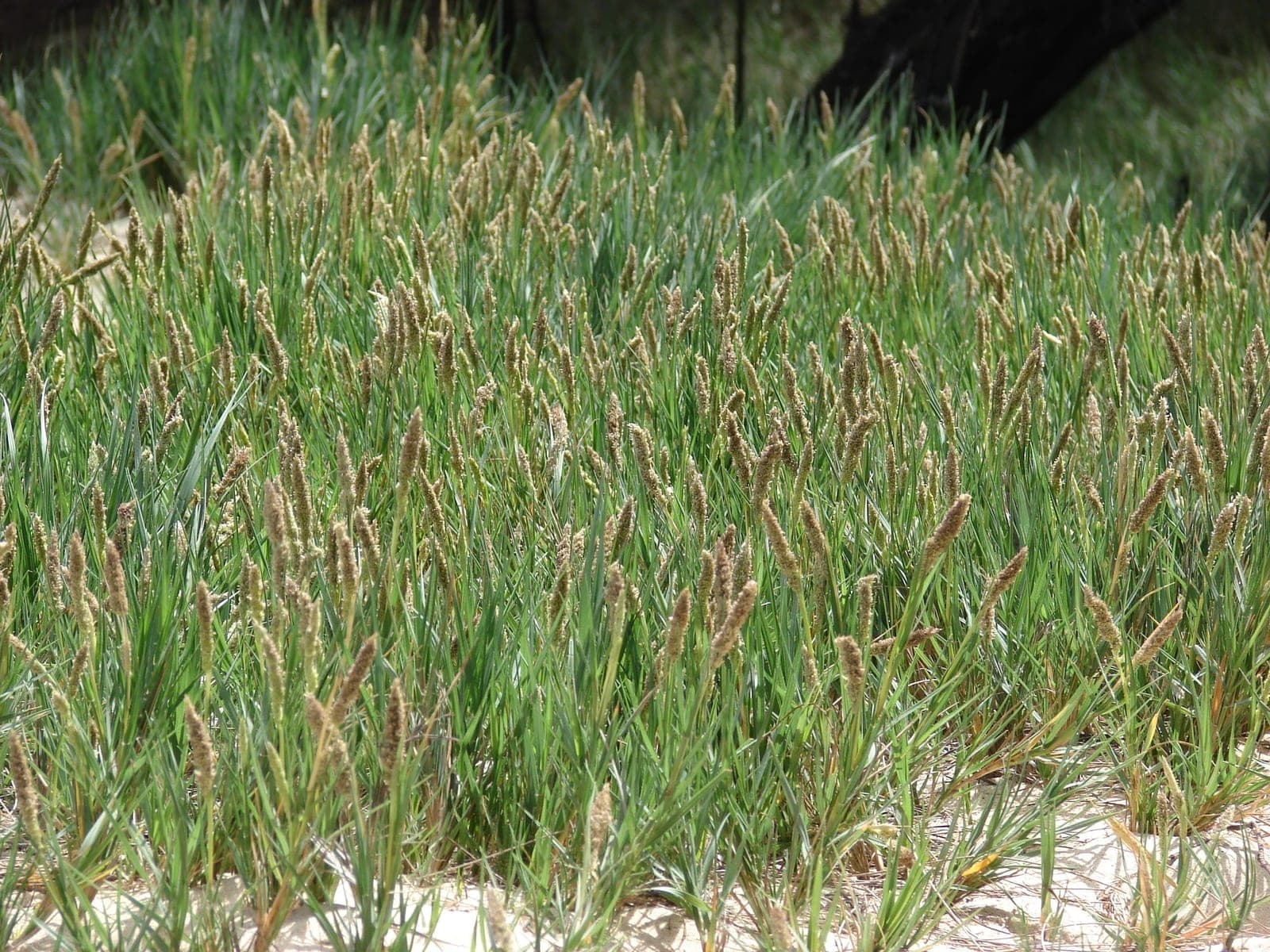
Prairie dropseed is a fine-textured, warm-season bunchgrass native to tallgrass and mixed-grass prairies from Texas to southern Canada. Narrow, glossy leaves arch into dense mounds and turn golden-orange in fall, holding wheat-toned structure through winter. In late summer, airy seed heads rise above the foliage and carry a fragrance often likened to butter popcorn or cilantro, strongest during warm, still afternoons.
It grows naturally on dry, open prairies and tolerates clay, loam, or sandy soils provided drainage is adequate. Establishment is slow - expect two to three years before a planting fills in - but mature clumps are exceptionally long-lived and nearly maintenance-free. Rich or consistently moist soil encourages weak, floppy growth and shortens longevity. It is well suited to prairie restorations, dry borders, and mass plantings where a fine-textured, low-input grass is needed.
Indigenous peoples of the Great Plains historically ground the seeds into flour. In the garden, persistent seed heads feed sparrows, juncos, and other granivorous songbirds through fall and winter, and the dense clump structure provides overwintering habitat for native ground-nesting insects.
Ecoregions:Northern ForestsNorthwestern Forested MountainsEastern Temperate ForestsGreat Plains
Root rot
Plants wilt, yellow, and stunt even in moist soil; lower stems and roots turn brown, soft, and mushy and the plant may collapse. Most common in heavy, wet, or poorly drained ground.
Improve drainage and stop overwatering, and never plant too deep. Lift and destroy badly affected plants along with the soil around the roots. Grow in raised or free-draining beds to prevent it returning.