
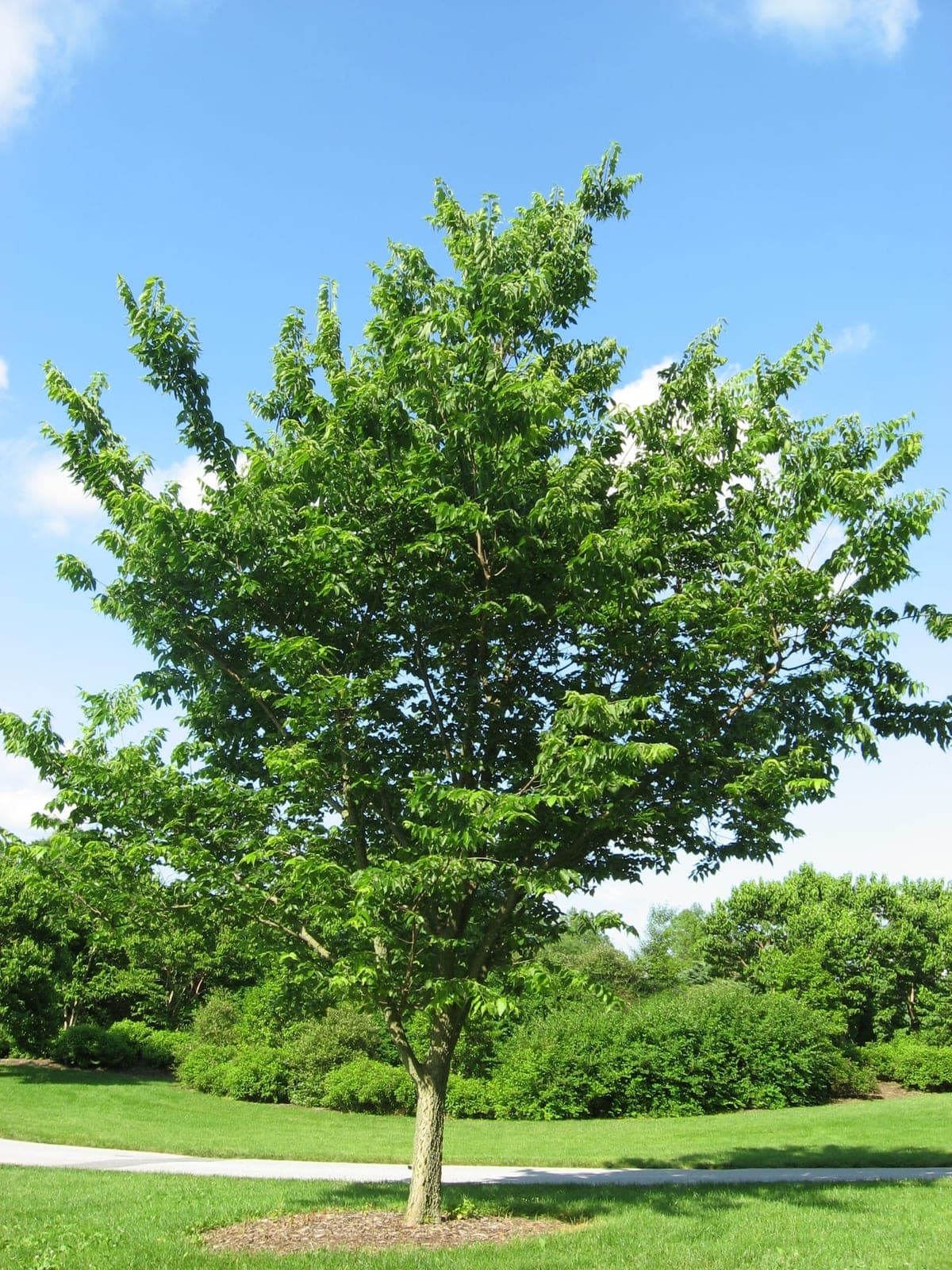
Common hackberry (Celtis occidentalis) is a large native deciduous tree reaching 40–60 feet, notable for tolerating drought, periodic flooding, compacted soil, and urban pollution - making it one of the most site-flexible native hardwoods available for eastern and central North America. The moderately long-lived wood is yellowish gray to light brown with yellow streaks and has been used for furniture, flooring, and sporting goods.
Bark develops distinctive corky ridges and warts with age. Small dark-purple drupes ripen in early fall and persist into winter, providing high-fat, high-sugar food for more than 40 bird species. Hackberry is a primary larval host for the hackberry emperor, tawny emperor, question mark, and eastern comma butterflies. A common cosmetic issue is witches' broom - dense clusters of stunted twigs caused by a combined powdery mildew and eriophyid mite infestation - which is disfiguring but rarely threatens tree health. Prefers a near-neutral to slightly alkaline pH and is native from Quebec to the Great Plains.
Native Americans consumed the sweet drupes fresh, dried, and ground into a paste mixed with fat and corn. Bark preparations were used in traditional medicine for sore throats and menstrual irregularity.
Ecoregions:Northern ForestsEastern Temperate ForestsGreat Plains
Powdery mildew
White or grey powdery coating on leaves - usually starting on older growth in humid conditions or when nights cool.
Improve air circulation by thinning plants. Apply neem oil or potassium bicarbonate spray at first sign. Avoid overhead watering.
Fungal leaf spot
Brown or purplish spots on the leaves, often ringed with a yellow halo, that spread and merge in warm, humid, or wet weather; heavily spotted leaves yellow and drop early.
Pick off spotted leaves and clear fallen debris to remove overwintering spores. Improve air circulation by thinning, and water at the base so foliage dries quickly. If it persists, apply a copper- or sulfur-based fungicide at the first sign.
Armillaria Root Rot
Thinning, yellowing canopy with progressive dieback; white, fan-shaped mycelial mats visible beneath bark at or just below the soil line; honey-colored mushroom clusters appearing at the trunk base or on surface roots in autumn.
No chemical cure exists. Improve drainage and avoid any injury to roots or trunk. Remove severely infected trees along with as much root material as possible. Do not replant susceptible species in the same spot.
Hackberry Witches' Broom
Dense clusters of abnormally short, tightly packed twigs form at branch tips, most visible after leaf drop. During the growing season, affected shoots bear small, distorted leaves. Clusters enlarge over multiple years but do not girdle or kill individual branches.
No chemical treatment is warranted for most established trees. Prune broom clusters back to healthy wood during winter dormancy to improve appearance and reduce mite and spore reservoirs. Dispose of removed material off-site. Trees rarely suffer significant structural decline from this condition.