
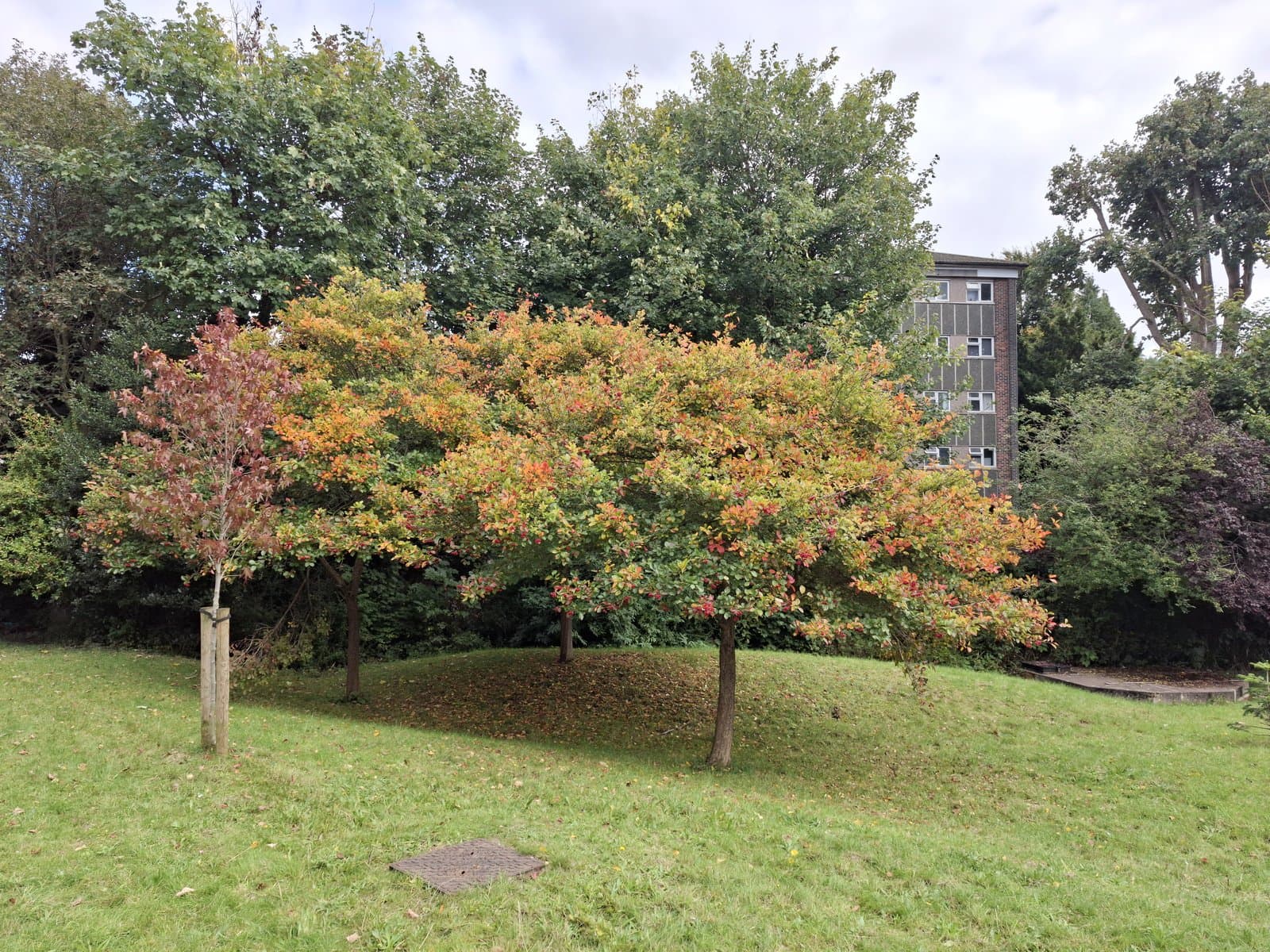
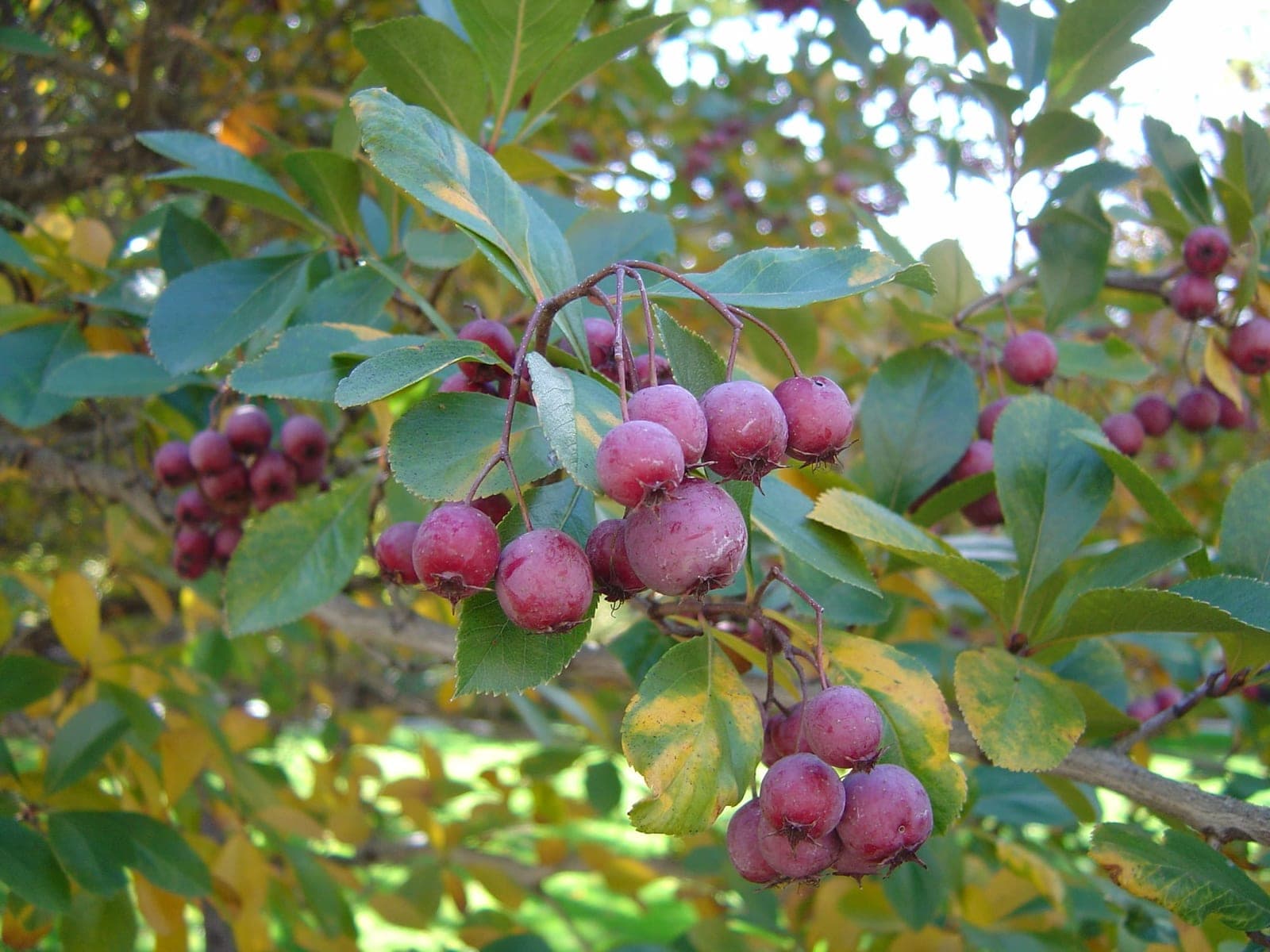
Cockspur hawthorn is a native North American tree reaching 20–35 feet, named for its exceptionally long recurved thorns that can exceed 3 inches. Clusters of small white flowers appear in late spring, giving way to persistent red haws that remain on the tree well into winter. It has strong wildlife value and tolerates a range of difficult conditions that eliminate many other trees from consideration.
The species handles clay soils, urban compaction, drought once established, and a broad pH range without significant decline. Its dense, thorny structure makes it an effective barrier hedge or windbreak when planted in rows at tighter spacing. Prune only during full dormancy to limit fire blight entry points, and remove basal suckers promptly to maintain a clean canopy. A 2–3 inch organic mulch layer over the root zone aids establishment on drier sites.
The red haws are edible and have been used to make jams, jellies, and fruit wines. Hawthorn species in this genus contain significant flavonoid and oligomeric proanthocyanidin concentrations and have a long record of traditional use for cardiovascular and circulatory complaints, supported by modern phytochemical research.
Ecoregions:Northern ForestsEastern Temperate ForestsGreat Plains
Fire Blight
Water-soaked, wilting blossoms and young stems that rapidly turn brown to black. Infected shoot tips curl into a characteristic shepherd's crook. Bark beneath the infection may show reddish-brown discoloration.
Prune infected wood 8–12 inches below visible symptoms during dry weather. Sterilize tools with 70% isopropyl alcohol or a 10% bleach solution between cuts. Avoid high-nitrogen fertilizers that produce soft, disease-susceptible growth. Copper-based bactericides applied at early flowering can reduce spread in high-pressure years.
Cedar-Hawthorn Rust
Bright orange to yellow spots on upper leaf surfaces in spring; raised, tube-like orange spore structures on corresponding leaf undersides. Young fruit and shoot tips may develop swollen orange lesions. Severe infection causes premature defoliation.
Remove or relocate eastern red cedars and other susceptible Juniperus species within several hundred feet where feasible, as they host the alternate fungal stage (Gymnosporangium globosum). Apply a preventive fungicide such as myclobutanil or propiconazole starting at bud break and repeating every 10–14 days during wet spring weather. Rake and destroy all fallen leaves in autumn. On high-pressure sites, select resistant cultivars at planting.
Entomosporium Leaf Spot
Small circular red-purple spots on both leaf surfaces beginning in late spring, enlarging to lesions with gray or tan centers and red-purple margins. Heavy infection leads to early leaf drop by late summer.
Rake and dispose of fallen leaves each season. Prune selectively to improve air circulation. Avoid overhead irrigation. Fungicide applications - myclobutanil, chlorothalonil, or copper-based products - beginning at leaf emergence and repeated every 10–14 days during wet weather can limit disease spread.
Powdery mildew
White or grey powdery coating on leaves - usually starting on older growth in humid conditions or when nights cool.
Improve air circulation by thinning plants. Apply neem oil or potassium bicarbonate spray at first sign. Avoid overhead watering.