
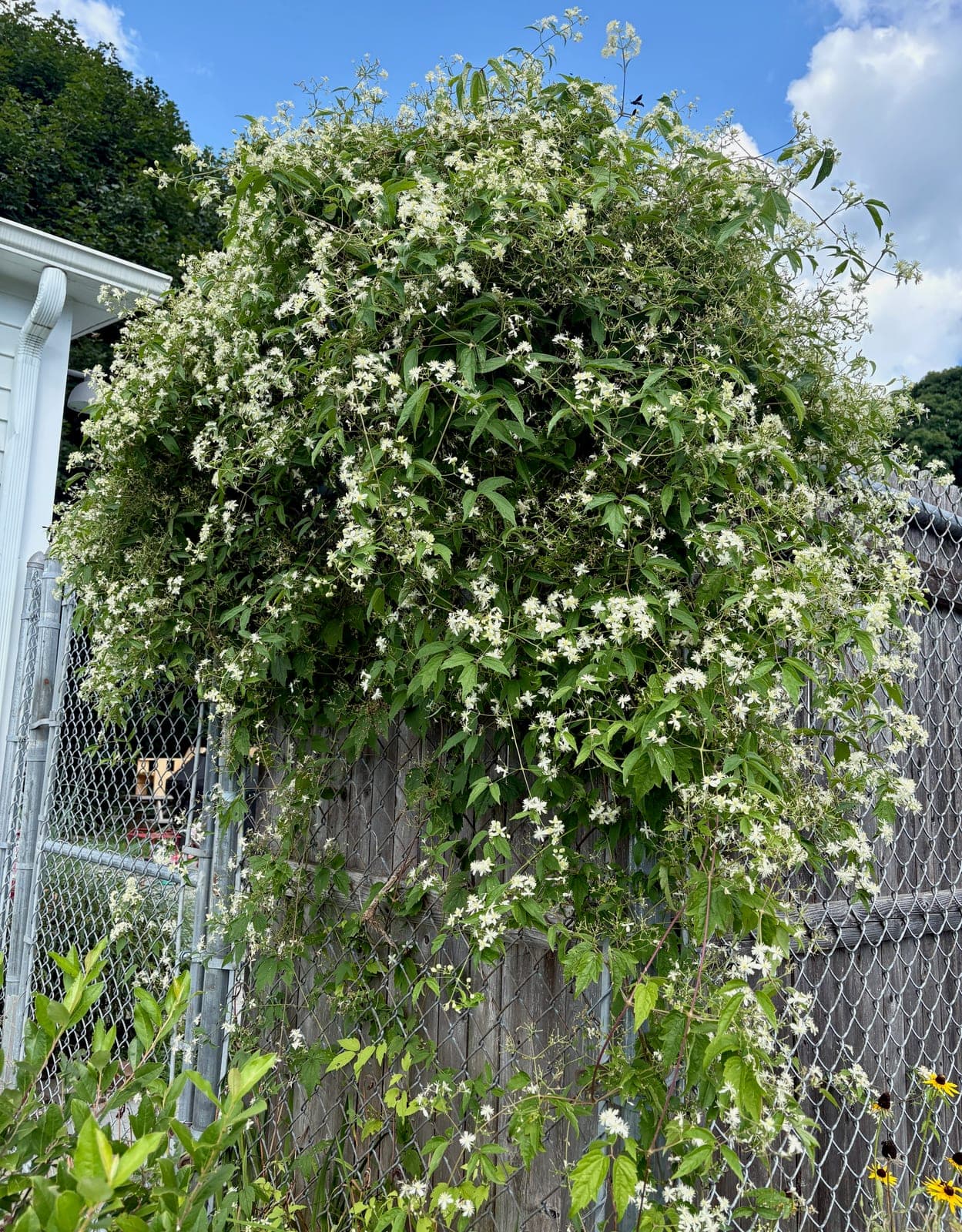
Clematis virginiana is a vigorous native deciduous vine found across eastern North America from Newfoundland to Manitoba and south to the Gulf Coast. It climbs by twisting leaf petioles around supports and can reach 15–20 ft. Dense clusters of small white flowers appear in mid- to late summer, followed by feathery, silvery seed heads that persist through fall - the basis for its alternate name Old Man's Beard.
It naturally colonizes moist woodland edges, stream banks, fencerows, and thickets, tolerating a wide range of soils. Plants spread readily by seed and can become aggressive in favorable sites; cut back to 12–18 in above ground in late winter or early spring to keep growth manageable and encourage vigorous new stems. Mulching the root zone conserves moisture and keeps roots cool. A soil pH of 6.0–7.5 suits it well. This is a Group 3 clematis - it flowers on current-season wood, so annual hard pruning does not reduce flowering.
The flowers draw native bees, bumble bees, and butterflies for nectar and pollen. Songbirds collect the cottony seed tails as nesting material. Some Native American peoples used the plant externally as a counterirritant for skin sores and headaches; the plant contains protoanemonin, a toxic irritant, and is not safe for internal use.
Not sure when to prune this one? Read the Clematis Growing Guide - the three pruning groups and when to cut each.Ecoregions:Northern ForestsEastern Temperate ForestsGreat Plains
Clematis Wilt
Sudden wilting and blackening of stems and leaves, often just before flowering. Whole shoots collapse rapidly while roots remain healthy. Caused by the fungus Calophoma clematidina.
Cut affected stems back to ground level and dispose of them, not in compost. Water at the base to keep foliage dry, improve air circulation, and plant the crown deep so the plant can regenerate from below soil. Apply a fungicide if the problem recurs.
Powdery mildew
White or grey powdery coating on leaves - usually starting on older growth in humid conditions or when nights cool.
Improve air circulation by thinning plants. Apply neem oil or potassium bicarbonate spray at first sign. Avoid overhead watering.
Fungal leaf spot
Brown or purplish spots on the leaves, often ringed with a yellow halo, that spread and merge in warm, humid, or wet weather; heavily spotted leaves yellow and drop early.
Pick off spotted leaves and clear fallen debris to remove overwintering spores. Improve air circulation by thinning, and water at the base so foliage dries quickly. If it persists, apply a copper- or sulfur-based fungicide at the first sign.
Root rot
Plants wilt, yellow, and stunt even in moist soil; lower stems and roots turn brown, soft, and mushy and the plant may collapse. Most common in heavy, wet, or poorly drained ground.
Improve drainage and stop overwatering, and never plant too deep. Lift and destroy badly affected plants along with the soil around the roots. Grow in raised or free-draining beds to prevent it returning.