
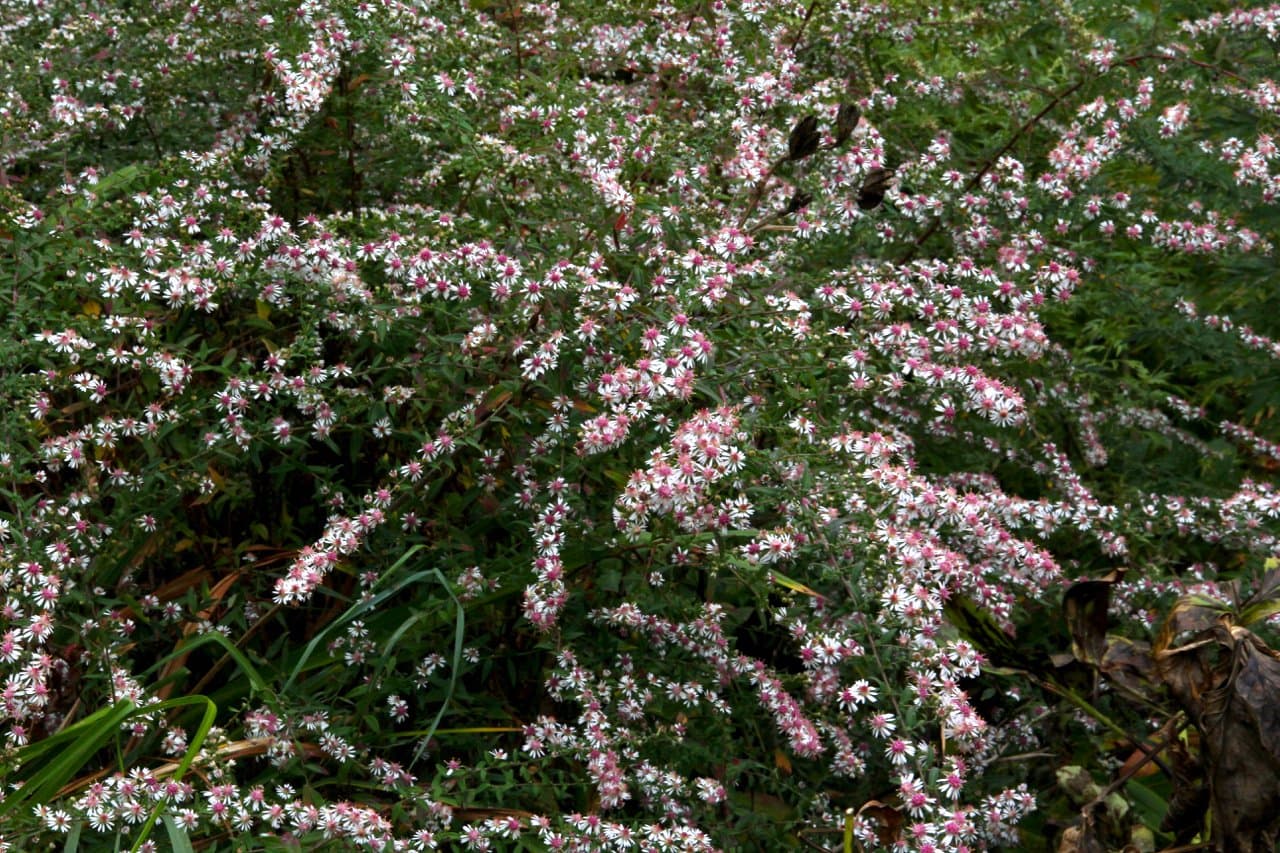
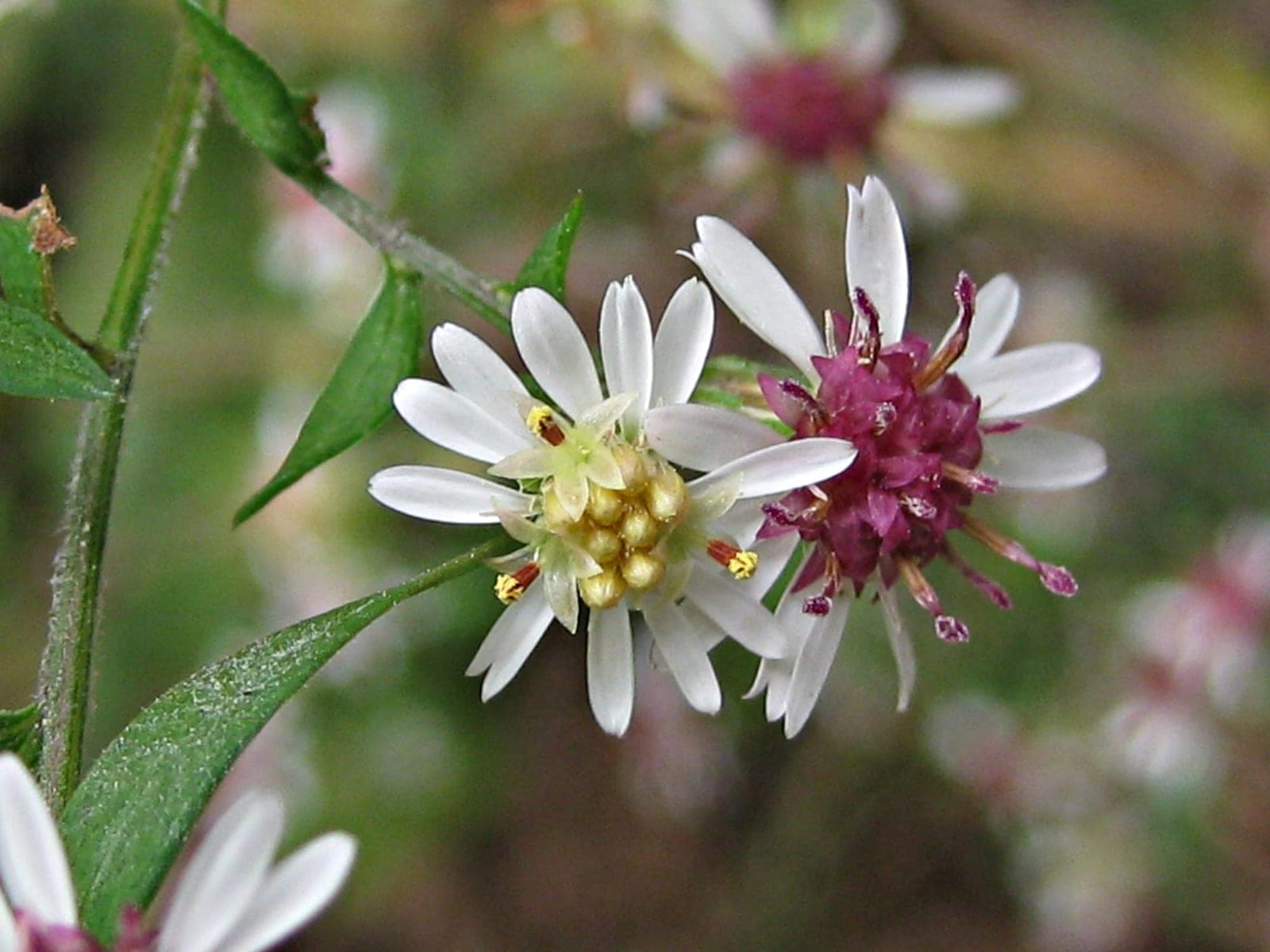
Symphyotrichum lateriflorum is a native perennial of eastern and central North America, at home along woodland edges, roadsides, and open meadows. Its small white ray flowers have disk florets that shift from yellow to pinkish-red or burgundy as they mature - that two-toned effect gives the plant its common name. Stems branch widely and can reach 4 feet tall, producing a mounding, arching habit. The cultivar 'Horizontalis' is the classic garden form: tiered, nearly horizontal branching, smaller near-black-tinged leaves, and the same calico flower effect, long valued in designed borders for reading as a dark, layered shrub until it disappears under bloom.
Calico aster blooms from late summer into fall, making it one of the most reliable late-season nectar sources for bees, migrating monarch butterflies, and other pollinators. It tolerates clay, dry soils, and part shade, performing well in spots where many perennials struggle. It self-seeds at a moderate rate and will colonize gradually without becoming aggressive. A pH around 5.5–7.0 suits it, and little or no fertilizer is needed - excess fertility promotes flopping. Cold-hardiness is exceptional, reliable to Zone 3a.
Leaving stems standing through winter provides seeds for goldfinches and other songbirds and shelter for cavity-nesting insects. The species works well in rain gardens, pollinator corridors, and naturalized woodland garden margins.
Ecoregions:Northern ForestsEastern Temperate ForestsGreat Plains
Aster Yellows
Deformed, greenish flowers, stunted growth, and yellowed foliage. Flower centers may produce tufts of leafy growth instead of normal petals.
No cure. Remove and destroy infected plants immediately to stop spread. Control leafhoppers, which transmit the disease, and remove nearby weed hosts.
Powdery mildew
White or grey powdery coating on leaves - usually starting on older growth in humid conditions or when nights cool.
Improve air circulation by thinning plants. Apply neem oil or potassium bicarbonate spray at first sign. Avoid overhead watering.
Rust
Orange to brown raised pustules on the undersides of leaves, with yellow spotting on the upper surface. Heavy infections cause leaves to yellow and drop.
Remove and destroy infected leaves. Avoid overhead watering and improve air circulation. Apply a sulfur or copper-based fungicide if it spreads. Clear plant debris in fall.
Fungal leaf spot
Brown or purplish spots on the leaves, often ringed with a yellow halo, that spread and merge in warm, humid, or wet weather; heavily spotted leaves yellow and drop early.
Pick off spotted leaves and clear fallen debris to remove overwintering spores. Improve air circulation by thinning, and water at the base so foliage dries quickly. If it persists, apply a copper- or sulfur-based fungicide at the first sign.