
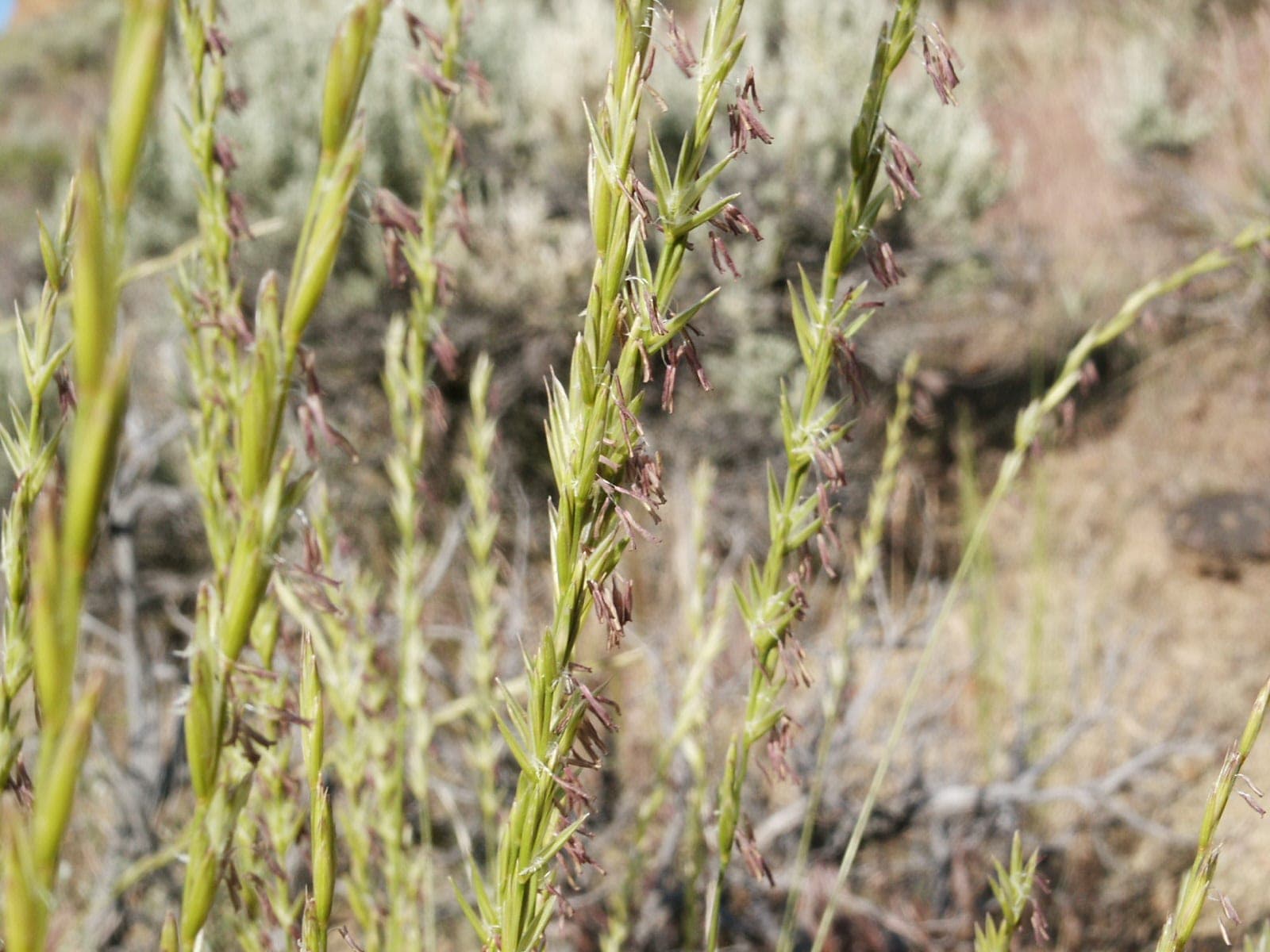
Bluebunch wheatgrass is a perennial bunchgrass native to the sagebrush-steppe and bunchgrass prairies of western North America, ranging from British Columbia south to California and New Mexico. Blue-green foliage and arching stems bearing distinctly awned seed heads give it quiet ornamental presence in dry native plantings and restoration landscapes.
It demands full sun, sharply drained soil, and very low supplemental water once established. Deep fibrous roots resist erosion and improve soil infiltration. It does not persist in heavy clay, waterlogged ground, or sites with regular summer irrigation, which tips competitive advantage to invasive annual grasses such as cheatgrass. Preferred pH is 6.0–8.0. High-nitrogen fertilizer weakens its competitive edge and should be avoided. Dormant fall seeding is the most reliable establishment method; early spring seeding also succeeds when soil is still cool.
Bluebunch wheatgrass is one of the dominant grasses of the Intermountain West and a cornerstone species in dryland habitat restoration, highway revegetation, and rangeland recovery projects. It provides critical forage and cover for elk, deer, pronghorn, and sage grouse throughout its native range.
Ecoregions:Northwestern Forested MountainsGreat PlainsNorth American Deserts
Rust
Orange to brown raised pustules on the undersides of leaves, with yellow spotting on the upper surface. Heavy infections cause leaves to yellow and drop.
Remove and destroy infected leaves. Avoid overhead watering and improve air circulation. Apply a sulfur or copper-based fungicide if it spreads. Clear plant debris in fall.
Flag Smut
Dark teliospore masses form in long stripes along the length of infected leaf blades, which shred into ribbons as the spores mature. Infected tillers are stunted and produce no functional seed heads.
Remove and destroy infected plants before spores disperse. Do not compost infected material. Avoid replanting susceptible grasses in heavily infected soil for at least two seasons. Use certified, smut-tested seed for new seedings.