
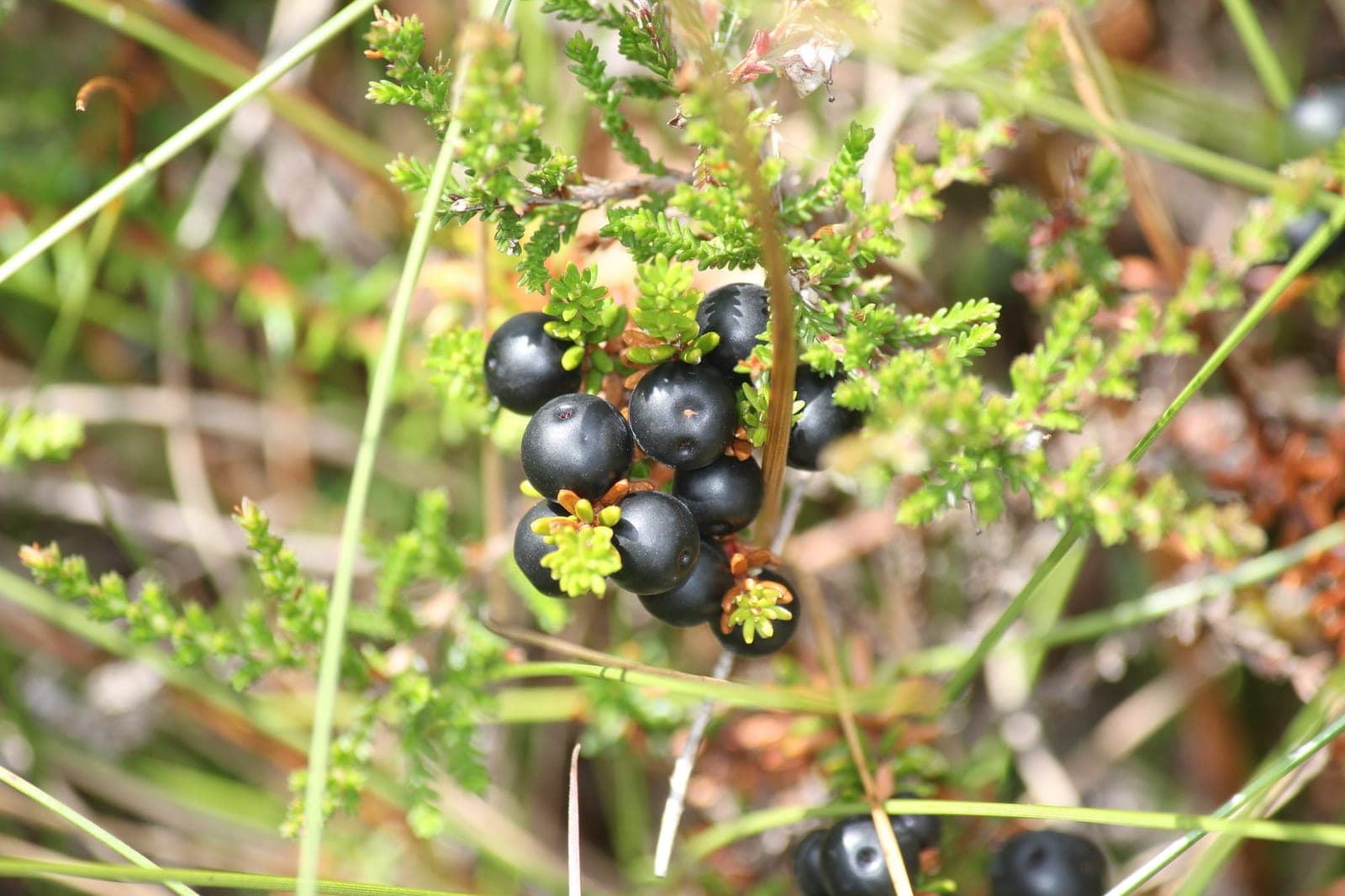
Empetrum nigrum is a low-growing, mat-forming evergreen shrub native to tundra, heathlands, and boreal forests across the Northern Hemisphere. It produces small, glossy, purple-black berries that are a significant food source for wildlife and humans in Arctic and subarctic regions. For gardeners in cold climates, it is among the most cold-hardy groundcovers available, surviving zones as cold as 2a.
The plant spreads by layering and forms dense mats that suppress weeds in acidic, peaty, or rocky soils. It tolerates exposed, windswept sites where few other plants survive. Soil pH should be kept between 4.0 and 5.5; organic mulch such as pine bark or shredded leaves helps maintain acidity and moisture retention. Propagation is most reliable from semi-hardwood cuttings taken in early summer; seed germination is slow and erratic.
The berries are edible and have been harvested for centuries by Arctic Indigenous peoples - including Iñupiaq, Inuktut, Tlingit, Haida, and Dena'ina communities - for fresh eating, incorporation into akutaq (a traditional fat-and-berry preparation), and making jams and juice. The fruit is high in anthocyanins. Decoctions of the plant have traditionally been used for kidney and urinary complaints.
Ecoregions:TundraTaigaHudson PlainNorthern ForestsNorthwestern Forested MountainsMarine West Coast ForestEastern Temperate Forests
Phytophthora Root Rot
Wilting despite moist soil, yellowing leaves, stunted growth, and dark, decayed roots and crown tissue. Vines may collapse during hot weather.
Plant in well-draining soil and avoid waterlogging. Remove and destroy affected vines. Improve drainage with raised beds or amended soil and avoid overwatering.
Fungal leaf spot
Brown or purplish spots on the leaves, often ringed with a yellow halo, that spread and merge in warm, humid, or wet weather; heavily spotted leaves yellow and drop early.
Pick off spotted leaves and clear fallen debris to remove overwintering spores. Improve air circulation by thinning, and water at the base so foliage dries quickly. If it persists, apply a copper- or sulfur-based fungicide at the first sign.