
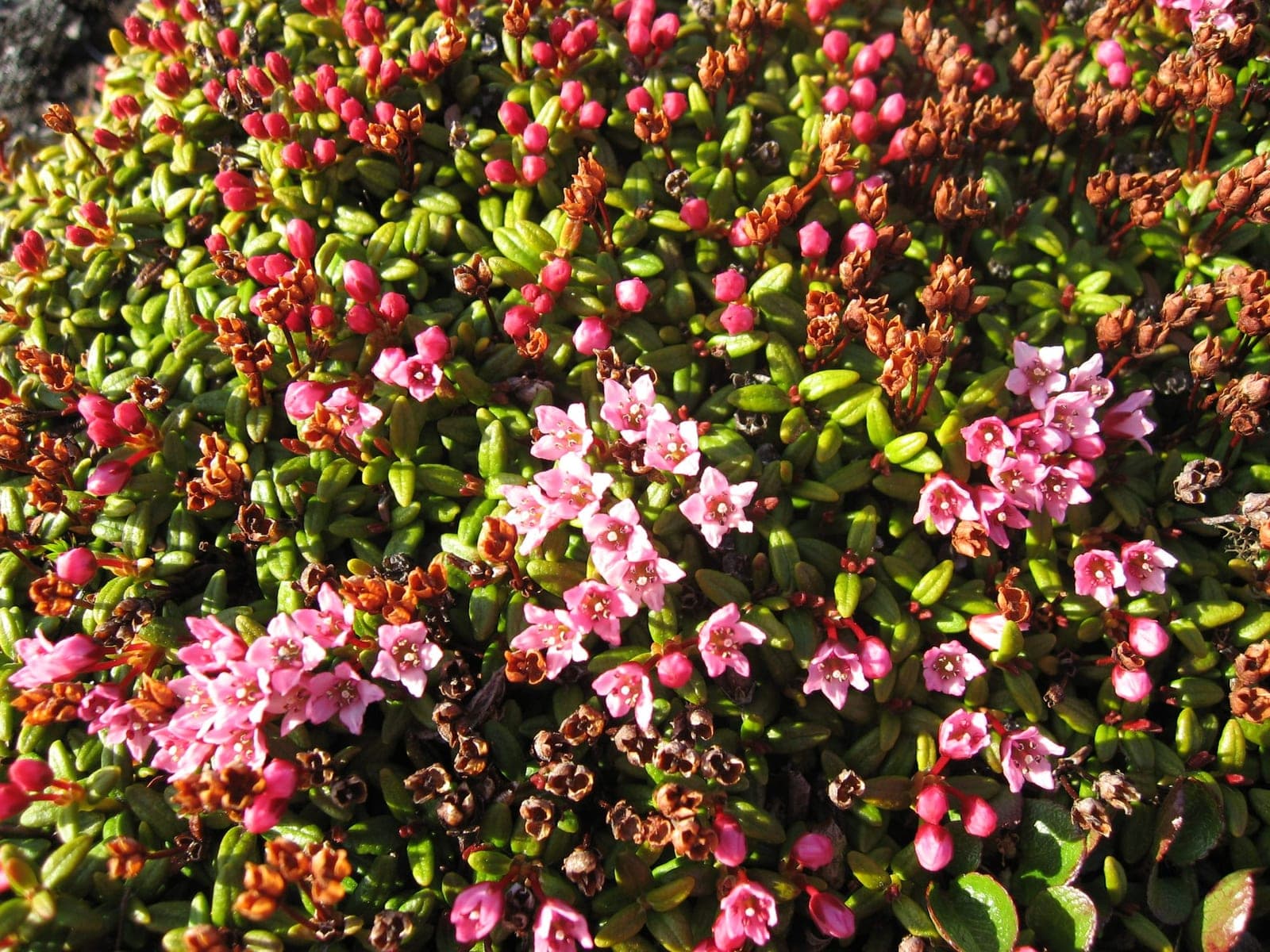
Kalmia procumbens, also widely known under its former name Loiseleuria procumbens, is a mat-forming dwarf shrub native to windswept arctic and subalpine ridges across the Northern Hemisphere. It rarely exceeds 4 inches in height and produces small, five-lobed pink flowers in tight terminal clusters in late spring. In a rock garden or alpine trough it can recreate the character of high-altitude fell-field habitats that few other cultivated plants approach.
This plant demands conditions that closely mirror its native habitat: full sun, sharply drained acidic soil, and reliable air circulation. It is extremely slow-growing and will not tolerate heat, humidity, or waterlogged conditions. It performs best in zones 2 through 5, where cool summers and reliably cold winters match its natural range. A gritty substrate - coarse sand blended with acidic humus - at a pH of 4.5 to 5.5 suits it far better than standard garden mix. A thin top-dressing of fine gravel helps maintain even soil moisture without encouraging rot at the stem base. In zone 6, afternoon shade and impeccable drainage are essential.
In its native range, alpine azalea forms dense mats that stabilize soil on exposed ridges and provide microhabitat for invertebrates. It is pollinated by small bees and flies, and its mat structure traps windblown organic debris, building a thin layer of soil in otherwise bare scree.
Ecoregions:TundraTaigaNorthern ForestsNorthwestern Forested MountainsMarine West Coast Forest
Phytophthora Root Rot
Wilting despite moist soil, yellowing leaves, stunted growth, and dark, decayed roots and crown tissue. Vines may collapse during hot weather.
Plant in well-draining soil and avoid waterlogging. Remove and destroy affected vines. Improve drainage with raised beds or amended soil and avoid overwatering.
Root rot
Plants wilt, yellow, and stunt even in moist soil; lower stems and roots turn brown, soft, and mushy and the plant may collapse. Most common in heavy, wet, or poorly drained ground.
Improve drainage and stop overwatering, and never plant too deep. Lift and destroy badly affected plants along with the soil around the roots. Grow in raised or free-draining beds to prevent it returning.
Fungal leaf spot
Brown or purplish spots on the leaves, often ringed with a yellow halo, that spread and merge in warm, humid, or wet weather; heavily spotted leaves yellow and drop early.
Pick off spotted leaves and clear fallen debris to remove overwintering spores. Improve air circulation by thinning, and water at the base so foliage dries quickly. If it persists, apply a copper- or sulfur-based fungicide at the first sign.