
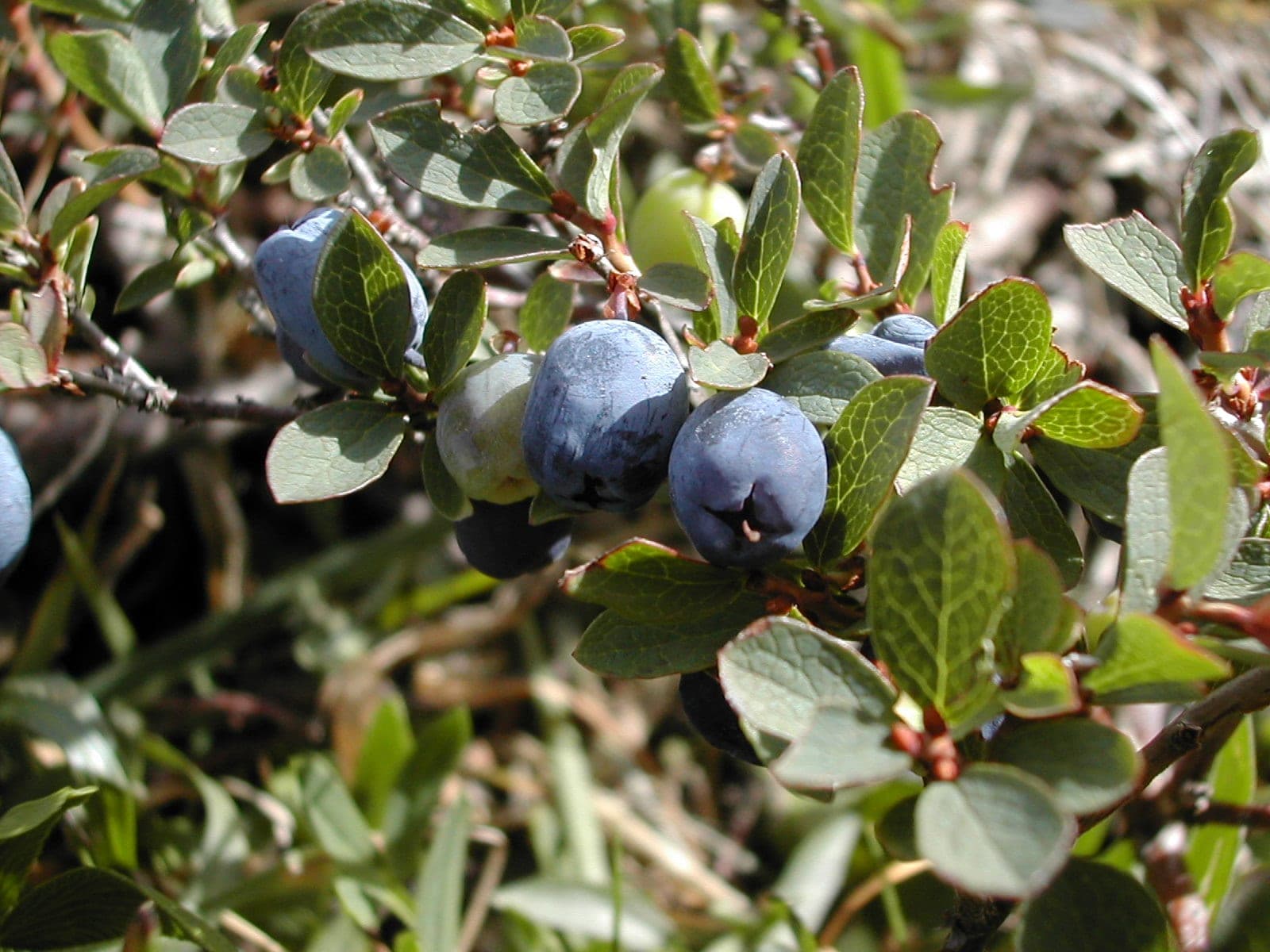
Vaccinium uliginosum is a low-growing deciduous shrub native to boreal and arctic regions of North America, Europe, and Asia. It produces small, dark blue berries closely related to bilberries, and ranks among the most cold-hardy fruiting shrubs available for zones 2–6. It suits bog margins, peaty rock gardens, and native plantings in northern climates where most fruiting shrubs fail.
In the wild it colonizes peat bogs, wet heaths, and alpine tundra, spreading by rhizomes to form low mats. It requires consistently moist, acidic soil with a pH below 5.5 and high organic content. Pine bark mulch or a peat-based soil amendment replicates these conditions in cultivation. Berry production is heaviest in full sun; light shade reduces yield but the plant remains healthy. Avoid alkaline soils and any amendment containing lime.
The berries have been gathered across northern latitudes for fresh eating, jams, and fermented beverages, serving as a seasonal food staple for Arctic and subarctic indigenous peoples. Research has documented high concentrations of anthocyanins and other polyphenols in the fruit, with published studies examining antioxidant and anti-inflammatory activity.
Ecoregions:TundraTaigaHudson PlainNorthern ForestsNorthwestern Forested MountainsMarine West Coast Forest
Mummy Berry
New shoots and leaves wilt, blacken, and die in spring. Infected berries turn tan or pink, shrivel into hard 'mummies', and drop to the ground.
Remove and destroy mummified berries and blighted shoots. Rake and dispose of fallen fruit and leaves. Apply 2 inches of fresh mulch in early spring to bury overwintering spores, and prune for airflow.
Blueberry Stem Blight
Sudden wilting and browning of leaves on individual canes, with reddish-brown discoloration in the wood beneath the bark. Affected canes die back, often spreading downward from a wound.
Prune out infected canes 6–8 inches below visible discoloration and destroy them. Disinfect tools between cuts. Avoid wounding plants and keep them vigorous with proper water and acidic soil.
Powdery mildew
White or grey powdery coating on leaves - usually starting on older growth in humid conditions or when nights cool.
Improve air circulation by thinning plants. Apply neem oil or potassium bicarbonate spray at first sign. Avoid overhead watering.
Botrytis (grey mould)
Grey fuzzy mould on petals and stems, worst in cool wet conditions.
Remove affected parts immediately. Improve air circulation. Avoid overhead watering. Apply copper fungicide if severe.
Phytophthora Root Rot
Wilting despite moist soil, yellowing leaves, stunted growth, and dark, decayed roots and crown tissue. Vines may collapse during hot weather.
Plant in well-draining soil and avoid waterlogging. Remove and destroy affected vines. Improve drainage with raised beds or amended soil and avoid overwatering.