
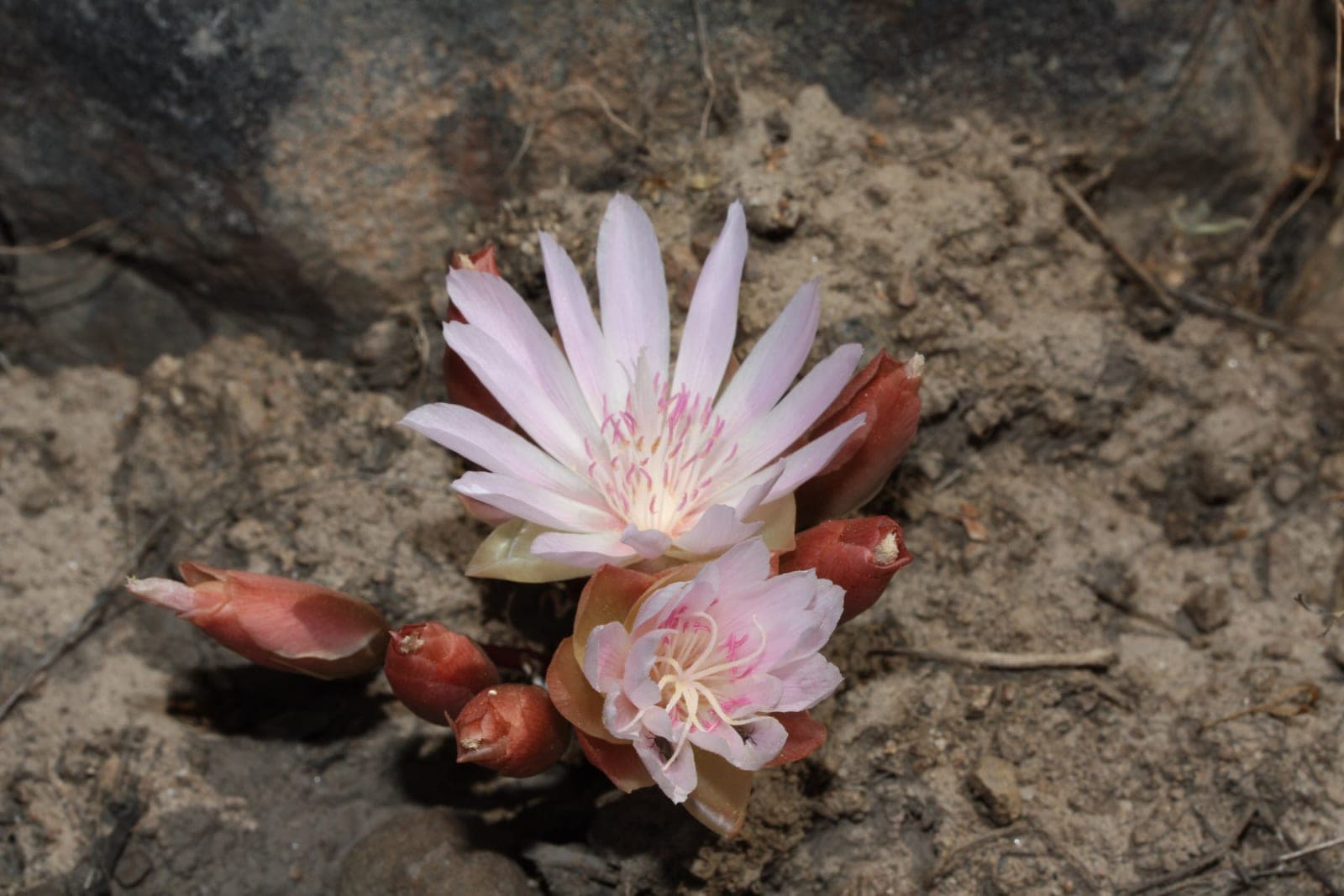
Lewisia rediviva is a compact perennial native to the Rocky Mountains, Great Basin, and Columbia Plateau. It is the state flower of Montana and was named for Meriwether Lewis, who collected specimens during the Corps of Discovery expedition. Despite its low stature, it produces large flowers in shades of pink to white each spring.
Bitterroot is summer-dormant: basal leaves emerge in fall, persist through winter, then die back as the plant flowers in late spring. After seeds set, the plant disappears entirely until autumn. Perfect drainage is non-negotiable - wet crowns during summer dormancy cause fatal rot. It thrives in rocky, gravelly, or sandy soils and should receive no supplemental water once dormant. The species epithet rediviva means brought back to life, reflecting the root's documented ability to survive months of desiccation and still regenerate. pH tolerance runs slightly acidic to neutral. Established plants naturalize well in crevice gardens, dry-slope plantings, and scree beds.
Thick, starchy roots were a dietary staple for many Interior Plateau tribes, including the Salish and Nez Perce. Boiling removes the bitter outer skin; the cooked inner root is bland and nutritious. Roots were widely traded and held significant cultural importance. Traditional preparations were also used for heart complaints and pleurisy.
Ecoregions:Northwestern Forested MountainsMarine West Coast ForestNorth American DesertsMediterranean California
Crown Rot
Lower leaves yellow and wilt; the base of the rosette turns brown and soft, sometimes with white fungal threads at the soil line. Plants collapse in wet conditions.
Remove and destroy affected plants. Improve drainage and avoid overhead watering. Do not mulch directly against the crown. Space plants for airflow and avoid replanting in the same wet spot.
Phytophthora Root Rot
Wilting despite moist soil, yellowing leaves, stunted growth, and dark, decayed roots and crown tissue. Vines may collapse during hot weather.
Plant in well-draining soil and avoid waterlogging. Remove and destroy affected vines. Improve drainage with raised beds or amended soil and avoid overwatering.