
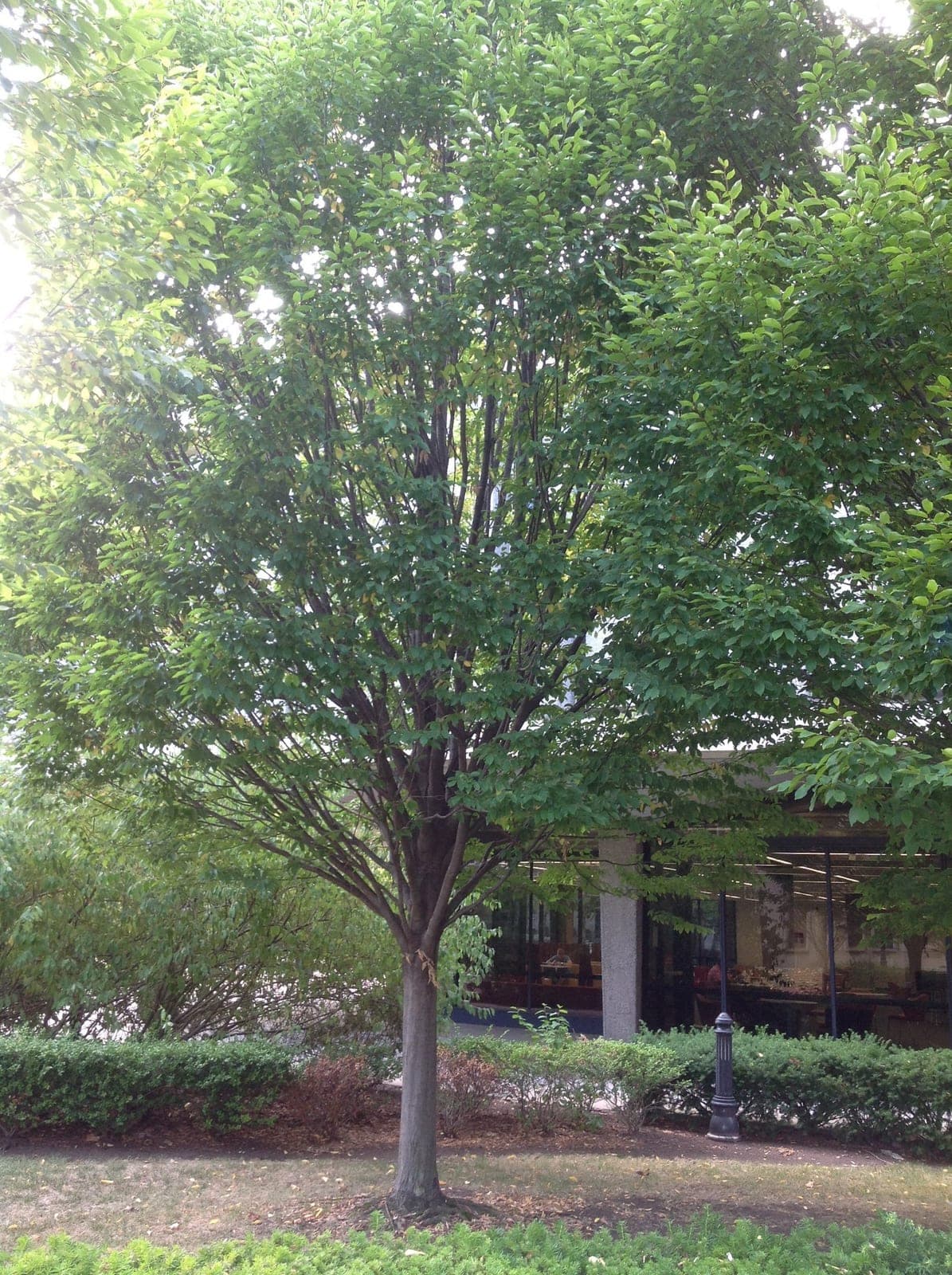
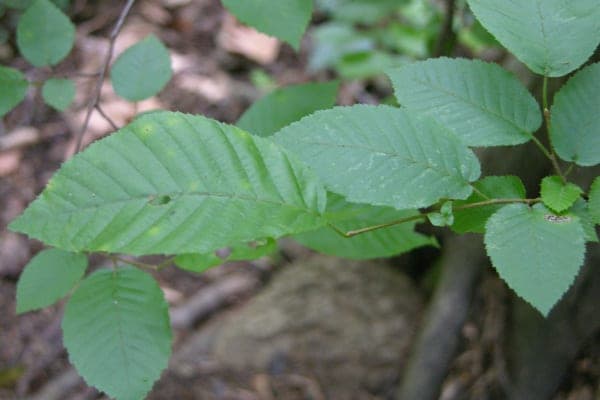
American hornbeam (Carpinus caroliniana) is a small, slow-growing native hardwood found across eastern North America. Its smooth gray bark is deeply fluted and sinuous, resembling bundled muscle fibers - earning it the names musclewood and muscle beech. The wood ranks among the hardest of any North American species and was historically used for tool handles and small implements. The tree offers year-round interest: catkins in spring, hop-like nutlet clusters through summer, vivid orange and scarlet fall color, and sculptural winter form.
In the wild, hornbeam grows under a closed canopy near streams and rivers. In cultivation it establishes best in moist, slightly acidic to neutral soil and prefers partial to full shade, though it tolerates more sun where moisture is reliable. It transplants slowly and resents root disturbance; use balled-and-burlapped or container-grown stock planted small, and maintain a deep mulch layer over the root zone. Avoid compacted or poorly drained sites. Target soil pH of 6.0–7.0.
Nutlets ripen in late summer and are consumed by ruffed grouse, turkey, ring-necked pheasant, and small mammals. Dense branching provides nesting structure. Several native moths and butterflies use hornbeam as a larval host, making it a functional component of wildlife and woodland gardens throughout its native range.
Ecoregions:Northern ForestsEastern Temperate Forests
Powdery mildew
White or grey powdery coating on leaves - usually starting on older growth in humid conditions or when nights cool.
Improve air circulation by thinning plants. Apply neem oil or potassium bicarbonate spray at first sign. Avoid overhead watering.
Fungal leaf spot
Brown or purplish spots on the leaves, often ringed with a yellow halo, that spread and merge in warm, humid, or wet weather; heavily spotted leaves yellow and drop early.
Pick off spotted leaves and clear fallen debris to remove overwintering spores. Improve air circulation by thinning, and water at the base so foliage dries quickly. If it persists, apply a copper- or sulfur-based fungicide at the first sign.
Armillaria Root Rot
Thinning, yellowing canopy with progressive dieback; white, fan-shaped mycelial mats visible beneath bark at or just below the soil line; honey-colored mushroom clusters appearing at the trunk base or on surface roots in autumn.
No chemical cure exists. Improve drainage and avoid any injury to roots or trunk. Remove severely infected trees along with as much root material as possible. Do not replant susceptible species in the same spot.
Botryosphaeria Canker
Dark, sunken cankers on stems and major branches, most often occurring after drought stress or mechanical wounding. Bark peeled back from affected areas reveals brown, discolored wood beneath. Branch tips wilt and die back progressively inward.
Prune infected branches at least 6 inches below the visible canker margin using sterilized tools, and dispose of all cuttings away from the garden. Reduce plant stress by maintaining consistent irrigation during dry periods and avoiding bark wounds during maintenance. No curative fungicide is available; keeping plants vigorous is the primary preventive strategy.