
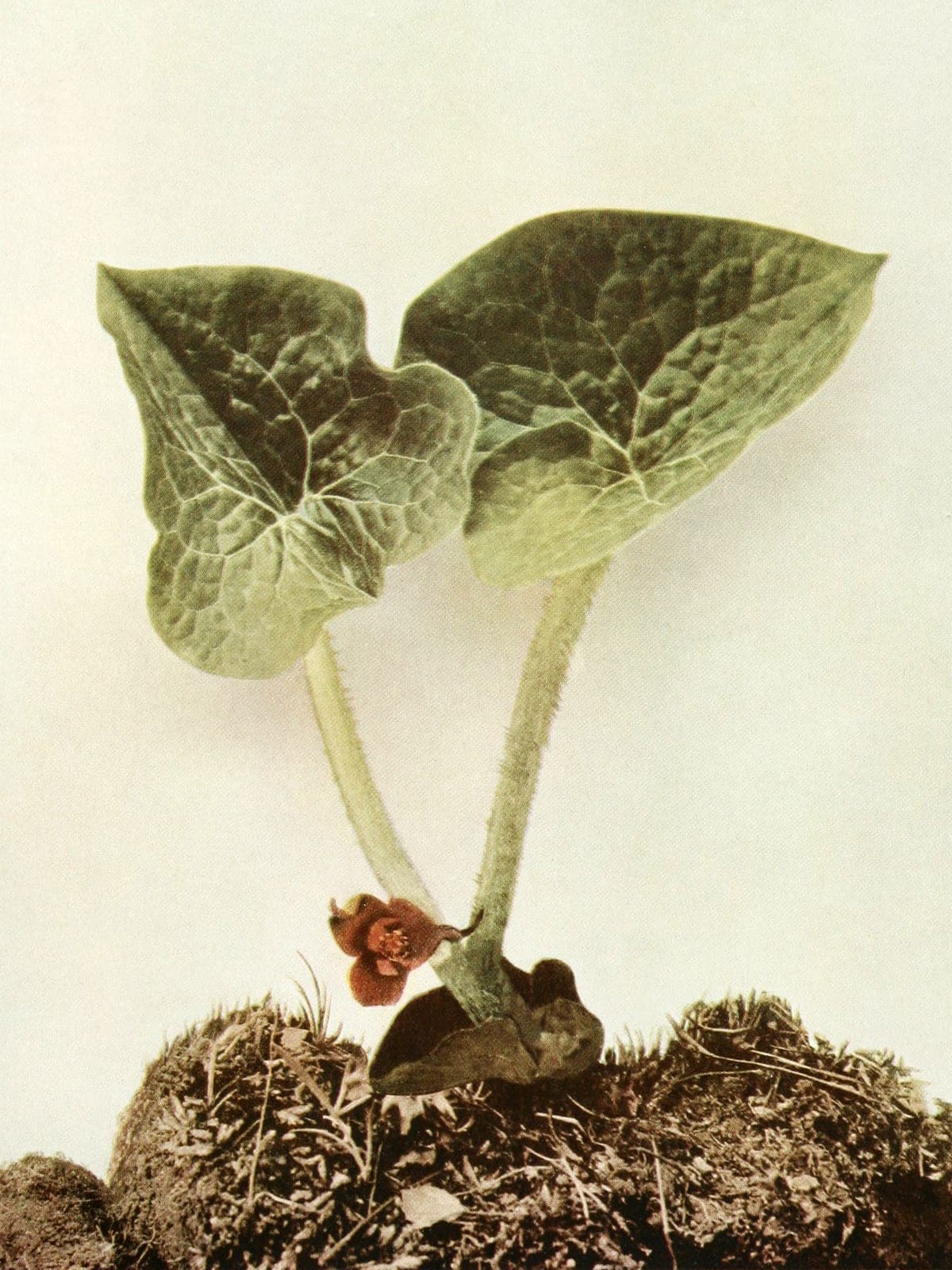
Asarum canadense is a native North American perennial groundcover that forms spreading colonies of large, heart-shaped, velvety leaves. It fills deep shade under deciduous trees where most ornamentals fail, making it one of the most reliable plants for a woodland garden floor. Small jug-shaped, brownish-purple flowers open at soil level each spring, hidden entirely beneath the foliage.
The plant spreads by rhizome to build dense, weed-suppressing mats, and its seeds are dispersed by ants via attached elaiosomes-a process called myrmecochory-allowing gradual natural spread through a planting. It prefers slightly acidic, humus-rich, consistently moist soil; a topdressing of shredded leaf mulch replicates its natural forest-floor habitat and retains moisture through summer dry spells. Cold-hardy to zone 3, it dies back in winter and re-emerges reliably each spring.
Native peoples used the aromatic rhizome as a flavoring and in traditional medicine for headaches, digestive complaints, and earache; early colonists dried and ground it as a ginger substitute. The plant contains aristolochic acid, a compound associated with nephrotoxicity, and is not recommended for internal use today.
Ecoregions:Northern ForestsEastern Temperate ForestsGreat Plains
Fungal leaf spot
Brown or purplish spots on the leaves, often ringed with a yellow halo, that spread and merge in warm, humid, or wet weather; heavily spotted leaves yellow and drop early.
Pick off spotted leaves and clear fallen debris to remove overwintering spores. Improve air circulation by thinning, and water at the base so foliage dries quickly. If it persists, apply a copper- or sulfur-based fungicide at the first sign.
Crown Rot
Lower leaves yellow and wilt; the base of the rosette turns brown and soft, sometimes with white fungal threads at the soil line. Plants collapse in wet conditions.
Remove and destroy affected plants. Improve drainage and avoid overhead watering. Do not mulch directly against the crown. Space plants for airflow and avoid replanting in the same wet spot.
Root rot
Plants wilt, yellow, and stunt even in moist soil; lower stems and roots turn brown, soft, and mushy and the plant may collapse. Most common in heavy, wet, or poorly drained ground.
Improve drainage and stop overwatering, and never plant too deep. Lift and destroy badly affected plants along with the soil around the roots. Grow in raised or free-draining beds to prevent it returning.