
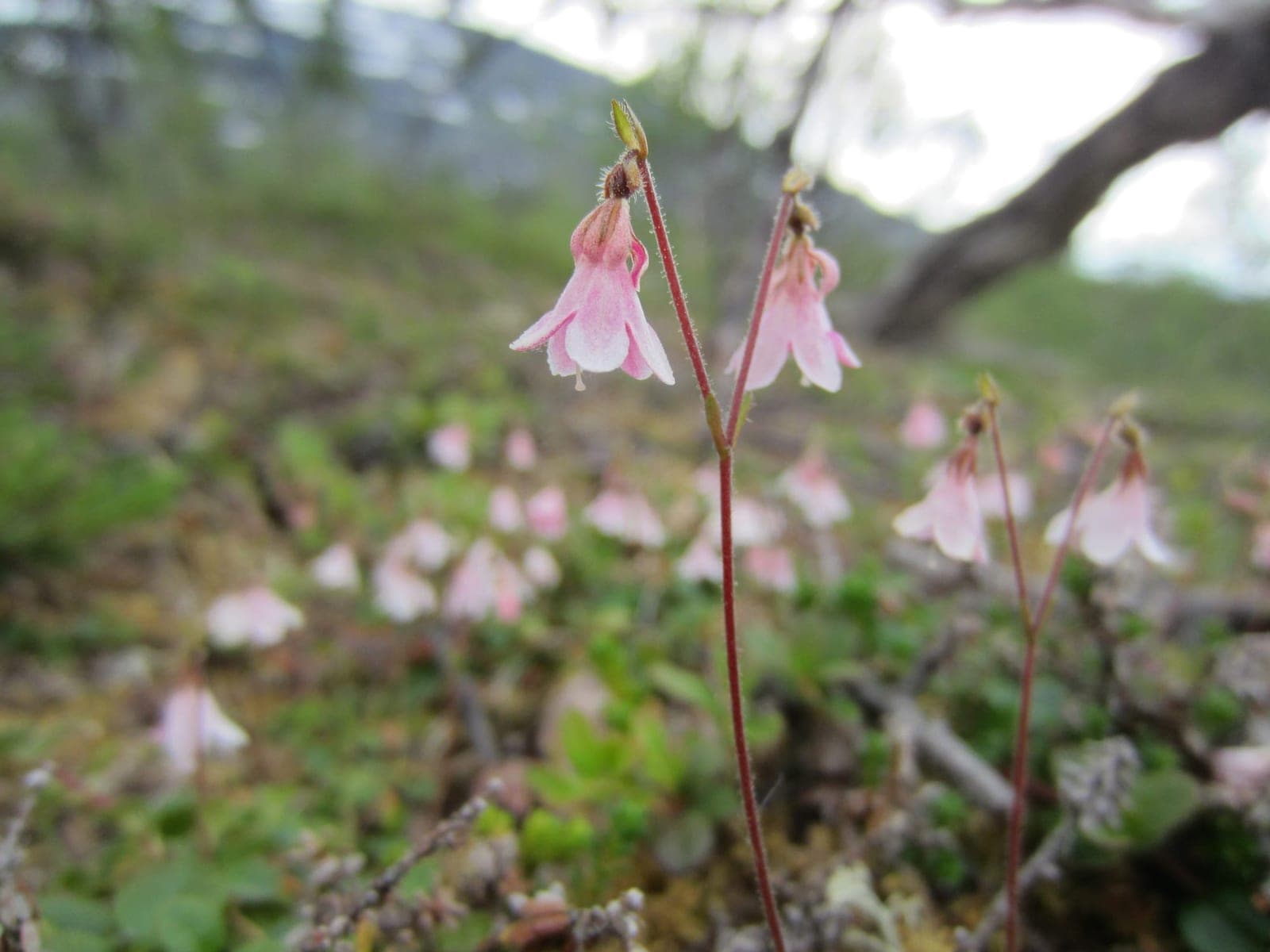
Linnaea borealis is a trailing, evergreen subshrub native to boreal and subarctic forests across the Northern Hemisphere. Named in honor of botanist Carl Linnaeus - reportedly his favorite plant - it forms a low, dense mat of small, glossy, rounded leaves. In early summer, slender forked stems rise just above the foliage and carry pairs of nodding, fragrant, pale-pink bells, an understated but distinctive feature in cool woodland gardens.
Twinflower spreads by surface runners that root at nodes, slowly building a woven mat under 4 inches tall. It requires consistently cool summers and will not persist where heat or drought are prolonged, making zones 2–6 its natural fit, particularly beneath conifers or in dappled deciduous shade. Acidic, humus-rich soil with reliable drainage is essential; alkaline, compacted, or waterlogged conditions are poorly tolerated. Establishment is slow, and container-grown plants transplant more successfully than bare-root divisions. A consistent top-dressing of pine-needle or leaf-litter mulch mimics its natural forest-floor habitat, maintains soil acidity, and retains moisture through dry spells.
Some Indigenous peoples of North America, including Ojibwe communities, used twinflower preparations for fever and muscle soreness. Ecologically, its dense mat-forming habit stabilizes forest-floor soils and supports moisture retention in boreal understories.
Ecoregions:TaigaNorthern ForestsNorthwestern Forested MountainsMarine West Coast ForestEastern Temperate ForestsGreat PlainsNorth American Deserts
Fungal leaf spot
Brown or purplish spots on the leaves, often ringed with a yellow halo, that spread and merge in warm, humid, or wet weather; heavily spotted leaves yellow and drop early.
Pick off spotted leaves and clear fallen debris to remove overwintering spores. Improve air circulation by thinning, and water at the base so foliage dries quickly. If it persists, apply a copper- or sulfur-based fungicide at the first sign.
Root rot
Plants wilt, yellow, and stunt even in moist soil; lower stems and roots turn brown, soft, and mushy and the plant may collapse. Most common in heavy, wet, or poorly drained ground.
Improve drainage and stop overwatering, and never plant too deep. Lift and destroy badly affected plants along with the soil around the roots. Grow in raised or free-draining beds to prevent it returning.
Botrytis (grey mould)
Grey fuzzy mould on petals and stems, worst in cool wet conditions.
Remove affected parts immediately. Improve air circulation. Avoid overhead watering. Apply copper fungicide if severe.